Your China & Yunnan Travel Experts


A Great Wall pass was more than a gate. Major passes controlled valleys, roads, river crossings and trade corridors through systems of walls, forts, towers and garrison settlements. This guide keeps an east-to-west sequence of 13 historically important sites, but it is not a ranking of military power or visitor quality. The sites belong to different dynasties and landscapes, and several are far apart. Use the overview of how the Great Wall was defended to understand how each pass fitted a larger network.
Shanhaiguan occupies the narrow corridor between the Yan Mountains and the Bohai coast in Qinhuangdao, Hebei. The present heritage landscape is strongly associated with the Ming defense system and the title “First Pass under Heaven.” Its strategic value came from controlling movement between North China and the northeast. Combine the gate city with the coast through the Laolongtou and Shanhaiguan route guide , but do not assume a continuous public walk on top of the wall between the two sites.

Huangyaguan lies in the mountain country of Jizhou District, Tianjin. Its restored pass complex, steep ridges and water-control features help visitors read the wall as an integrated system. It suits travelers seeking a full-day heritage excursion and sustained steps. Confirm the legal walking boundary and return transport because surrounding unrestored ridges are not automatically open. Plan a managed mountain visit rather than using old hiking tracks. Weather, event days and restoration work can change access.

Juyongguan controls a mountain valley northwest of central Beijing. Its enclosed circuit and Cloud Platform make military architecture easy to read, but the stairways are steep and more demanding than the compact map suggests. It is convenient for travelers with limited time, while visitors prioritizing gentler walking may prefer another managed section. Check the dedicated Beijing–Juyongguan transport guide before relying on a fixed bus reference.

Zijingguan stands in the Taihang mountain corridor of Yi County, Hebei. It formed part of the Inner Great Wall system and guarded approaches between the Hebei plain and Shanxi highlands. Surviving fabric and visitor services are less standardized than at Beijing's major scenic sections, so verify local access and transport rather than treating it as a simple day-trip substitute.
Its history includes repeated conflict, but exact battle totals vary across popular accounts. The reliable takeaway is geographic: whoever controlled this valley could approach other northern routes without forcing the strongest gate head-on.
Daomaguan lies in Tang County, Hebei, on a difficult Taihang route. Its name is often explained through the steep terrain that challenged horses. The pass belonged to the group of Inner Great Wall corridors associated with Zijingguan and Juyongguan. Today it is better suited to travelers researching remote heritage than to those expecting a fully serviced scenic area.
Pingxingguan is in the mountains of Shanxi near the Hebei border. The corridor has older frontier significance and is also remembered for the Battle of Pingxingguan in September 1937. These historical layers should not be collapsed into one story: the Ming pass landscape and the twentieth-century battlefield require different interpretation. Check which museum or heritage area you intend to visit.
Piantouguan stands near a major bend of the Yellow River in Pianguan County, Shanxi. It was a key node of the Ming northern defense and a place where wall lines interacted with river terrain. Its significance also involved movement and exchange across the frontier, reminding visitors that passes regulated trade and communication as well as military threats.
Yanmen Pass crosses a strategic route through the mountains near Dai County, Shanxi. Its long historical memory includes frontier defense, travel and legend across several periods. The restored scenic area contains gates, walls and uphill walking. Do not rely on old opening-hour or admission figures, which may change by season and ticket policy.
Planning note
Check the scenic area's official channel shortly before travel.
Allow extra time for mountain weather and road conditions.
Niangzi Pass controls a Taihang route linking Shanxi and Hebei. The name is associated in tradition with Princess Pingyang and women soldiers, while the surviving pass architecture is largely connected with later rebuilding. Treat the legend as cultural context rather than a complete construction record.
The setting combines a fortified corridor, settlement and river landscape. Clarify which local attractions are included in the current ticket and whether restoration affects access.
Planning note
Verify current hours locally.
Verify current admission and transport locally.
Shahukou sits near the Shanxi–Inner Mongolia boundary in Youyu County. It served as a northern corridor for military movement, migration and commerce. Its name and historical interpretation are complex; a visitor gains more by examining the pass as an exchange gateway than by repeating a simplified translation of the characters.
During periods of negotiated peace, frontier markets and movement could become as important as conflict. This makes Shahukou useful for understanding the Great Wall as a managed border zone rather than an absolute cultural divide.
Planning note for Shahukou
Road distances and services change; confirm the route from Datong or Shuozhou before departure.
Check the current museum and site admission policy.
Check seasonal opening arrangements.
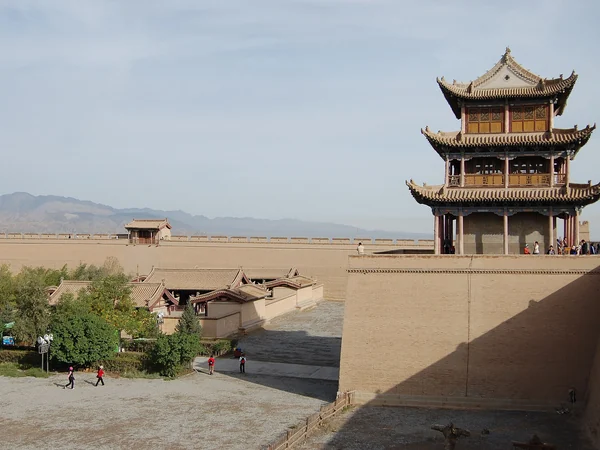
Jiayuguan guards a Hexi Corridor route between the Qilian Mountains and desert landscapes in Gansu. Founded in the early Ming period and expanded later, its fortified city is a principal western node of the Ming wall. The famous “last brick” story is local legend, not an engineering audit. Visit the pass together with nearby wall and beacon sites to understand the corridor system. Jiayuguan works well as a base for several separate heritage stops.
Yangguan southwest of Dunhuang is associated with Han frontier administration and the southern branch of routes later grouped under the Silk Road. The present visitor landscape includes reconstructed interpretation alongside archaeological context, so distinguish the symbolic pass experience from surviving ancient fabric. Desert heat, wind and long road transfers require realistic timing. Yangguan belongs in a Dunhuang-area itinerary, not a Great Wall day trip from Jiayuguan.

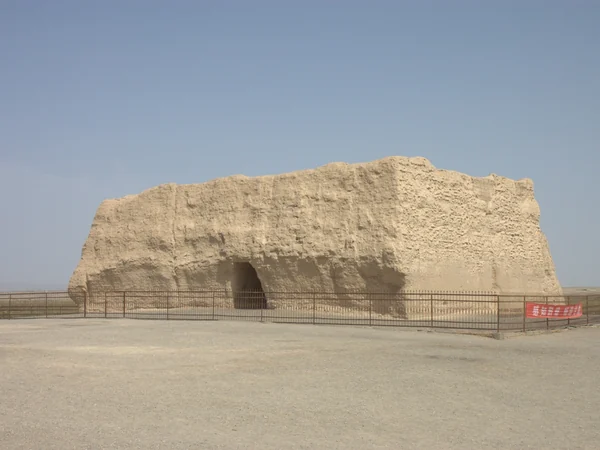
Yumen Pass, or Jade Gate Pass, formed part of the Han frontier west of Dunhuang. Its rammed-earth remains demonstrate that the Great Wall is not only brick battlements on green mountains. The site connects fortification, communication and movement through the Hexi Corridor toward Central Asia. Pair it with a broader Silk Road itinerary and confirm desert-site access before departure. Treat Yangguan and Yumen Pass as distinct sites with different routes and remains.

From $ 389

From $ 509

From on request
Editorial accountability
Hu Lei, CEO. The named owner is responsible for travel-planning accuracy and escalation of time-sensitive checks.
Yuntian Travel (Yunnan) Group is identified in its corporate profile as a licensed professional inbound travel service provider based in Kunming, China. Registration and travel-service documents can be requested before booking.
Page-specific references where cited, official destination, transport and entry notices, YUNSKY route-planning records, and direct provider confirmation before a booking is finalized.
Content is reviewed when rules, transport, access, pricing or route conditions change. Final availability and operating details are reconfirmed for each traveler’s dates.
Quality review: Page updated: