Your China & Yunnan Travel Experts


How was the Great Wall of China defended?

Standing on the Great Wall raises a practical question: how was such a long frontier defended when no army could occupy every metre?
 
The answer is a layered system, not one tactic. Walls restricted movement; passes controlled roads and valleys; towers improved observation; signals carried warnings; and garrisons supplied troops who could respond where danger appeared. The system changed by region and dynasty, so no single description fits every surviving line. The separate guide to Great Wall watchtower functions explains how tower design supported this wider network.

The wall itself created delay and
exposure. Attackers crossing steep ground or approaching a gate became easier to observe, while horses, baggage and siege equipment were harder to move. Defenders could use bows, crossbows and, in later periods, firearms from protected positions. Yet the Wall was not permanently staffed at equal strength: strategically important corridors received more people and resources than remote stretches.
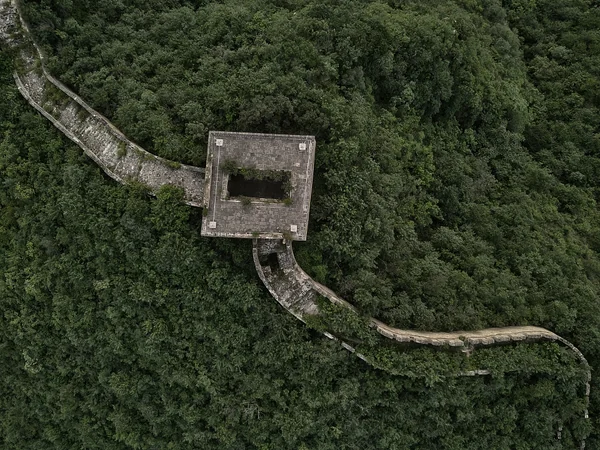
Masonry watchtower and battlements forming part of the Great Wall defense system
The most sensitive points were passes and gates because trade, official travel and military movement needed openings. A major pass could combine an outer gate, inner gate, enclosed courtyards, walls, barracks and nearby forts. These spaces channelled movement and created successive defensive positions. See how this worked at different landscapes in the guide to fortification passes along the Great Wall.

Watchtowers and beacon sites supported observation, communication and local defense. Their spacing and form varied with terrain, line of sight and period; a fixed total for the entire multi-dynasty Great Wall should therefore be treated cautiously.

From high points, sentries watched roads, valleys and ridge approaches. Towers also provided protected positions and, in some sectors, temporary shelter or storage. Their value came from connection with the surrounding wall, forts and garrisons rather than from the tower alone.

Warnings could travel through smoke, fire, flags, lanterns or other agreed signals. The exact code was not universal across all dynasties and regions. Signals alerted command posts, but they did not replace messengers, local intelligence or troops moving from nearby garrisons.

Patrols checked active sectors, guarded gates and maintained communication. Mobile forces remained essential because masonry could slow or redirect an attack but could not pursue an enemy, protect every gap or resolve a breach. Logistics—food, water, weapons, horses and roads—were as important as battlements.

The Great Wall was therefore a frontier-management system, not an impenetrable border. Armies sometimes crossed through weak points, negotiated passage, bribed gatekeepers or bypassed a line. Even when it failed to stop an invasion, the system could provide warning, slow large formations and protect key corridors. For a wider scale and chronology, use the fact-checked Great Wall facts guide. When visiting, look beyond the bricks: identify the valley being controlled, the next visible tower and the route a garrison could use to respond.

Editorial accountability

How this guide is checked

Named content owner

Hu Lei, CEO. The named owner is responsible for travel-planning accuracy and escalation of time-sensitive checks.

Company and licence status

Yuntian Travel (Yunnan) Group is identified in its corporate profile as a licensed professional inbound travel service provider based in Kunming, China. Registration and travel-service documents can be requested before booking.

Source basis

Page-specific references where cited, official destination, transport and entry notices, YUNSKY route-planning records, and direct provider confirmation before a booking is finalized.

Update basis

Content is reviewed when rules, transport, access, pricing or route conditions change. Final availability and operating details are reconfirmed for each traveler’s dates.

Quality review: Page updated:

Open WhatsApp chat with YunSky Travel