When was
the Great Wall of China built? The most accurate answer is: in many periods, by different states and dynasties, over more than two thousand years. The
Great Wall is a network of walls, passes, forts and beacon systems rather than one continuous structure completed in a single reign .
Long regional walls appeared before imperial unification, especially during the Spring and Autumn and Warring States periods. Dating individual earthworks can be difficult because later builders repaired the same corridor and because early written geography does not map perfectly onto modern place names. The
origin of the Great Wall guide explains this evidence problem.
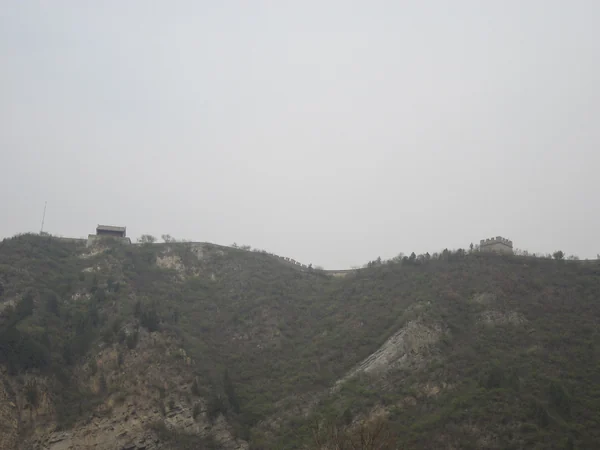
After unifying rival states in 221 BCE, Qin Shi Huang ordered selected northern fortifications linked, extended or reorganized. This is the source of the popular statement that the first emperor “built the Great Wall,” but much of the work reused earlier defenses. The surviving Qin system was mainly earth and stone, not the brick wall seen around Beijing.
The Han dynasty built and maintained frontier works farther west to support defense and communication along the Hexi Corridor. Northern Wei, Northern Qi, Northern Zhou, Sui, Jin and other regimes also constructed or repaired walls in different regions. Each campaign responded to its own frontier and should not be added to a single uninterrupted building schedule. In the
Ming dynasty, extensive rebuilding and new construction from the fourteenth to seventeenth centuries produced many of the masonry walls, passes and towers most visitors recognize today. The dedicated
Ming Great Wall history shows how defense evolved beyond the wall body.
Period-by-period construction therefore continued, stopped, shifted and resumed. Some lines became internal boundaries after territory changed; others were abandoned or absorbed into new systems. The people involved included soldiers, conscripted laborers, skilled artisans, transport workers, local communities and, in some periods, people serving penal labor. The composition and organization were not identical across dynasties.
A useful timeline begins with regional walls before 221 BCE, then separates Qin unification, Han western expansion, northern-dynasty and Sui/Jin systems, and Ming rebuilding. The
Warring States Great Wall article provides the crucial pre-Qin chapter.
UNESCO inscribed the Great Wall as a World Heritage property in 1987. That designation concerns the multi-period defense system and its surviving components; it does not mean every visible section dates from one year or dynasty. When visiting, read the interpretation for that specific section and avoid transferring a Ming date or material description to a remote earthwork.