The story of Meng Jiangnu is one of China's best-known legends connected with the Great Wall . It expresses grief, loyalty and the human cost of compulsory labor. It should be read as folklore, not as a verified report of one event. The tale developed over many centuries, and details such as names, places and the length of the collapsed wall differ among regional and literary versions.
Many modern retellings place the story in the
Qin dynasty after China's unification in 221 BCE. In one popular version, neighboring Meng and Jiang families discover a baby girl associated with a gourd vine and raise her together, giving her the combined name Meng Jiangnu. This opening is part of the folktale tradition rather than evidence about Qin society. Readers who want the documented political setting should compare the
Qin Great Wall history guide.
As an adult, Meng Jiangnu meets a young man commonly called Fan Xiliang. In later versions he is hiding from officials who are conscripting laborers. Their meeting and marriage establish the story's central conflict: private family life is interrupted by the demands of the state.
The ruler is usually identified as Qin Shi Huang although the legend's earlier narrative ancestors were not originally a Qin Great Wall story. Fan is taken away soon after the marriage, leaving Meng Jiangnu without reliable news. That separation—not a factual biography—is the emotional foundation of the tale.
Meng Jiangnu travels north carrying winter clothes for her husband. On reaching the frontier, she learns that he has died. Her mourning becomes so intense that a section of wall collapses, revealing his remains. This supernatural scene gives the legend its enduring image. Claims that hundreds of kilometres collapsed or that one exact modern city was the event site are not historically verifiable and should not be repeated as fact.
Some versions add a confrontation with the emperor. Meng Jiangnu agrees to demands only after securing a proper funeral for Fan, then escapes the ruler by entering the sea. Other versions end differently. These variations show how oral storytelling adapts a shared theme rather than preserving a single eyewitness record. The broader
Great Wall history overview helps separate archaeological chronology from later cultural memory.
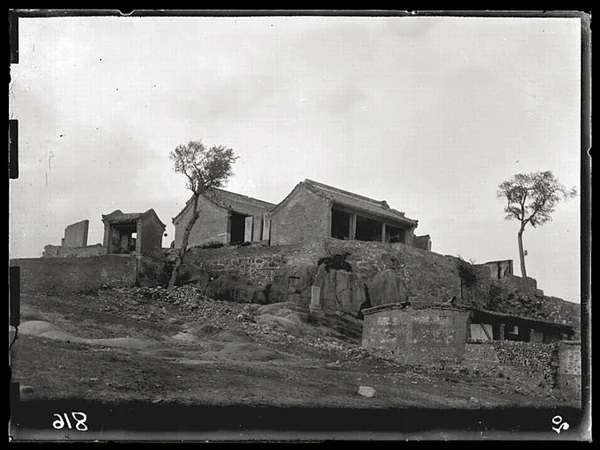
Temples and memorial traditions associated with Meng Jiangnu can be found in more than one place; the best-known complex is near Shanhaiguan in Hebei. Displays and local narratives may emphasize different versions. Check current access locally and treat inscriptions, opera, songs and paintings as evidence of the legend's cultural afterlife, not proof that every scene occurred there.
The story remains meaningful because it shifts attention from emperors and fortifications to ordinary people affected by war and labor obligations. It does not prove that every Great Wall builder suffered the same fate, nor does it explain every dynasty's construction system. For the military reasons behind different walls, continue to
why the Great Wall was built. Read together, the historical and folkloric pages show two different kinds of truth: one reconstructs events from evidence; the other preserves how generations understood grief, authority and remembrance.