Your China & Yunnan Travel Experts


Reviewed August 28, 2026. Planning China with children is a sequence of decisions, not a longer adult itinerary with a playground added. Start with passports, school dates, health and mobility needs; choose two or three city hubs; then reserve identity-linked transport and major attractions. This guide explains the trade-offs and the checks that must be repeated close to departure. First-time parents should also read what to know before going to China with kids before paying non-refundable costs.
Use this planning order:
China spans several climate zones, so there is no single best month for every family. Beijing can be cold and dry while Guangzhou is mild; Shanghai can be humid while high-altitude Yunnan changes quickly. Compare dated city forecasts, air-quality information and attraction notices for the actual route. Spring and autumn often reduce temperature stress, but they are not guarantees of clear weather or light crowds.
School breaks may be the only workable window. If traveling in summer, move exposed sites to the morning, place an indoor recovery block after lunch and keep one rain plan. For winter, shorten outdoor sessions and verify heating, road and cableway operations. Never buy a route solely because an old article calls a month ‘best.'
Pressure periods to check before booking:
Decision rule:
Fix the school calendar first, compare two climate-compatible routes, then price flexible transport and hotels. If the family must travel in a peak period, reserve identity-linked tickets early, avoid same-day intercity connections and schedule one lower-demand neighborhood or park day.

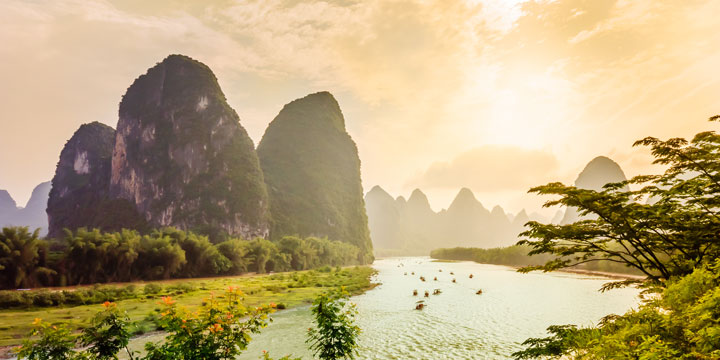
Family boat journey through the karst scenery of the Li River in Guilin
 Weather and crowd decisions should be based on dated official notices for each city and attraction , checked again shortly before the visit.
For a first trip, two or three hubs usually produce more usable family time than five cities connected by repeated packing. Count hotel-to-hotel travel, not only train or flight time: checkout, station security, boarding, arrival and the next check-in can consume much of a day. The examples below explain what each hub contributes and when it is a poor fit.
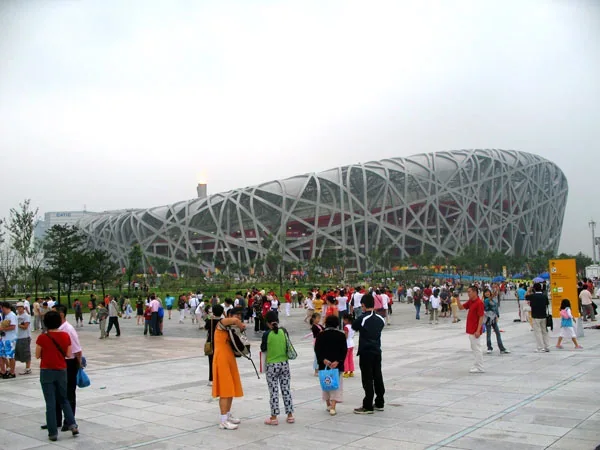
Beijing — history and large-scale monuments Beijing suits school-age children who enjoy stories about emperors, architecture and modern Olympic sites. The Great Wall is a separate weather-sensitive excursion; the Forbidden City requires an edited route and advance identity-based planning. Younger children need a park or hotel-rest block after a palace morning.
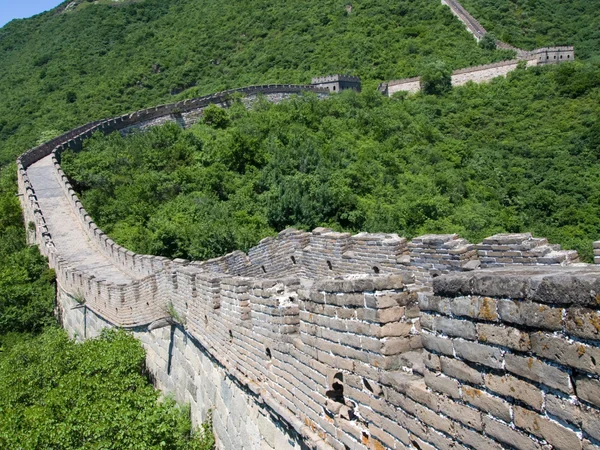
Family visitors walking on a restored Great Wall section at Mutianyu, Beijing
Best seasonal fit: mild-weather months, with heat, wind, rain and holiday crowds rechecked for the chosen dates.
Good family choices: a short Mutianyu section, an edited Forbidden City route, Temple of Heaven park life, the Summer Palace lakeshore or one Olympic-area stop—not all in one day.
Shanghai — urban contrast and easy indoor backups Shanghai works well as an arrival or departure hub because families can alternate the Bund and historic neighborhoods with museums, an aquarium or other indoor stops. Theme parks need a dedicated day and dated reservations; they should not replace the city's local history, riverfront and community life.

Shanghai skyline and Huangpu River after dark
Best seasonal fit: spring or autumn for walking, while summer heat, rain and typhoon-related disruption require flexible outdoor plans.
Good family choices: the Bund at a quiet hour, a short Yuyuan-area history walk, Shanghai Museum or Natural History Museum, one Lujiazui attraction, and a separate theme-park day only if it matches the child.
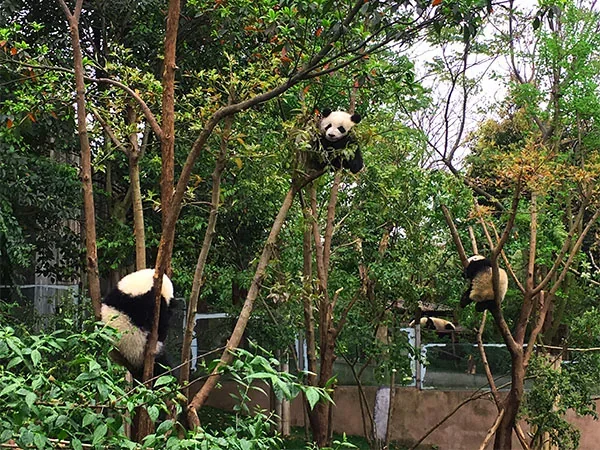
Chengdu — panda conservation context and slower city rhythm Chengdu can anchor a calmer family stop. Visit a recognized panda base early, observe quietly and explain breeding and habitat conservation instead of promising close contact. Add a park, museum, teahouse observation or food lesson only after confirming allergens and the child's tolerance for spice and noise.

Giant pandas resting in a managed habitat in Chengdu
Best seasonal fit: milder spring and autumn periods, with rain, humidity and current panda-base entry rules checked for the date.
Good family choices: one panda base, People's Park, a carefully selected museum or a supervised cooking activity with ingredients and allergens confirmed in advance.
Hong Kong — compact transport, harbor geography and resort options Hong Kong offers efficient public transport and a clear mix of harbor, hill, beach and theme-park experiences. Hills, humidity and long station connections still affect young walkers. Check entry requirements separately from mainland China and keep weather alternatives when planning the Peak, ferries or outdoor rides.
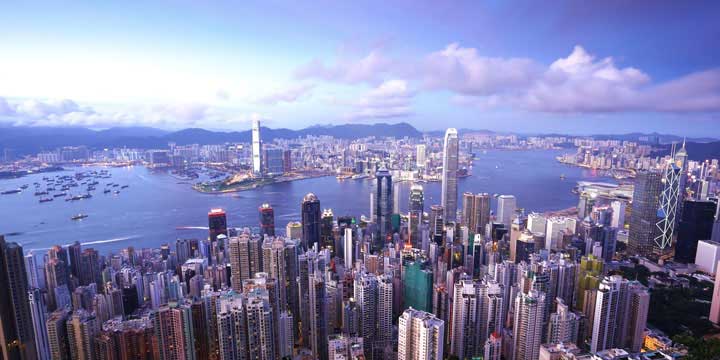
Victoria Harbour between Hong Kong Island and Kowloon
Best seasonal fit: cooler, drier months for walking; tropical storms, heat and seasonal marine conditions must be monitored.
Good family choices: a Star Ferry crossing, a short harbor walk, the Peak when visibility is useful, a beach with lifeguard information, or one full resort day.
Guilin and Yangshuo — karst landscape and measured outdoor activity Guilin is strongest when the family wants scenery rather than another large city. River cruises, bamboo-raft-style activities and cycling are weather-, water-level- and age-dependent. Verify the operator, life jacket, boarding access and route instead of assuming every online ‘Li River' experience is the same.
Family cycling landscape beside the Yulong River near Yangshuo
Best seasonal fit: comfortable walking and river conditions vary; compare rainfall, heat and water-operation notices for the exact week.
Good family choices: a licensed Li River cruise, Reed Flute Cave, a short rural walk, or age-appropriate cycling on a checked route with helmets and traffic awareness.
Xi'an — history through objects, walls and food Xi'an gives older children a clear historical sequence: the Qin imperial project at the Terracotta Warriors, Tang-era Buddhist and Silk Road connections, and the Ming city wall. Do the Lintong museum complex on its own day; use a second day for the museum, pagoda or a short wall section rather than combining every landmark.
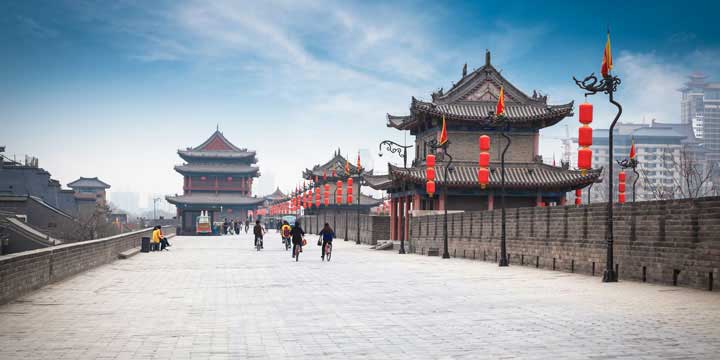
Visitors walking and cycling on the broad top of Xi'an City Wall
Best seasonal fit: mild months, while summer exposure, winter cold and slippery stone after rain require a walking alternative.
Good family choices: Terracotta Warriors with museum context, Big Wild Goose Pagoda precinct, Shaanxi History Museum or a short city-wall segment; Mount Huashan is not a default young-child add-on.
Guangzhou — Greater Bay Area food, city parks and family resorts Guangzhou is useful for families already entering through southern China or prioritizing Chimelong. A zoo, amusement park, water park and circus are different full-day products with separate rules; choose one instead of describing the whole resort as a single attraction. Balance it with a city park, heritage street or museum.
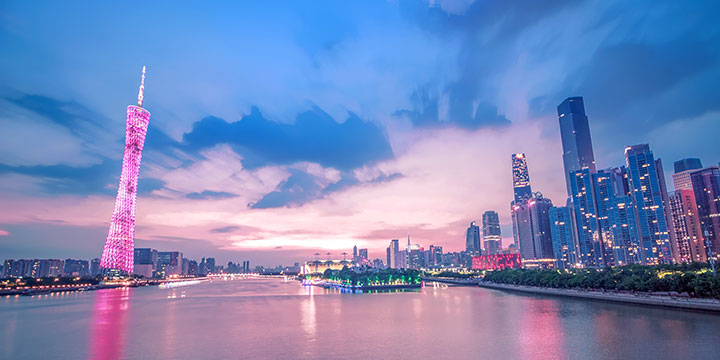
Canton Tower and Guangzhou skyline beside the Pearl River
Best seasonal fit: cooler months for urban walking; summer visits need heat, thunderstorm and water-park operation checks.
Good family choices: one Chimelong venue matched to age and height, Canton Tower if visibility is good, Guangdong Museum with current reservations, or a shaded neighborhood walk.
Harbin — a winter-specific route requiring serious clothing and contingency planning Harbin can be memorable for families deliberately prepared for severe cold. Ice-and-snow venues are seasonal constructions with changing dates, surfaces and opening conditions. Layer clothing, protect hands and feet, limit outdoor blocks and keep warm indoor recovery. Animal parks should be judged separately for welfare and visitor behavior, not treated as automatic inclusions.
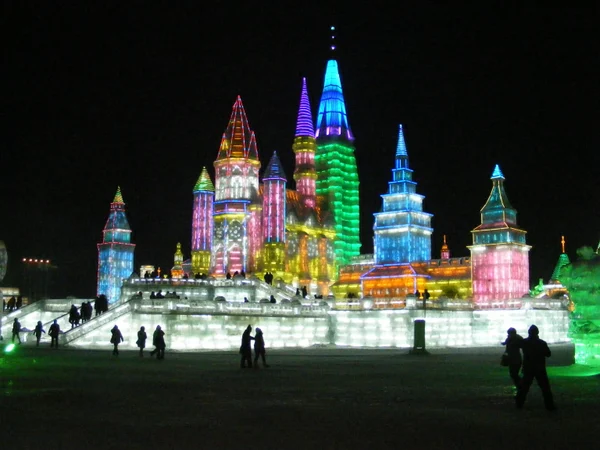
Visitors among illuminated ice structures at Harbin Ice and Snow World
Best seasonal fit: the operating winter festival period, confirmed on official channels rather than assumed from a fixed calendar date.
Good family choices: Ice and Snow World with strict cold limits, a daytime snow venue, an indoor museum or a supervised beginner snow activity with equipment and insurance terms checked.
A useful family activity has a clear purpose, a safe exit and enough unstructured time. Food is often the easiest cultural bridge, but allergy language, shared oil and spice should be planned first; use the China eating guide for families with kids to prepare a restaurant card and backup meal.
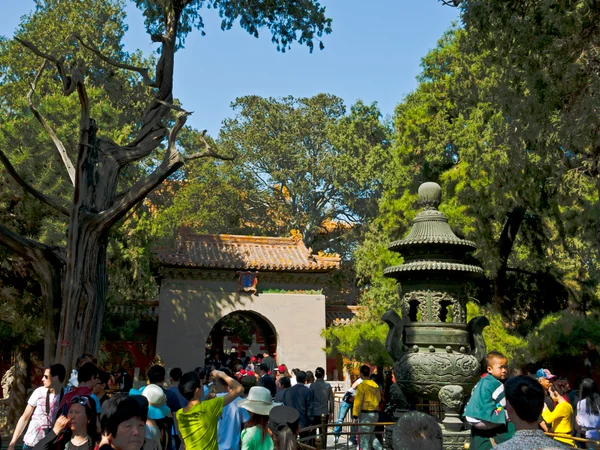
Visitors near a gateway in the Imperial Garden of Beijing's Forbidden City
 Treat workshops and animal venues as learning experiences, not guaranteed contact or sales opportunities. Ask who teaches, how long it lasts, which materials or animals are involved, whether photography is allowed, and how the child can opt out. If the child is tired, frightened or overstimulated, leaving early is a successful safety decision rather than a failed visit.
Use the passport and visa or entry permission applicable to each traveler, including children, and verify requirements with the relevant authority or carrier. Names and document numbers on air, rail and attraction bookings must match the document carried. Keep encrypted digital copies and a separate emergency record, but expect the original passport to be required for identity-linked services.
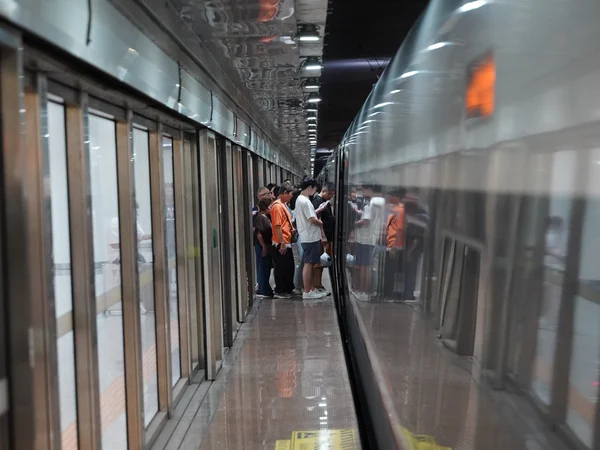
For high-speed rail, the official 12306 channel is the reference point; station security, document checks and boarding time still apply. Choose seats and luggage deliberately—the China high-speed train cars and seats guide explains carriage layout and practical family trade-offs. Avoid a flight or long train immediately after an intercontinental arrival.
Documents and medical plan: carry passports, booking records, insurance contacts, prescriptions and a concise health summary for each child. Keep essential medicine in original labeled packaging and hand luggage; ask a clinician about destination- and child-specific needs before travel.
Hydration: use refillable bottles where safe drinking water is available and keep sealed water for transfers or uncertain refill points. Do not ration water to reduce toilet stops; plan toilet access instead, especially in heat.
Food backup: pack permitted, familiar snacks for long queues, delayed trains and children with restricted diets. Check carrier and border rules before packing fresh food, meat, dairy or large liquids.
Day bag: use a comfortable hands-free bag with wipes, tissues, sanitizer, spare bag, compact first-aid items and one complete clothing change for younger children. Toilet paper availability varies by facility, so a small tissue pack is sensible; avoid repeating the inaccurate claim that Chinese toilets never provide paper.
Clothing system: pack layers by destination, not a generic China list, and include breathable, quick-drying pieces for humid routes. Keep a spare top and socks accessible on day trips; wet or overheated children lose energy quickly.
Rain protection: a light rain jacket is often safer than an umbrella on steep steps, crowded paths or in strong wind. Use waterproof pouches for passports and medication, and keep an indoor alternative rather than forcing an outdoor ticket in a storm.
Sun and air: carry hats, child-appropriate sunscreen and sunglasses, and monitor heat and local air-quality advice for strenuous outdoor plans. Move activity earlier, shorten it or choose an indoor day when conditions exceed the family's limits.
Power and communication: bring compatible charging equipment, a power bank within airline limits, offline maps and the hotel address in Chinese. Ask permission before photographing people, children, ceremonies or private spaces; memories do not require intrusive images.
Comfort object: one familiar toy, book, headphones or sleep item can make transfers and unfamiliar rooms easier. Label it discreetly and keep a substitute photo in case it is lost.
 Finish packing with a document-and-delay test : can the family manage one unexpected night without checked luggage?
Safety routine: Agree on supervision roles before entering a station, market, wall, boat or theme park.
Eating routine: Explain allergies or religious restrictions before ordering and ask about hidden ingredients and shared preparation.
Hotel routine: Confirm occupancy, bed type and child policy in writing before paying.
Money and connectivity: Prepare more than one lawful payment method and a small contingency rather than assuming every foreign card, wallet or cash note will work everywhere.
 End each day with a five-minute family review : check feet, hydration, medication, tomorrow's weather, tickets, passports and the one activity everyone most wants to keep.
| Chinese | Pinyin | English |
| 你好 | Nǐ hǎo | Hello |
| 请帮帮我 | Qǐng bāng bāng wǒ | Please help me |
| 谢谢 | Xièxie | Thank you |
| 请问洗手间在哪里? | Qǐngwèn xǐshǒujiān zài nǎlǐ? | Excuse me, where is the restroom? |
| 我对___过敏 | Wǒ duì ___ guòmǐn | I am allergic to ___ |
| 我的孩子走失了 | Wǒ de háizi zǒushī le | My child is missing |
| 请帮我叫医生 | Qǐng bāng wǒ jiào yīshēng | Please help me call a doctor |
 Save these phrases with the child's name, hotel address and allergy details . Machine translation can help, but an offline human-readable card is faster when the phone has no signal or battery.
Days 1–3: arrive in Beijing, protect the first afternoon, then use one palace-or-temple day and one Great Wall day. Days 4–5: take a daytime high-speed train to Xi'an and reserve the Terracotta Warriors for a separate morning or day.
Days 6–9: choose one contrasting hub—Shanghai for urban variety, Chengdu for panda conservation and a slower rhythm, or Guilin for scenery. Day 10: keep a departure buffer. This framework is a capacity test, not a product promise; replace a city rather than adding one when the family needs more rest.
Before booking, require a written day-by-day scope that identifies included tickets, transport, meals, guide hours, hotel occupancy, child pricing, cancellation and the responsible operator. Ask how passport data is protected, how an attraction closure is handled and who can make emergency decisions. A tailored route should remove unsuitable stops, not merely add premium labels. Compare the final proposal against the family's sleep, meal, health and walking limits. A successful China family trip leaves children with questions and stories, not a count of how many attractions they endured.
From $ 509
From on request
From on request
Editorial accountability
Hu Lei, CEO. The named owner is responsible for travel-planning accuracy and escalation of time-sensitive checks.
Yuntian Travel (Yunnan) Group is identified in its corporate profile as a licensed professional inbound travel service provider based in Kunming, China. Registration and travel-service documents can be requested before booking.
Page-specific references where cited, official destination, transport and entry notices, YUNSKY route-planning records, and direct provider confirmation before a booking is finalized.
Content is reviewed when rules, transport, access, pricing or route conditions change. Final availability and operating details are reconfirmed for each traveler’s dates.
Quality review: Page updated:
