Your China & Yunnan Travel Experts

The Yunnan Water Splashing Festival is associated with Dai New Year, particularly in Xishuangbanna. Water can express blessing and renewal within the celebration, but the experience is broader than a large public water fight. Distinguish a local observance, a city event and a staged visitor activity before deciding what to attend.
Dai New Year is commonly associated with April. The actual dates, venue and visitor program need confirmation for the locality and year; this guide does not publish an unverified upcoming schedule. Begin with the Xishuangbanna destination overview and the choices below.
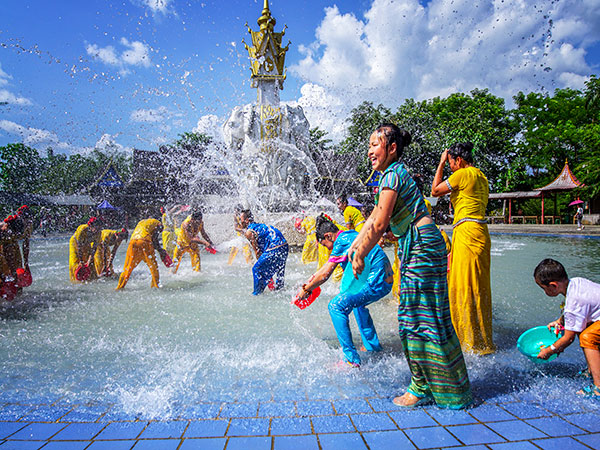
Dai communities have their own local contexts and practices. A general travel account cannot establish that every community marks the occasion in the same way. Ask a knowledgeable local host or guide which tradition and setting you are visiting.
Water-related participation can be one visible part of a wider period of social, cultural and religious activity. Do not assume that everything happening in a festival district is a performance for visitors or that every person present wants to be splashed.
The Yunnan communities guide explains why a celebration should not be used as a complete picture of everyday life. Consent and context matter even in a lively public setting.
| Format | Reason to choose it | Question before attending |
|---|---|---|
| A public city celebration | A shared event with a broad program and many participants | Where is participation allowed, and what are the crowd and return arrangements? |
| An appropriate local observance | A more specific community context when visitors are welcome | Who has agreed to host or permit the visit, and what may you observe? |
| A staged visitor-park activity | A scheduled demonstration or participation format | Is this a regular show rather than the annual New Year program? |
A staged activity is not inherently without value. Its value comes from knowing what it is, what is explained and how it fits your interests. The problem is confusing it with an annual event or presenting one scene as universal Dai life.
Request the year, locality, venue, start and finish dates and the specific activity you want to attend. Ask what source supports the information and whether the program is confirmed or still provisional. An old social photograph does not establish a future schedule.
If your trip depends on one activity, clarify what happens if it is changed or canceled. Build the itinerary around a meaningful Xishuangbanna stay rather than a single uncertain hour. The festival comparison guide helps distinguish broad calendar context from an actual event listing.
Use the regional weather guide for southern Yunnan context, then check the forecast for your date. An April association does not promise the same weather at every event.
Join water activities only where participation is invited and follow the organizer's instructions. Do not target people who are working, passing through, worshipping or clearly declining. Keep cameras and personal belongings appropriate to the environment rather than assume others will protect them.
For temple or religious components, ask about clothing, entry and photography. Water-event behavior is not automatically appropriate inside a religious space. Observe the rules of that particular setting and avoid interrupting worship.
Ask before close portraits and respect a refusal. Traditional dress does not make someone a public photo subject. The language guide provides simple ways to ask, but a guide may be useful when the context requires more explanation.
Arrive early enough to settle in before the activity you most want to attend. Keep the event day focused, with a meal beforehand and a defined return route. A flight arrival followed immediately by a crowded celebration creates avoidable timing and luggage complications.
Choose accommodation for the actual program location and transport access. Confirm where vehicles can collect you after the event, particularly if roads or public spaces have special arrangements. Do not assume the normal hotel-door pickup remains possible.
On another day, choose a different regional interest or a more relaxed outing. A coffee or tea interest should be added only if the specific visit and route fit; a producing-region name does not make every farm a nearby attraction.
Compare dated accommodation and transport offers rather than assume one standard festival price. Ask whether the proposed activity has an admission or participation charge and what a guide or arranged visit includes. Use the budget guide to keep those components visible.
For meals, use the regional food guide and discuss any Muslim travel needs along the actual day. A crowded program can make a vague “find lunch nearby” plan less practical.
If the annual program cannot be confirmed for your dates, choose a normal regional itinerary or an accurately described visitor activity. Do not label the substitute as the festival itself.
No. Water-related activity is one visible part of a wider Dai New Year context. Local social, cultural and religious practices should be understood in their specific setting.
It is commonly associated with April, but exact local dates and programs need confirmation for the year. This guide does not announce an unverified upcoming schedule.
No. It is a programmed visitor activity and should be described that way. The annual observance has its own calendar and local context.
No. Participate only where invited and respect people who decline or are not taking part. Follow the event's boundaries and instructions.
Ask about the specific venue and activity. Do not assume a festive occasion permits photography of worshippers, interiors or private observances.
Give your dates, group size, preferred participation level and whether cultural interpretation or a public event matters most. Ask for a locally confirmed program and a useful alternative.
Use the Yunnan planning guide to allocate the regional nights and compare route ideas for the rest of the journey. To investigate Dai New Year, request a Xishuangbanna stay around a confirmed celebration.
Editorial accountability
Hu Lei, CEO. The named owner is responsible for travel-planning accuracy and escalation of time-sensitive checks.
Yuntian Travel (Yunnan) Group is identified in its corporate profile as a licensed professional inbound travel service provider based in Kunming, China. Registration and travel-service documents can be requested before booking.
Page-specific references where cited, official destination, transport and entry notices, YUNSKY route-planning records, and direct provider confirmation before a booking is finalized.
Content is reviewed when rules, transport, access, pricing or route conditions change. Final availability and operating details are reconfirmed for each traveler’s dates.
Quality review: Page updated: