Your China & Yunnan Travel Experts



How to read a long history responsibly
A dynasty list is useful for orientation, but it can hide periods when several states existed at once, frontiers shifted or local communities followed different paths. Archaeology, inscriptions, transmitted texts and later official histories do not always answer the same questions. Museum labels therefore distinguish excavated evidence from traditional accounts, and good travelers should do the same. When a site claims a very early origin, ask whether the surviving building is ancient, a later reconstruction, or a modern memorial to an older tradition.
Travel also compresses time. A single city may contain a Han tomb, a Tang-style temple rebuilt in the Ming, a Qing commercial street and a twentieth-century museum. Reading those layers separately produces a more accurate experience than assigning one dynasty to the whole destination.
The Xia is traditionally dated to roughly 2070–1600 BCE and is described in later texts as China's earliest dynasty. Archaeologists continue to debate how particular Bronze Age sites relate to the dynasty named in those records. What is clear is that settlements in the Central Plains were developing more complex agriculture, craft production and political organization. This distinction between traditional chronology and archaeological evidence is important when reading any concise timeline of early China.
Early-state evidence and interpretation
Large Bronze Age settlements, elite burials, workshops and regional exchange demonstrate increasingly complex societies before the securely documented Shang capitals. The Erlitou site is central to discussion because its date and scale overlap with the period later texts associate with Xia, yet the archaeological culture and the named dynasty are not automatically identical. Visitors should look for what an exhibition can actually demonstrate—urban planning, craft specialization, food remains or social hierarchy—before accepting a neat founder story.
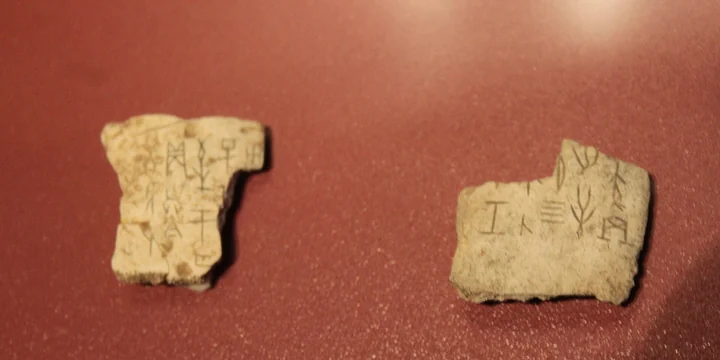
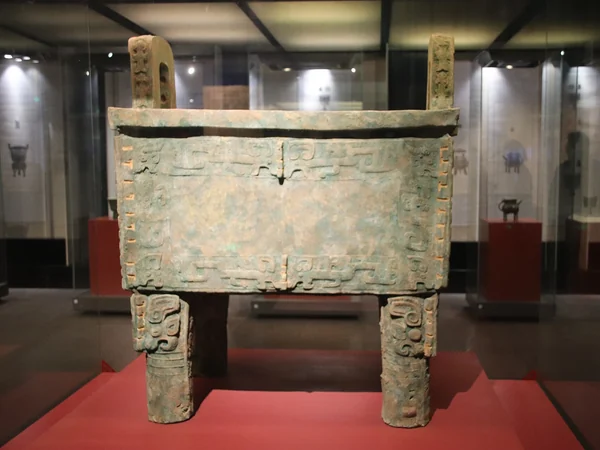
Shang: The Shang dynasty, conventionally dated to about 1600–1046 BCE, left the earliest substantial body of Chinese writing. Divination records carved on turtle shells and animal bones identify rulers, rituals, warfare and harvest concerns. Elite bronze casting reached an exceptional technical level, as surviving ritual vessels demonstrate. The late Shang capital at Anyang is especially important because inscriptions and excavated remains can be studied together, giving historians a firmer evidence base than for the preceding period.
Why Shang sources are unusually valuable
Oracle-bone records were produced for royal divination, so they illuminate court concerns rather than every part of society. They mention sacrifices, weather, childbirth, warfare and harvests, while tombs and workshops reveal craft systems and unequal access to resources. Bronze vessels were not merely decorative objects; their inscriptions and ritual settings help historians reconstruct kinship and political authority. At Anyang, the relationship between writing, architecture and excavated burials makes the period tangible without pretending that one capital represents the entire Shang realm.
Zhou: The Zhou dynasty began around 1046 BCE and lasted until 256 BCE. Historians divide it into Western Zhou and Eastern Zhou; the latter includes the Spring and Autumn and Warring States periods. Political authority became increasingly fragmented, yet the era produced influential debates about ethics, government and social order. Confucian, Daoist, Mohist and Legalist ideas all took shape in this environment, while states introduced administrative and military reforms that prepared the ground for later unification.
Political fragmentation and intellectual change
The Zhou court justified its conquest through the idea later called the Mandate of Heaven, which linked legitimate rule to moral order and became influential in later dynastic histories. During the Eastern Zhou, powerful states competed through diplomacy, taxation, irrigation, infantry armies and bureaucratic reform. Confucius, Mozi, Mencius, Zhuangzi and Legalist thinkers responded to this unsettled world from different positions. Their writings should not be merged into one “ancient Chinese philosophy”; disagreement is one of the period's defining features.
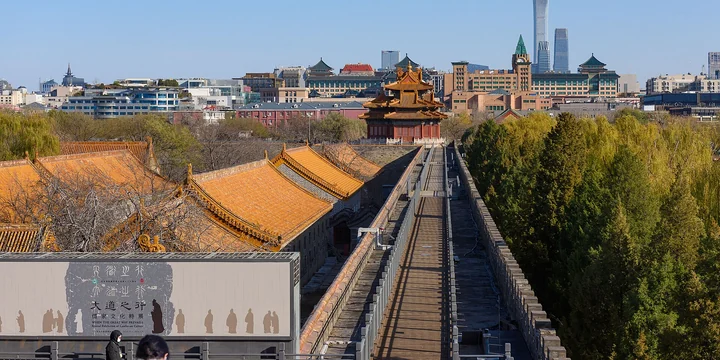
The imperial era began with Qin unification in 221 BCE and ended when the Qing dynasty fell in 1912. Across more than two millennia, courts expanded or contracted territory, rebuilt institutions, collected taxes and managed transport networks, while local societies retained strong regional identities. Trade also connected China to Central Asia and maritime routes; the broader China Silk Road story is therefore part of political, economic and cultural history rather than a single road or one dynasty.
Continuity did not mean uniformity
Later dynasties inherited institutions from earlier regimes but repeatedly rebuilt them. Examination systems, land taxes, military colonies, postal networks and frontier administration changed across time. Periods of unity alternated with division, and north–south migration reshaped language, agriculture and cities. Maritime exchange expanded in some eras while overland routes mattered more in others. For travelers, this means a palace, canal, city wall or Buddhist cave should be connected to its particular patron, economy and landscape rather than used as proof that imperial China was unchanged for two thousand years.
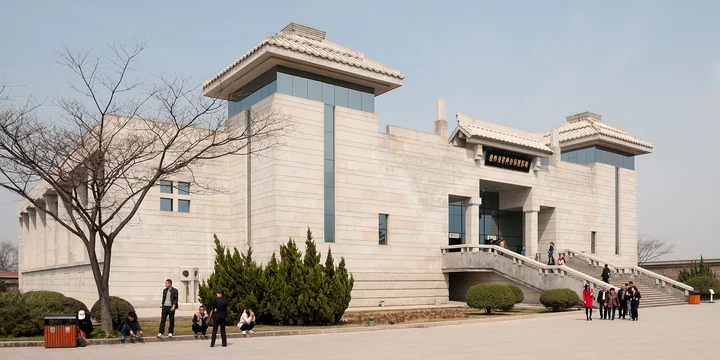
Qin: In 221 BCE, the state of Qin defeated its rivals and established the first unified imperial dynasty. The court standardized measures, currency and writing practices, connected defensive walls and organized commanderies under central authority. Qin rule was brief, ending in 206 BCE, but its administrative model influenced later dynasties. Near Xi'an, the Terracotta Army forms part of the vast mausoleum complex built for the First Emperor and provides unusually vivid material evidence of the period.
Han: The Han dynasty ruled from 206 BCE to 220 CE, interrupted by the short Xin dynasty. Its governments consolidated the imperial system, expanded frontier contacts and adopted Confucian learning as an important basis for official education. Overland exchange reached far into Central Asia, while technologies, crops and ideas moved in several directions. The name “Han” later became closely associated with China's majority ethnic group, although the empire itself contained varied communities and border regions.
Three Kingdoms, Jin, Sui and Tang: After the Han collapsed, the rival states of Wei, Shu and Wu dominated the Three Kingdoms period from 220 to 280. The Jin reunified the realm briefly, followed by further division. The Sui restored unity in 589 and expanded the canal system, but fell in 618. The Tang dynasty then governed until 907, presiding over an influential cosmopolitan age in which Chang'an became a major political and cultural center and long-distance exchange flourished.
From division to the Tang capital
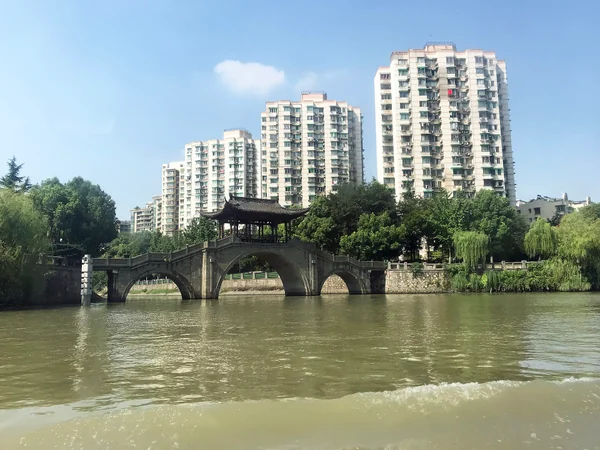
Political division after the Han encouraged major movements of people and the growth of regional courts. Buddhism expanded through translation, pilgrimage and patronage, while art and burial practice absorbed influences from across Eurasia. The Sui reunified much of the realm and strengthened the Grand Canal before collapsing quickly. Tang Chang'an then became a planned capital connected to Central Asian diplomacy and trade. Its cosmopolitan character is visible in tomb art, ceramics, religious sites and surviving objects, though the modern city of Xi'an has developed far beyond the ancient walls.
Song: The Song dynasty ruled from 960 to 1279, first from Kaifeng and later from Hangzhou. Commercial growth, urban life, printing, scholarship and technological innovation marked the period. Paper money appeared on a significant scale, maritime trade expanded and an educated civil bureaucracy played a central role in government. Although the Song faced powerful neighboring states and eventually lost the north, its economic and cultural achievements had lasting influence across China and East Asia.
Urban and commercial transformation
The Song period is important not only for inventions but for systems that connected production, markets and knowledge. Printed books circulated more widely, examination culture expanded and cities supported specialized shops, entertainment and long-distance commerce. Improved rice varieties contributed to agricultural growth in the south, while ceramics and maritime trade linked ports to wider Asian networks. Paintings and city scrolls are rich sources, but they combine observation with artistic convention; museums should be used to compare the image with excavated goods and written records.
Yuan: Kublai Khan proclaimed the Yuan dynasty in 1271, and Mongol forces completed the conquest of the Southern Song in 1279. The court governed a vast and diverse realm from Dadu, present-day Beijing, and maintained connections across the wider Mongol world. Movement of merchants, envoys and specialists increased, but society was also shaped by hierarchy, taxation and regional unrest. The dynasty ended in 1368 when Ming forces took the capital.
Ming: The Ming dynasty ruled from 1368 to 1644. Its founder, the Hongwu Emperor, rebuilt central institutions after the Yuan. Later emperors moved the capital to Beijing, constructed much of the Forbidden City and sponsored the maritime voyages associated with Zheng He. Agricultural production, craft industries and commercial networks expanded, while silver became increasingly important to taxation and exchange. Fiscal strain, climate pressures, rebellion and conflict on the northern frontier contributed to the dynasty's fall.
Qing: The Qing dynasty, established by the Manchus, ruled China from 1644 until 1912. Under the Kangxi, Yongzheng and Qianlong emperors, the empire expanded and administered a large multi-ethnic territory. The nineteenth century brought internal rebellions, foreign wars, unequal treaties and difficult reform efforts. The 1911 Revolution ended imperial rule, and the last emperor abdicated in 1912. Qing palaces, gardens, temples and archives remain central sources for understanding late imperial China.
Reading Qing heritage on the ground
Qing rule cannot be reduced to palace life in Beijing. Banner institutions, frontier administration, multilingual scholarship, regional trade and local government all shaped the empire. The nineteenth century brought the Opium Wars, the Taiping and other rebellions, treaty ports, self-strengthening projects and growing foreign pressure. When visiting a treaty-port district or an imperial garden, compare who built it, who used it and which parts survived later conflict. Restoration dates matter, especially where fire, war or twentieth-century redevelopment altered the original fabric.
Republic of China: The Republic of China was founded in 1912 after the Qing collapse. The following decades included competing governments, regional military power, political movements, Japanese invasion and a long civil war. Sun Yat-sen is remembered as a founding revolutionary figure, while Yuan Shikai, Chiang Kai-shek and many other leaders shaped different stages of the republic. The war against Japan from 1937 to 1945 caused immense destruction and displacement before civil conflict resumed.
A period with several overlapping histories
The republican era included efforts to build new legal, educational and industrial institutions alongside warlord conflict and uneven regional control. The Nationalist government established its capital in Nanjing, the Chinese Communist movement developed through changing rural and urban strategies, and Japanese invasion transformed daily life across occupied and battlefront regions. Museums may emphasize military, political, social or local histories differently. Visitors should compare dates and actors carefully, particularly when a memorial uses emotionally powerful objects or survivor testimony.
People's Republic of China: The People's Republic of China was founded in 1949, with Beijing as its capital. Its history includes land and industrial campaigns, the social upheaval of the Cultural Revolution, and major economic reforms beginning in the late 1970s. Reform and opening accelerated urbanization, manufacturing, infrastructure and international exchange. Contemporary China is best understood by separating these distinct phases and consulting current statistics alongside historical accounts, because rapid change has affected regions and generations differently.
Approaching modern history during a trip
Post-1949 history includes rapid industrialization, collectivization, political campaigns, famine, the Cultural Revolution, reform and opening, migration to cities and the growth of a globally connected economy. These processes affected families and regions in different ways. Former factories, planned neighborhoods, rural museums and new infrastructure can all be historical evidence, not simply background to older monuments. Because many sites address living memory, travelers should read labels closely, avoid casual political generalizations and recognize that personal experiences may differ from a national summary.
A balanced history itinerary pairs major monuments with archaeological museums, local collections and ordinary urban landscapes. It also leaves enough time to understand what was rebuilt, moved or reinterpreted after the period being presented.
|
Dynasty
|
Time
|
|
Xia Dynasty
|
2,100 B.C. – 1,600 B.C.
|
|
Shang Dynasty
|
1,600 B.C. – 1,100 B.C.
|
|
Zhou Dynasty
|
1,100 B.C. – 256 B.C.
|
|
Spring and Autumn Period and Warring States Period
|
770 B.C. – 221 B.C.
|
|
Qin Dynasty
|
221 B.C. – 206 B.C.
|
|
Han Dynasty
|
202 B.C– 280 A.D.
|
|
Three Kingdoms Period
|
220 A. D. – 280 A.D.
|
|
Jin Dynasty
|
265 A.D. – 420 A.D.
|
|
Sui Dynasty
|
581 A.D. – 618 A.D.
|
|
Tang Dynasty
|
618 A.D. – 907 A.D.
|
|
Song Dynasty
|
960 A.D. – 1279 A.D.
|
|
Yuan Dynasty
|
1271 A.D. – 1368 A.D.
|
|
Ming Dynasty
|
1368 A.D. – 1644 A.D.
|
|
Qing Dynasty
|
1644 A.D. – 1911 A.D.
|
|
Morden time
|
1911 A.D. – 1949 A.D.
|
|
People's Republic of China
|
1949 A.D. – Present
|
Editorial accountability
Hu Lei, CEO. The named owner is responsible for travel-planning accuracy and escalation of time-sensitive checks.
Yuntian Travel (Yunnan) Group is identified in its corporate profile as a licensed professional inbound travel service provider based in Kunming, China. Registration and travel-service documents can be requested before booking.
Page-specific references where cited, official destination, transport and entry notices, YUNSKY route-planning records, and direct provider confirmation before a booking is finalized.
Content is reviewed when rules, transport, access, pricing or route conditions change. Final availability and operating details are reconfirmed for each traveler’s dates.
Quality review: Page updated: