Your China & Yunnan Travel Experts



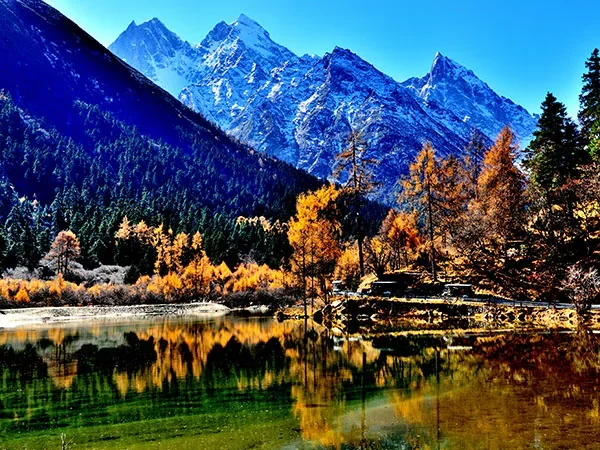
China's environmental conditions cannot be summarized by one image of clear skies or one report of haze. The country includes dense industrial regions, dry northern basins, humid coasts, high plateaus, forests and protected landscapes such as Jiuzhaigou. Air, water and landscape conditions vary by city, season and weather. Travelers need current local information, while long-term national reports provide context for wider trends.
Separate long-term environment from today's conditions
Environmental reporting answers different questions. Long-term emissions and water data show trends; a city monitor describes recent local conditions; a weather forecast explains wind, rain and temperature; an attraction notice tells the traveler whether a trail, boat or park is operating. None replaces the others. A national improvement can coexist with a poor local day, while one clear photograph does not prove that a region has no environmental pressure.
Build decisions at the scale of the itinerary. A multi-city trip may cross an industrial plain, humid river delta, mountain reserve and high plateau in one week. Air quality, pollen, ultraviolet exposure, heat, cold, flood risk and wildfire smoke can change between them. Check the exact destination and activity time rather than attaching a permanent “clean” or “polluted” label to an entire province.
Use reliable observations without creating panic
Visibility can be reduced by humidity, fog, dust or pollution, so the color of the sky is not a measurement. Use established monitoring and local public notices. Compare the pollutant, averaging period and health category because different indexes may use different scales. Travelers should respond to the applicable local guidance and personal health needs, not to an isolated screenshot with no date or location.

Air quality is measured with instruments, not by visibility or smell alone. Fine particles, ozone and other pollutants can change through the day as weather and emissions interact; mist, dust and humidity can also reduce visibility. Check a current local air-quality index together with the weather forecast, and pay attention to the pollutant and health guidance behind the headline number.
Understand the main air-quality signals
Fine particulate matter can penetrate deeply into the lungs, while larger particles, ozone, nitrogen dioxide and other pollutants have different sources and patterns. Particle levels may rise during stagnant winter weather, dust events, fires or heavy emissions. Ozone can be more important on sunny warm days even when the air looks clear. Wind and rain may improve conditions temporarily, but they do not describe the longer trend.
When readings or official alerts are unfavorable, reduce or reschedule strenuous outdoor activity, especially for children, older adults and people with respiratory or cardiovascular conditions. Choose an indoor museum, shorten an exposed walk and keep vehicle windows closed when advised. A well-fitting particulate respirator may reduce inhalation of particles, but it does not filter every gas and cannot compensate for unlimited exposure. Fit, authenticity and the user's ability to wear it safely matter.
Make health decisions conservatively
Travelers who use inhalers or other prescribed treatment should carry enough medicine and follow their clinical plan. New chest pain, severe breathing difficulty, confusion or other urgent symptoms require appropriate medical attention. This page supports itinerary planning; it cannot diagnose exposure or replace a qualified professional. Indoor air also varies, so accommodation with effective maintenance and a smoke-free room may matter more than a generic claim about a whole city.
When official alerts or local readings show poor conditions, consider shifting strenuous outdoor activity, choosing indoor attractions or adjusting the route. A well-fitting particulate respirator can reduce exposure to airborne particles when worn correctly, but it does not remove every risk or address all pollutants. Travelers with respiratory, cardiovascular or other health concerns should discuss an appropriate plan with a qualified clinician before the trip.
Prepare an exposure-reduction kit
Carry prescribed medicine, water, eye protection if useful, and a reliable particulate respirator for travelers who can wear one safely. Store masks clean and dry; a loose, damaged or counterfeit product may offer little benefit. Families should test fit and comfort before the travel day rather than during an alert.
Reduce exposure at the itinerary level. Replace a long run or steep climb with a shorter indoor visit, use a closed vehicle when advised and avoid waiting beside heavy traffic. Check indoor ventilation and smoke-free-room arrangements with the accommodation. If conditions persist, moving the outdoor activity to another day may be more effective than relying on equipment alone.
Environmental planning in China also addresses surface-water quality, groundwater, soil degradation, waste, biodiversity and industrial pollution. These issues differ by watershed and region and should not be projected onto every destination. Visitors can reduce their own impact by refilling water where safe, limiting disposable items, staying on marked paths and following reserve rules.
Water, soil, waste and biodiversity
Water pressure differs between northern basins, major rivers, lakes, coasts and highland watersheds. Treatment infrastructure, agricultural runoff, industrial history, drought and flooding all affect local conditions. Travelers should drink water from a source considered safe for visitors, follow destination guidance and avoid entering rivers or lakes where access, currents or water quality are uncertain. A clear mountain stream is not automatically safe to drink.
Soil erosion, desertification and land restoration are visible in some northern and western landscapes. Wetlands and forests may be under seasonal protection for migration, fire prevention or habitat recovery. Waste management also varies between cities and remote areas. Carry reusable items where practical, but respect security rules and local sorting systems. Never leave batteries, wipes or food packaging on a trail.
Nature tourism carries responsibilities
Protected areas are living ecosystems, not only scenic backgrounds. Stay on marked routes, keep distance from wildlife, avoid feeding animals and follow limits on fire, drones, noise and collection. Seasonal closures can protect breeding, vegetation or visitor safety. A closed path should not be bypassed for a photograph. Local communities may depend on the same water, grazing land or forest, so responsible travel includes respecting homes, farms, religious sites and working landscapes.
Choose a route that fits the group's walking ability and available time. Shuttle buses, stairs, boardwalks, cableways and high elevation can make a park demanding even when the map looks compact. Confirm accessible routes and toilets with the specific destination, and carry back everything brought into areas without waste services.

Satellite view of a winter haze episode over eastern China; a single event is not a permanent map of local air quality.
Read environmental images with a date and legend
A satellite image, colored map or city photograph captures a particular method and moment. Check what the colors measure, the time period, cloud cover and whether the scale is national or local. An image may illustrate transport of particles without proving ground-level exposure at every point. Use maps to identify questions, then confirm the destination with current monitoring and public guidance.
National and provincial monitoring shows why broad labels such as “polluted city” or “clean province” are too simple. Wind, rainfall, heating demand, dust events, traffic and industrial activity can all change conditions. Use a recent city-level reading for daily decisions, and compare several days when planning outdoor photography or mountain views.
Regional patterns are not permanent rankings
Northern winter heating, spring dust, coastal storms, basin stagnation and summer ozone can create different air-quality patterns. Rain may clean the air while increasing flood or landslide risk. A destination with generally good annual conditions can still have a poor episode, and a city with a pollution history can have excellent travel days.
Avoid building an itinerary from old “best and worst city” lists. Compare recent readings, the forecast and the planned activity. A museum day requires a different threshold from a strenuous mountain hike. Photographing a monitor reading with its date and location can help a sensitive traveler discuss the event later, but it should not be used to generalize about the entire region.
Variation also occurs within one city. A riverside park, dense business district, suburban valley and industrial edge may have different noise, shade, traffic and air movement. Choose accommodation and daily transport with the actual activities in mind rather than relying only on a city's general reputation.
Choose accommodation by micro-location
A hotel beside a major road, construction site or nightlife district may have different noise and air conditions from one near a park or quieter residential street. Higher price does not guarantee better ventilation, shade or sound insulation. Review the immediate map, room orientation, smoke-free policy, climate control and recent maintenance information.
Location also changes daily exposure. A central property can reduce long vehicle transfers, while a remote resort may create repeated road journeys. Travelers sensitive to heat, pollution or fatigue should balance room conditions with the distance to planned activities. Ask for a room away from smoking, renovation or heavy traffic when needed, but treat requests as unconfirmed until the property accepts them.

Chinese cities have expanded parks, greenways, restored waterways and constructed wetlands, although access and distribution remain uneven. These spaces support recreation, shade, storm-water management and habitat. Travelers interested in landscapes beyond the major city circuit can compare the China nature tours collection and evaluate how much transfer time each protected area requires.
Use urban green space thoughtfully
Parks and waterfronts can provide shade, exercise and a calmer way to understand a city, but facilities vary. Check opening hours, toilet access, lighting, step-free routes and whether bicycles or pets use the same path. Riverbanks may close during high water, and planted shade may be limited in a new district.
Visit at a time that fits local life without blocking exercise groups or photographing people without permission. Carry reusable water containers where refilling is considered safe, follow waste-sorting signs and avoid feeding park wildlife. Urban nature is shared public space, not an empty scenic set.

Check seasonal weather, short-range forecasts, air quality, wildfire or flood notices and park access before outdoor days. Keep a flexible indoor alternative and allow extra time after severe weather. Routes combining high mountains and valleys, such as the Zhangjiajie and Jiuzhaigou tour, require destination-by-destination packing rather than one “China climate” assumption.
A practical environmental decision sequence
Several weeks before travel, review the route's seasonal heat, cold, rainfall, altitude and storm exposure. A few days before each stop, check weather, air quality and local alerts. On the day, confirm the attraction, road, cruise, cableway or trail status. If conditions deteriorate, change the activity rather than trying to recover a prepaid plan at any cost.
Keep an indoor alternative for every exposed day. Museums, covered markets, cultural workshops and slower neighborhood visits can preserve the purpose of a trip when a mountain is closed or visibility is poor. Build transfer buffers after major rain, snow or wind events. Travel insurance terms should be understood before a disruption, including what evidence is required for a delay or closure.
Pack for the actual exposure
Use layers, sun protection, rain gear and footwear with secure grip. Carry water where permitted and replace fluids during heat. For high elevation, allow gradual acclimatization and avoid assuming that clear skies mean low risk; ultraviolet exposure and cold nights can be significant. For humid destinations, quick-drying clothing and rest breaks help. For winter pollution or dust, bring appropriate protection before reaching a place where supplies may be limited.
Travelers with asthma, heart disease, heat sensitivity, pregnancy, limited mobility or other relevant conditions should seek individualized advice and communicate needs to the operator. Environmental conditions change, so recheck rather than treating any city ranking or seasonal paragraph as permanent.
Editorial accountability
Hu Lei, CEO. The named owner is responsible for travel-planning accuracy and escalation of time-sensitive checks.
Yuntian Travel (Yunnan) Group is identified in its corporate profile as a licensed professional inbound travel service provider based in Kunming, China. Registration and travel-service documents can be requested before booking.
Page-specific references where cited, official destination, transport and entry notices, YUNSKY route-planning records, and direct provider confirmation before a booking is finalized.
Content is reviewed when rules, transport, access, pricing or route conditions change. Final availability and operating details are reconfirmed for each traveler’s dates.
Quality review: Page updated: