Your China & Yunnan Travel Experts



Confucianism is an ethical, educational and political tradition associated with Confucius and generations of later interpreters. Its central questions concern how people cultivate character, meet obligations within relationships and create humane government. Terms such as rén (humaneness), yì (rightness), lǐ (ritual propriety) and xiào (filial respect) work together; none is a simple rulebook. For a wider comparison with Buddhism and Daoism, begin with Chinese philosophy and religion.
Confucius
The tradition begins with learning and self-correction rather than blind obedience. Confucius presented education, reflection and appropriate conduct as ways to become a jūnzǐ—a person of cultivated moral character. Relationships carry reciprocal duties: rulers, parents, children, teachers and friends are all expected to act responsibly. This helps visitors avoid the common mistake of describing Confucianism only as hierarchy.
Confucian thought changed repeatedly over more than two millennia. The stages below are a practical outline, not sealed schools with precise start dates. Political adoption, examination culture, Buddhist and Daoist debate, printing and modern education all reshaped which texts and thinkers received attention.
The first stage: the primitive Confucianism with representatives including Confucius, Mencius and Xun Zi
Confucius, Mencius and Xunzi disagreed on important questions, including human tendencies and the best means of moral education. Their debates made early Confucianism intellectually diverse. The tradition was influential during the late Zhou period but did not operate as a single official ideology.
The second stage: the political and religious Confucianism in Han Dynasty with Dong Zhongshu as the representative
During the Han, court scholars placed selected Confucian classics at the center of education and government. Dong Zhongshu became influential in later accounts, yet the transformation involved many scholars and institutions. Confucian learning then developed through commentary, state ritual and the training of officials rather than through one decree alone.
The third stage: the rational, unemotional Confucianism in Song, Ming and Qing dynasties
Song and Ming thinkers revisited the classics while responding to Buddhist and Daoist philosophy. Zhu Xi systematized a curriculum around the Four Books and became especially influential in examination culture. Other thinkers, including Wang Yangming, emphasized moral knowledge and action differently. Calling this entire period “unemotional” misses its serious concern with mind, feeling and cultivation.
The fourth stage: the modern, new Confucianism around 1950s
Modern Confucian thought emerged amid imperial collapse, reform, revolution and global intellectual exchange. Twentieth- and twenty-first-century scholars have debated how classical ethics relate to democracy, family, education and public life. There is no single modern Confucian position, and cultural institutes abroad should not be confused with the historical philosophical schools.
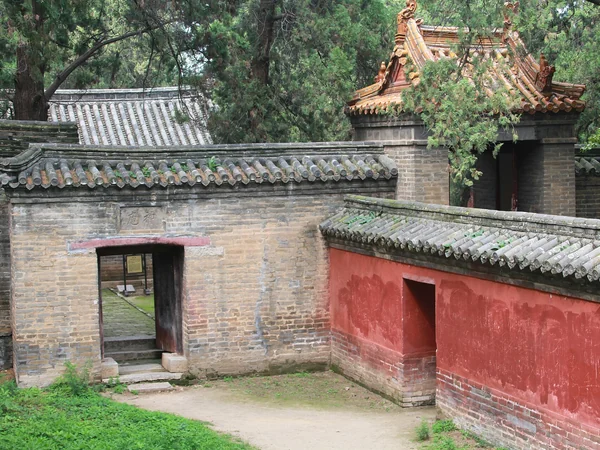
Confucian temple courtyards provide architectural context for ritual, education and commemoration.
Confucianism influenced family ethics, education, state ritual and ideas of public responsibility across China and neighboring societies. That influence was never uncontested: legalist methods, Buddhist institutions, Daoist traditions, local customs and later political movements also shaped daily life. Visitors should therefore use specific evidence—a school, stele, ritual object or text—rather than saying every Chinese custom is Confucian.
The civil examination tradition amplified the authority of Confucian texts, but access, curriculum and official expectations changed by dynasty. Its legacy is visible in academies and temple complexes. The education in China guide provides the broader historical context.
Today Confucian vocabulary appears in scholarship, family discussion, heritage interpretation and public culture. That visibility does not mean all Chinese people share one belief. Treat modern uses as contemporary interpretations and distinguish them from statements found in early texts.
Confucian Temple
•Confucius (551BC – 479BC)
Confucius (traditionally dated 551–479 BCE) was a teacher and thinker from the state of Lu. The Analects records sayings and conversations compiled by later followers; it is not a diary written by Confucius. His teaching links learning with reflection, moral example and responsible government.
•Mencius (372BC – 289BC)
•Dong Zhongshu (179BC – 104BC)
Mencius argued that people possess moral beginnings that can be cultivated and defended humane government. Xunzi took a more skeptical view of untrained human tendencies and stressed education and ritual. Reading them together shows why Confucianism is a continuing argument, not one founder's fixed doctrine.
•Zhu Xi (1130 – 1200)
Zhu Xi (1130–1200) shaped later Confucian study through commentary, educational practice and the synthesis often called Neo-Confucianism. His selection and interpretation of the Four Books became deeply influential, although later thinkers challenged parts of his approach.
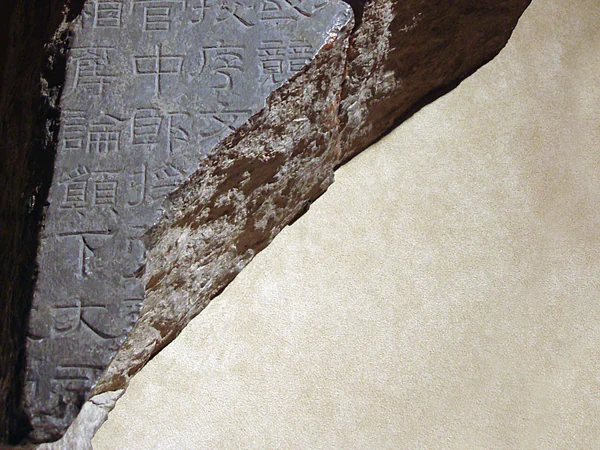
The Analects, Mencius, Great Learning and Doctrine of the Mean form the Four Books; the Five Classics preserve older historical, poetic and ritual materials.
Rule by man:
Rule by morality:
Rule by ritual: Older summaries sometimes reduce Confucian governance to “rule by man, morality and ritual.” A clearer reading is that moral example, appropriate institutions and learned ritual should reinforce one another. Personal virtue cannot substitute for every law, and ritual is not mere ceremony: it organizes respectful conduct, roles and shared expectations.
Rule by morality.
Qufu in Shandong Province
Qufu in Shandong is the essential heritage destination for travelers studying Confucius. The Temple and Cemetery of Confucius and the Kong Family Mansion form a UNESCO-listed complex. Plan enough time to distinguish the ritual temple, the residential-administrative mansion and the extensive cemetery landscape. For additional sacred architecture beyond this tradition, compare China's famous temples and monasteries.
Museums and research institutions in Qufu add context, but names and exhibition arrangements can change. Check the current official listing rather than assuming every institute is open to casual visitors.
The Temple of Confucius expanded through many dynasties, so its courtyards, gates, halls and stelae should be read as layers of patronage. It is a commemorative and ritual landscape, not the surviving classroom where every recorded saying was taught.
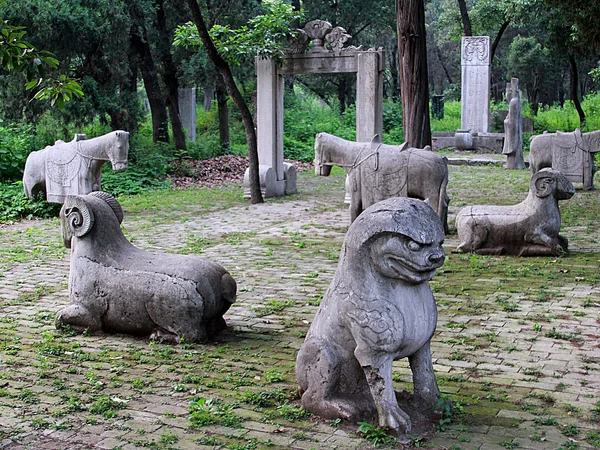
The Cemetery of Confucius is a wooded family burial landscape and should be visited quietly and respectfully.
The Kong Family Mansion housed generations of Confucius's senior descendants and administered family and ceremonial affairs. Its domestic rooms, offices and gardens reveal a different history from the adjacent temple.
The cemetery contains graves and commemorative material accumulated over a long period. Paths are extensive; allow for walking, weather and uneven surfaces, and follow photography or access restrictions posted on site.
Confucian temples exist in Beijing, Nanjing, Qufu and other cities, but their functions and surviving fabric differ. Some stand beside former academies; others became museums or heritage sites. Choose one that fits the route and use its labels to understand local history instead of assuming every complex follows the Qufu model. Beijing Confucius Temple on Guozijian Street, Nanjing Confucius Temple , Taiwan Confucius Temple and of course Qufu Confucius Temple.
Chinese: 敏而好学,不耻下问
A quick learner should never be embarrassed to ask a question.
Learning includes seeking clarification from anyone who can teach you, regardless of status.
Chinese: 有朋自远方来,不亦乐乎
Is it not joyful when friends arrive from far away?
Shared learning and friendship can make a long-awaited visit a genuine pleasure.
Chinese: 三人行,必有我师焉
When three people walk together, each may offer something worth learning.
A thoughtful person looks for a teacher in others' strengths and a warning in their faults.
Chinese: 己所不欲,勿施于人
Do not impose on others what you would not choose for yourself.
This principle asks people to test conduct through empathy and restraint.
Chinese: 玉不琢,不成器,人不学,不知道
Unworked jade does not become a useful vessel; without learning, a person cannot understand the way.
Education is compared with careful craft: potential develops through sustained study and practice.
Chinese: 君子坦荡荡,小人长戚戚
The cultivated person is open and at ease; the petty person remains burdened by anxiety.
Moral confidence is contrasted with insecurity driven by narrow self-interest.
Chinese: 工欲善其事,必先利其器
A craftsperson who wants to work well must first sharpen the tools.
Preparation is part of competent action, whether in study, travel or public service.
Chinese: 小不忍则乱大谋
Impatience in a small matter can disrupt a larger plan.
Self-control protects long-term judgment from a momentary reaction.
Chinese: 吾日三省吾身
Each day I examine myself repeatedly.
Regular reflection asks whether one has been loyal, trustworthy and diligent in learning.
Chinese: 三军可夺帅也,匹夫不可夺志也
An army may lose its commander, but an ordinary person cannot be forced to surrender a moral purpose.
Conviction is presented as an inner commitment that power alone cannot seize.
Chinese: 君子和而不同,小人同而不和
The cultivated person seeks harmony without demanding uniformity; the petty person seeks sameness without real harmony.
Cooperation does not require erasing principled differences.
Editorial accountability
Hu Lei, CEO. The named owner is responsible for travel-planning accuracy and escalation of time-sensitive checks.
Yuntian Travel (Yunnan) Group is identified in its corporate profile as a licensed professional inbound travel service provider based in Kunming, China. Registration and travel-service documents can be requested before booking.
Page-specific references where cited, official destination, transport and entry notices, YUNSKY route-planning records, and direct provider confirmation before a booking is finalized.
Content is reviewed when rules, transport, access, pricing or route conditions change. Final availability and operating details are reconfirmed for each traveler’s dates.
Quality review: Page updated: