Your China & Yunnan Travel Experts



Introduction of Buddhism
Buddhism reached China through several land and maritime networks rather than in one single event. Translation communities, traveling monks and Chinese patrons gradually made Indian Buddhist texts understandable within a Chinese intellectual world. New schools formed around meditation, devotional practice, philosophy and particular scriptures. For travelers, the useful starting point is to see Chinese Buddhism as a living and historically layered tradition, not simply an imported belief. The broader Chinese philosophy and religion guide explains how it developed alongside Confucian and Daoist thought.
Buddhism
Status of Chinese Buddhism
Most Buddhist communities in China belong to Mahayana traditions, while Tibetan Buddhist lineages are especially important across the Tibetan Plateau and parts of Inner Mongolia, Gansu, Qinghai and Sichuan. Theravada Buddhism is practiced principally among communities in southwest China, including parts of Yunnan. Chan, Pure Land and Tiantai are among the influential traditions encountered in temples and art. Visitors should avoid treating temple design, monastic clothing or ritual language as identical nationwide; region, lineage and local history all matter.
Buddhism
The Influence to China
Buddhism reshaped Chinese sculpture, cave art, printing, philosophy, ritual, literature and charitable institutions. Its visual heritage is especially clear in the cave complexes introduced in the Buddhist grottoes guide. At active temples, cultural interest should be balanced with respect: speak quietly, follow photography signs, do not block worshippers and never touch murals, statues or offerings. Opening hours, access rules and ritual schedules can change, so confirm them with the attraction before travel.
China's Buddhist geography is best understood as a network of sacred mountains, historic monasteries, cave-temple corridors and regional communities. Choose sites according to the route you are already taking instead of collecting distant landmarks without enough time to understand them.
Shanxi Province
It is where the sacred Mount Wutai located. At an altitude of around 3000m, Mount Wutai Shanxi combines Mount Wutai's active monastic landscape with Datong's Yungang Grottoes, the timber buildings of Yingxian and the cliff-side Hanging Temple. Mount Wutai is associated with Manjusri and rewards at least one unhurried day; the plateau climate can be much cooler than nearby lowlands. Datong works well as a separate base because mountain and cave sites are not adjacent. Yungang
Datong-area grottoes, historic wooden architecture and the Hanging Temple reveal different stages of religious and architectural history; they should not be compressed into one photo stop.
Tibetan Buddhism shapes the religious landscape of Lhasa and many communities across the plateau. Monasteries and pilgrimage circuits remain places of worship. Walk clockwise where local signs or custom indicate, ask before photographing people, and account for altitude in the itinerary. Tibet travel may involve current permit and booking requirements, so confirm the applicable rules before committing to transport.

The Potala Palace is a monumental historic complex, while Jokhang Temple and the Barkhor circuit provide a different view of living pilgrimage. Plan them as complementary experiences rather than interchangeable attractions.
Mount Emei in Sichuan is associated with Samantabhadra and combines temples with a steep, forested mountain environment. Cableways and buses reduce walking, but weather, crowds and elevation changes still affect the day. Pairing Emei with Leshan creates a coherent Buddhist-heritage route. Compare the other sacred landscapes in the Buddhist mountains guide before choosing.
Mount Putuo lies in the Zhoushan archipelago of Zhejiang and is associated with Guanyin. Ferries are part of the journey, so allow a weather buffer and avoid relying on a last connection. The island suits travelers interested in coastal scenery as well as temple culture, but weekends and major observance dates can be busy.
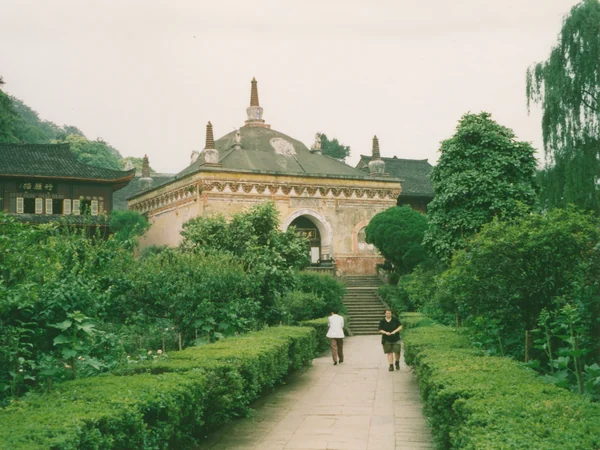
Temples on Mount Putuo
Mount Jiuhua
Mount Jiuhua in Anhui is associated with Ksitigarbha. Its temples are distributed across a mountain area rather than contained in one compound, making route and mobility planning important. Staying overnight can provide a calmer experience than a rushed day trip.
White Horse Temple in Luoyang, Henan Province
White Horse Temple near Luoyang is traditionally connected with the early transmission of Buddhism to China. Modern structures and international-style halls sit beside older Chinese temple spaces, so interpret the complex as a continuing institution rather than a perfectly preserved first-century site.
Famen Temple in Xian
Famen Temple in Shaanxi is known for its long Buddhist history and relic tradition. Its historic pagoda area and newer monumental zone create contrasting experiences. Combine it with a wider Shaanxi itinerary only after checking road time from Xi'an, and verify current exhibition access before departure.

Editorial accountability
Hu Lei, CEO. The named owner is responsible for travel-planning accuracy and escalation of time-sensitive checks.
Yuntian Travel (Yunnan) Group is identified in its corporate profile as a licensed professional inbound travel service provider based in Kunming, China. Registration and travel-service documents can be requested before booking.
Page-specific references where cited, official destination, transport and entry notices, YUNSKY route-planning records, and direct provider confirmation before a booking is finalized.
Content is reviewed when rules, transport, access, pricing or route conditions change. Final availability and operating details are reconfirmed for each traveler’s dates.
Quality review: Page updated: