Your China & Yunnan Travel Experts



“Lucky colors in China” is a useful entry point, but colour does not work like a permanent codebook. Meanings shift with period, region, religion, material and occasion. Red is strongly associated with celebration and good wishes, yet the red on a wedding invitation, a lacquer vessel and a political poster belongs to different contexts. Use the guide below to read common patterns, then confirm the specific event. The wider Chinese New Year guide explains how colour sits alongside family, food and ritual practice.
At Spring Festival, red and gold are prominent in lanterns, couplets, paper cuts, packaging and clothing. Their visibility does not mean every family follows one palette or that another colour is automatically offensive. A decoration's words, image, placement and giver-recipient relationship matter as much as its background colour.
Red is the clearest festive colour in many Chinese settings. It can mark joy, vitality, prosperity and a fresh beginning, especially at New Year and weddings. Historical pigments and red materials also carry their own artistic histories, so a museum object should be interpreted by date and function rather than labelled simply “lucky.”
New Year red appears in spring couplets, lanterns, door papers, paper cuts and envelopes. The written blessing is part of the meaning: a red square without its character or image does not convey the whole message. See examples and placement notes in the Chinese New Year decoration guide.
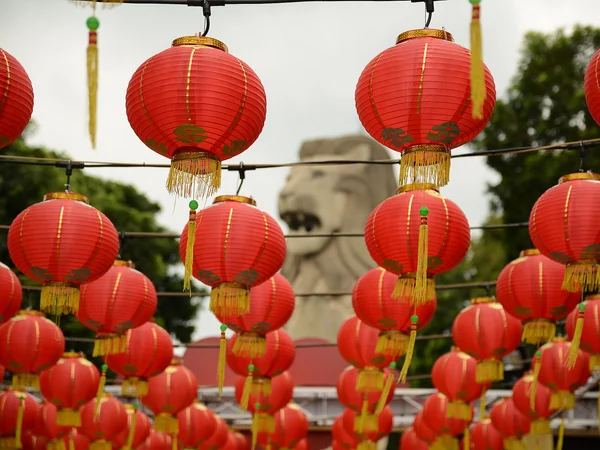
Red New Year decoration
Red envelopes carry money and good wishes in particular relationships and occasions. Amount, seniority and local custom can matter. Visitors should not assume that wearing red creates luck, and they should avoid turning a family practice into a costume prop without an invitation.
Yellow appears in several historical systems, including associations with earth and the centre. Certain shades and materials became closely connected with imperial authority, but “yellow was forbidden to everyone except the emperor” is too broad for China's long and varied history. Period, garment rank, object type and regulation must be specified.
At the Forbidden City, yellow-glazed roof tiles are part of a carefully ranked architectural palette alongside red walls and other colours. The site is strong evidence for Qing court design, not a rule for every Chinese building or every dynasty.
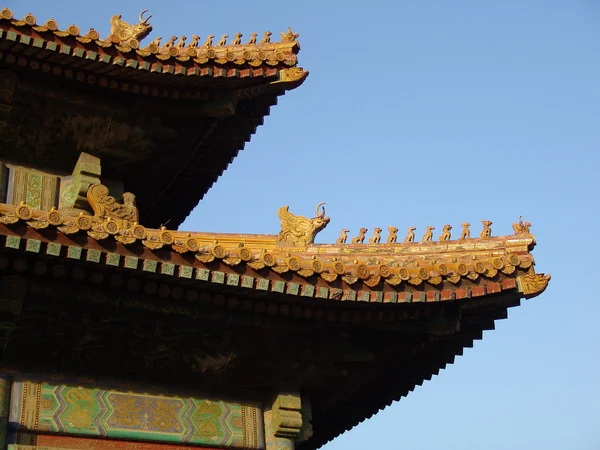
Forbidden City roof colours
Yellow and ochre robes also appear in Buddhist settings, with traditions varying by school and region. Visitors should identify the religious context and ask before photographing worship or monastic life instead of reading the garment as a generic sign of “royalty.”
Green can suggest spring, growth, health or freshness, and contemporary branding often uses it for environmental or food-related ideas. These associations are not guarantees of purity or product quality.
A well-known idiom about a man “wearing a green hat” implies an unfaithful partner, so a green hat can be an awkward gift; that specific phrase should not be expanded into a claim that all green clothing is unlucky.
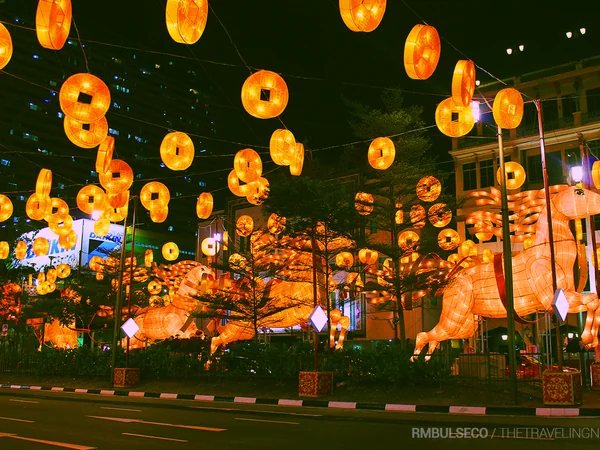
Gold and gold-coloured surfaces can signal brilliance, value, status and prosperity. At New Year they often accompany red in ornaments and commercial displays. Metallic colour, gold leaf, gilded metal and solid gold are materially different, and a photograph cannot establish which one is present. For related wordplay around prosperity, compare lucky numbers in China.
White is used in mourning and funerary contexts, which is why an all-white festive gift presentation may feel unsuitable in some families. Yet white also appears in porcelain, painting, clothing, religion and modern design without a funerary meaning. Ask about the occasion instead of treating white as culturally prohibited.
Black can be connected with water in Five Phases systems, but it also carries associations with ink, formality, power, mystery and modern fashion. It is not simply a universal mourning colour. At New Year, bright festive palettes are more typical; that preference does not make every black object insulting.
Rat — published lists differ by year and source.
Ox — do not treat one assigned colour as a personal forecast.
Tiger — colour choices do not predict health, money or relationships.
Rabbit — a general zodiac label cannot replace a dated tradition.
Dragon — red or gold may be festive choices, not guaranteed outcomes.
Snake — online charts frequently disagree about colour correspondences.
Horse — regional and family practice is more relevant than a generic chart.
Goat — choose clothing for the event, climate and host guidance.
Monkey — museum evidence and contemporary horoscope content are different genres.
Rooster — a colour can be aesthetically suitable without being cosmically prescribed.
Dog — ask the source which calendar year and system it applies.
Pig — enjoy zodiac palettes as a custom or design prompt, not an evidence-based promise.
After knowing about the lucky colors for Chinese New Year and lucky colors for your zodiac signs, it will be a great idea to explore more about Chinese culture. If you're willing to experience the Spring Festival, you'd better plan your trip and book everything ahead of time. See our sample tours for some good ideas.
Editorial accountability
Hu Lei, CEO. The named owner is responsible for travel-planning accuracy and escalation of time-sensitive checks.
Yuntian Travel (Yunnan) Group is identified in its corporate profile as a licensed professional inbound travel service provider based in Kunming, China. Registration and travel-service documents can be requested before booking.
Page-specific references where cited, official destination, transport and entry notices, YUNSKY route-planning records, and direct provider confirmation before a booking is finalized.
Content is reviewed when rules, transport, access, pricing or route conditions change. Final availability and operating details are reconfirmed for each traveler’s dates.
Quality review: Page updated: