Your China & Yunnan Travel Experts



Ming dynasty furniture is admired for balanced proportions, fluent lines, disciplined structure and sensitive use of wood grain. Those qualities describe important surviving examples, not every object made between 1368 and 1644. Workshops served courts, scholars, merchants, temples and ordinary households with different materials and budgets. Many pieces called “Ming style” were made later, and museums sometimes use an overlap such as late Ming–early Qing when evidence is not exact. See the broader traditional Chinese furniture history before using one dynasty as the starting point for the whole tradition.
Background: Why Furniture Flourished in the Ming Period
Chinese carpenters inherited mature frame construction and furniture forms from earlier periods. During the Ming, expanding urban markets, garden and residential building, print culture and access to high-quality timbers supported further refinement. Imported hardwood contributed to elite production, but the story is not simply that Zheng He's voyages created rosewood furniture. Maritime trade, regional supply networks, patrons and long-established craft knowledge all mattered, and most everyday furniture was not made from rare tropical hardwood.
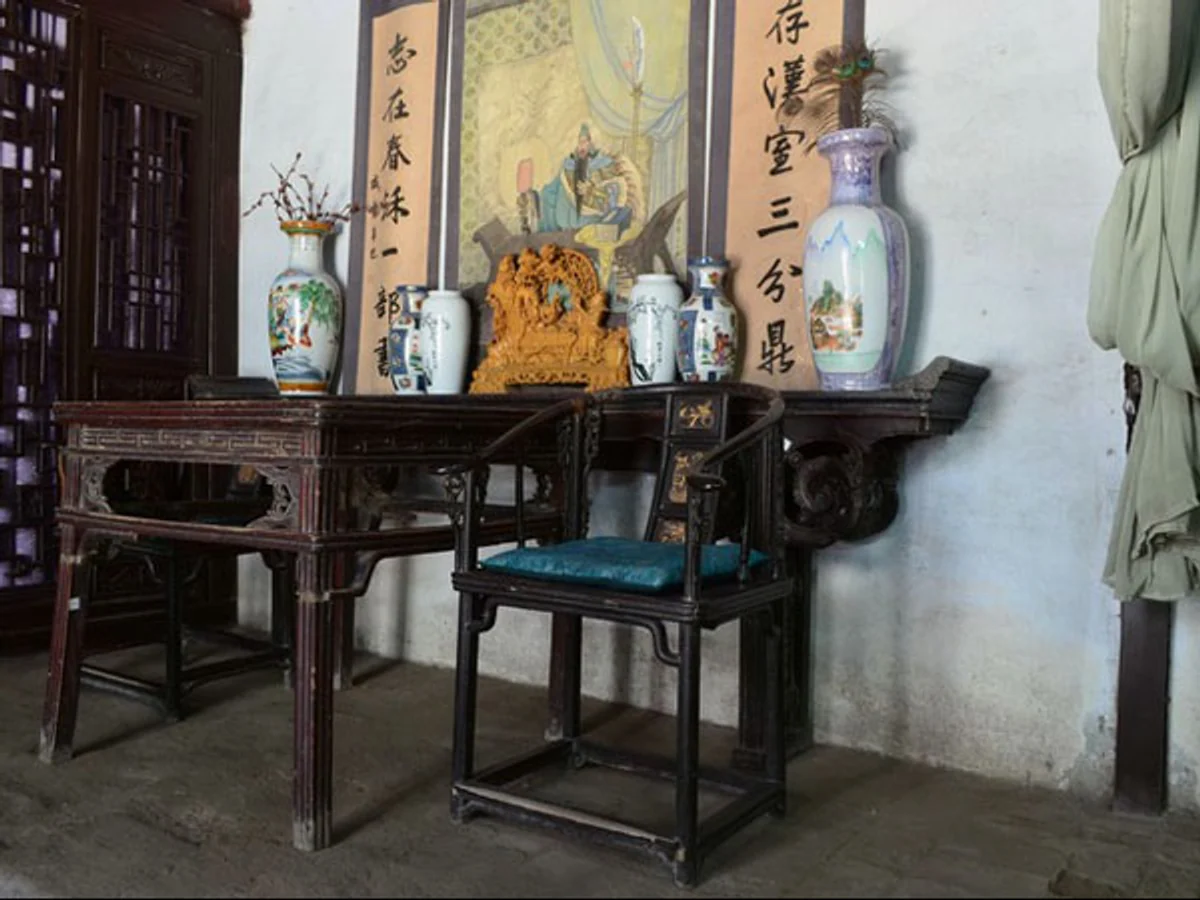
Museum evidence is the safest starting point for a Ming attribution
Recognizing Ming Furniture Without Stereotypes
Museum collections show chairs and stools, tables and desks, cabinets and chests, beds and couches, stands, racks and screens. Form followed activity: a painting table needed a different height and span from an altar coffer, while wardrobes organized hats, clothing and bedding. Classification helps reading an object, but it does not assign a date by itself.
Furniture could be arranged symmetrically in a formal reception hall or flexibly in a study and private room. Paintings, woodblock prints, excavated models and surviving pieces help reconstruct use. A matched pair may be meaningful, yet a single surviving cabinet is not incomplete simply because dealers often market pairs.
Materials: Precise Names Matter
Ming furniture survives in lacquered wood, local timbers and valued hardwoods. Historical names, modern Chinese standards, English trade names and botanical names are not interchangeable. A catalogue should state the degree of certainty and identify which components were examined.
Huanghuali is associated in major museum records with Dalbergia odorifera. Its visible grain and strength supported slender members, but a honey-brown color alone cannot establish the species or date.
Zitan names a prized dense, dark hardwood tradition. It is strongly associated with elite furniture, especially in later court collections, yet the label still requires material evidence.
Suan枝 or related rosewood trade terms can cover more than one market category. Translate cautiously and check current species-level documentation before purchase or shipment.
Ebony-like dark woods appear in records and objects, but “ebony” in a sales description may be a color claim, a local name or an unverified species. Ask for the basis of identification.
Jichimu, often translated as chicken-wing wood, describes a striking grain category associated with several woods in historical and modern usage. It should not be converted automatically into one Latin name.
Rare-wood demand creates conservation and legal concerns. Applicable CITES and national rules depend on species, object and cross-border movement. Provenance and lawful documentation are part of responsible collecting, not paperwork to address after payment. The Chinese rosewood furniture guide explains these material-label limits in more detail.
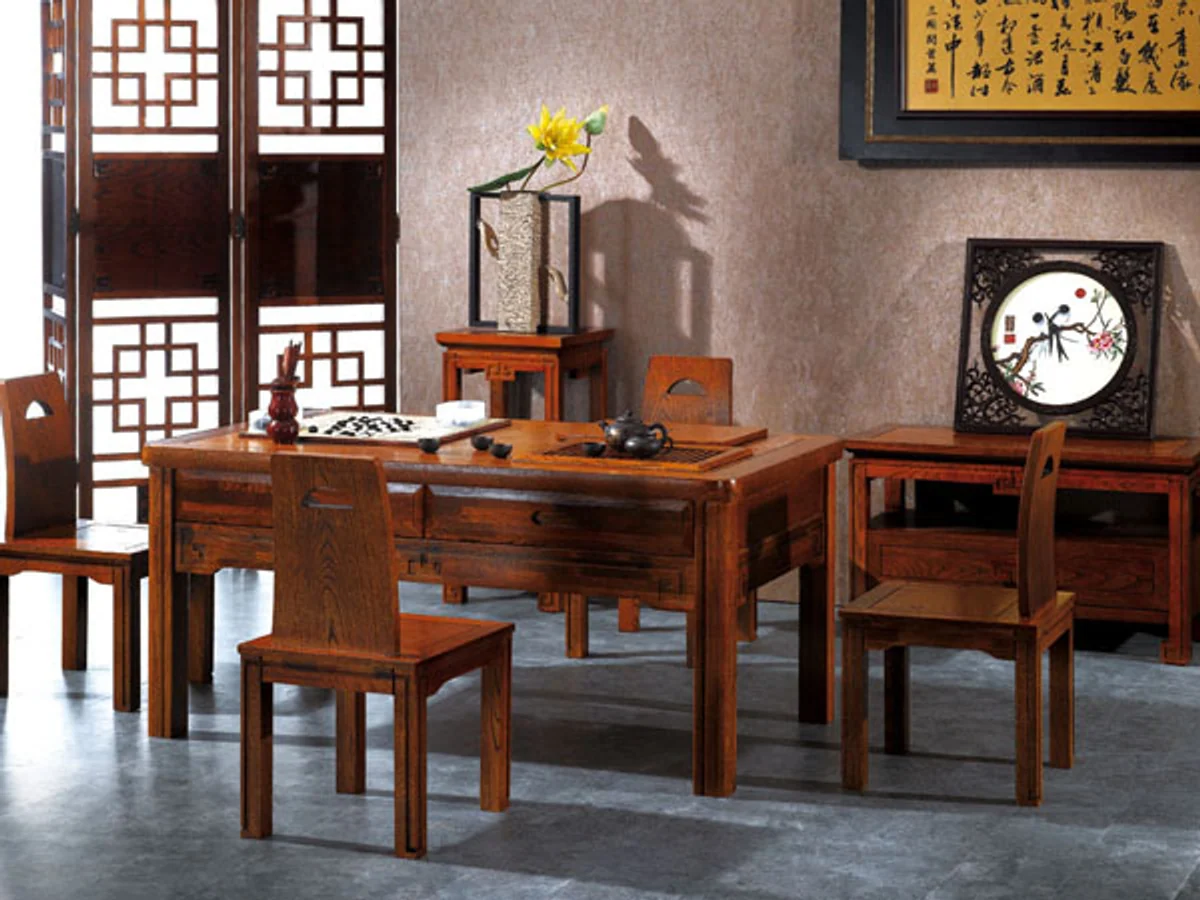
Mortise-and-tenon joints, framed panels, aprons, stretchers and carefully shaped members can create strength without bulky mass. Joinery responds to wood movement and load, but old furniture was not universally made without glue, nails or metal. Hardware can be original and repairs can be historically important. Assess the entire structure before celebrating a single exposed joint.
Influence, Revival and the Meaning of “Ming Style”
Chinese furniture informed European designers and collectors through trade, imported objects and printed interpretations, but direct influence must be demonstrated case by case. Chinoiserie was a European construction of “Chinese taste,” not a continuation of a Ming workshop. In the 20th and 21st centuries, craftspeople in China and abroad have also produced accurate revivals. A well-made revival deserves honest documentation rather than an invented 400-year provenance.
Decoration and Carving
Restrained Ming examples often use grain, profile and small areas of latticework or carving as decoration. Other pieces are more elaborate, and regional or functional variation matters. Motifs of plants, animals, landscapes and auspicious subjects should be interpreted with object-specific evidence, not assigned a universal meaning from a symbol list. Compare continuity and change in our Qing dynasty furniture guide. For a claimed antique, request high-resolution views, restoration history and independent examination; style is a line of inquiry, not a certificate of age.
Editorial accountability
Hu Lei, CEO. The named owner is responsible for travel-planning accuracy and escalation of time-sensitive checks.
Yuntian Travel (Yunnan) Group is identified in its corporate profile as a licensed professional inbound travel service provider based in Kunming, China. Registration and travel-service documents can be requested before booking.
Page-specific references where cited, official destination, transport and entry notices, YUNSKY route-planning records, and direct provider confirmation before a booking is finalized.
Content is reviewed when rules, transport, access, pricing or route conditions change. Final availability and operating details are reconfirmed for each traveler’s dates.
Quality review: Page updated: