Your China & Yunnan Travel Experts



What Survives Han clothing is studied through excavated textiles, tomb figures, lacquer and stone images, written records and objects preserved in museums. Each source has limits: a tomb ensemble represents a particular burial, an image may simplify construction, and later reconstruction involves informed choices. “Hanfu” is now a broad modern term, while a securely dated Han garment should be described by its actual form and context. Court Dress and Rank Official and ritual clothing could express office, ceremony and status through headwear, colour, material and prescribed combinations. Regulations changed across the Western and Eastern Han and were not a single colour chart worn by everyone in each season. Translating old garment names into modern English can also flatten important differences, so museum catalogues should be consulted for the object or text in question.
Dress Beyond the Court Farmers, craftspeople, soldiers, attendants and entertainers needed clothing suited to work and movement. Tunics, robes, trousers, skirts, belts and layered garments appear in the evidence, but class, sex, locality and task affected what was worn. Statements that every labouring woman or man used one outfit mistake selected figures for a nationwide uniform.
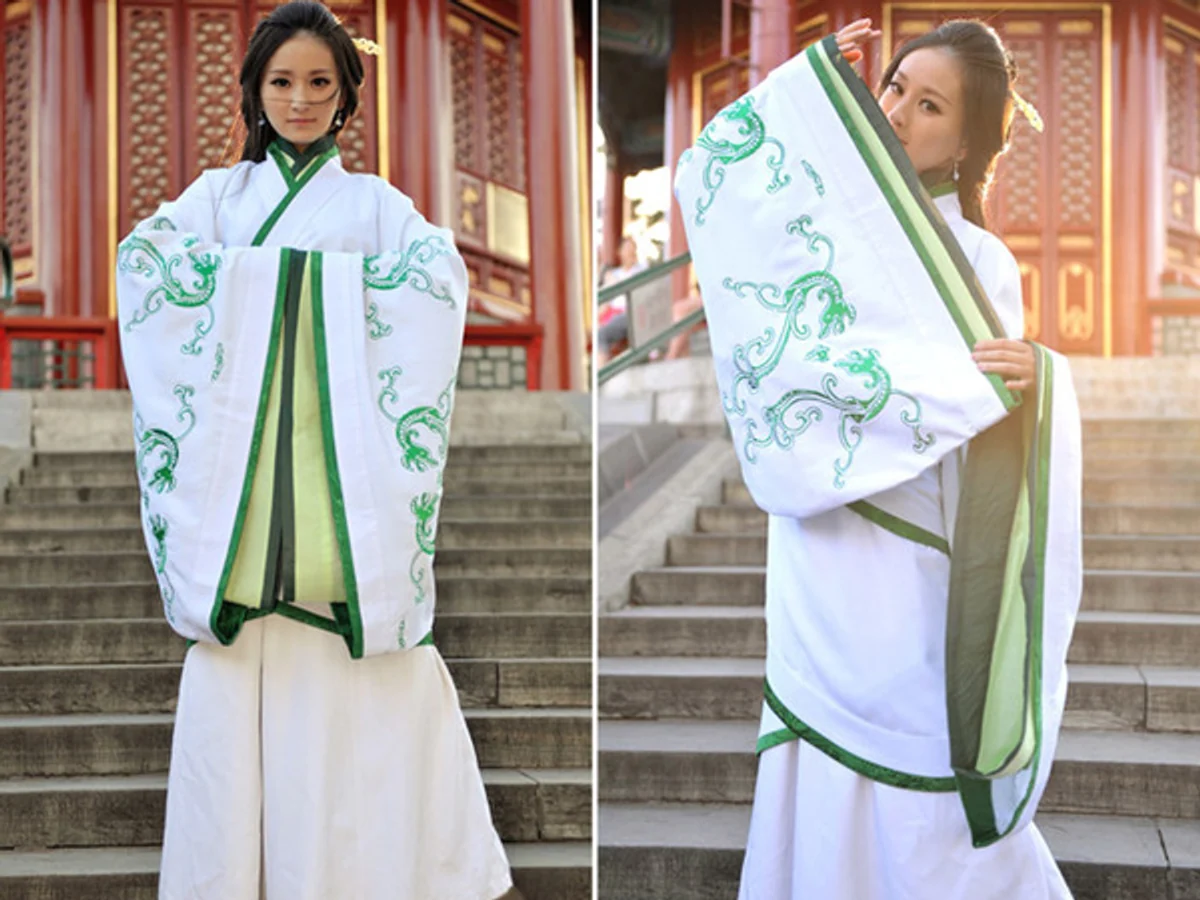
Reading a Museum Reconstruction
Check whether the display is an excavated original, a replica based on one find, an interpretation combining several sources or a modern design inspired by the period. Look for a date range, findspot, fibre, weave and conservation history. A mannequin's hairstyle, colour and accessories may be curatorial additions even when the textile pattern is closely researched.
Influence Was Not a One-Way Copy
Clothing ideas moved through diplomacy, migration, trade and political change across East and Central Asia. Similar wrapping, collars or silhouettes do not prove that one complete national costume was copied unchanged from Han China. Start with the wider traditional Chinese clothing guide for terminology and evidence standards.
Silk and Other Materials Silk is prominent in elite Tang objects and texts, but hemp, wool and other fibres also mattered. Material survival is uneven, and an excavated silk fragment cannot describe what every resident wore. Fibre analysis, weave, dye and archaeological context are stronger evidence than a modern fabric chosen merely because it looks luxurious. Exchange Across Eurasia Tang cities participated in far-reaching exchange. Foreign and regional garments, textiles, motifs, musicians and riders appear in art and documents, while local makers selected and transformed ideas. “Persian influence” or “Central Asian style” should be tied to a dated object and specific feature instead of used as an all-purpose label. Women's Dress and Representation Painted figures and tomb objects show women in varied skirts, jackets, shawls and riding clothes. These images reveal elite ideals and visual conventions as well as clothing, so they cannot establish one standard Tang female silhouette. Neckline, sleeve width and layering changed across time, place and setting. Images, Replicas and Stage Costumes
A museum reconstruction should cite the mural, figurine, textile or written source behind each major choice. Television and dance costumes may deliberately heighten colour, volume or ornament for visibility; they are creative interpretations rather than archaeological evidence.
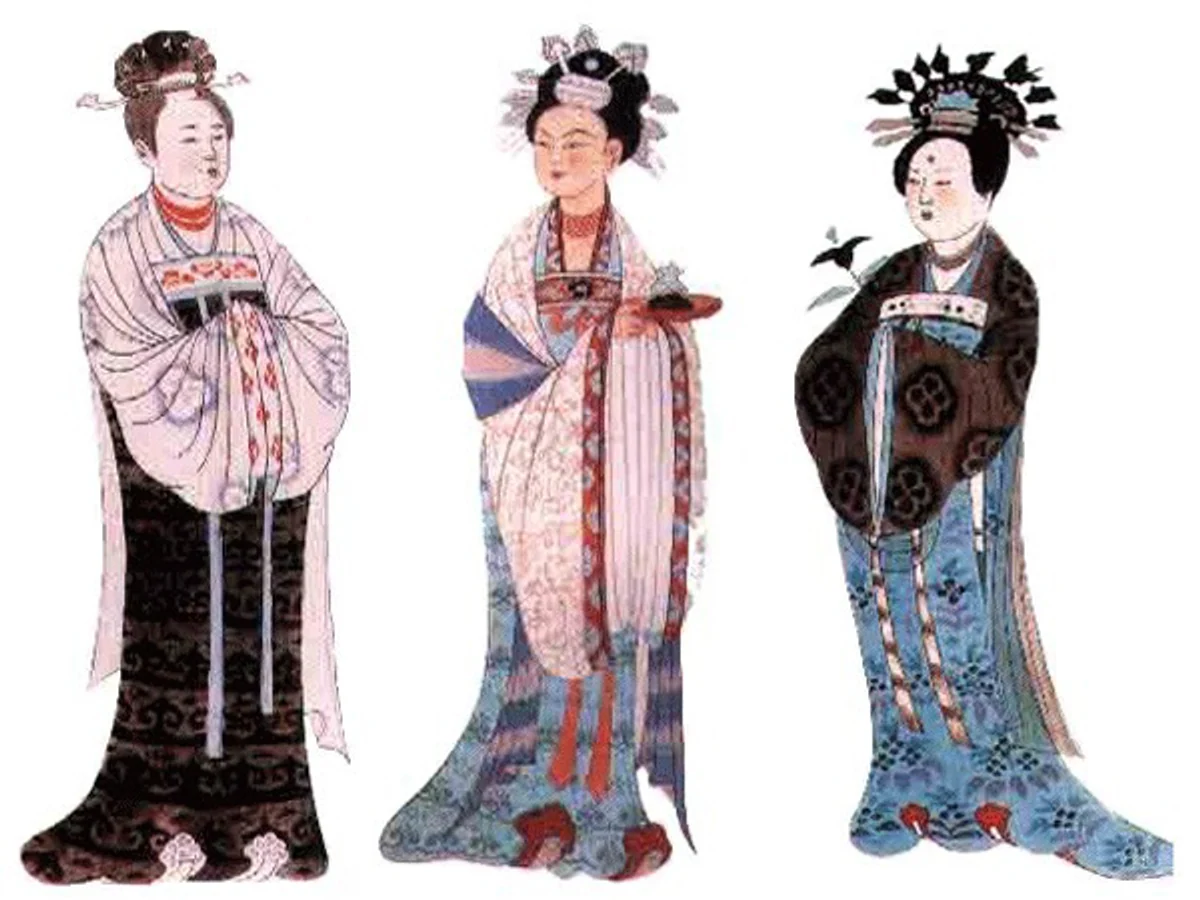
Gender, Riding and Social Claims
Some Tang images show women riding or wearing garments associated with male or foreign styles. That is valuable evidence for particular settings, but it does not prove that all women enjoyed the same freedom or that every cross-dressed figure was making one modern political statement. Regional Clothing in a Connected World
Tang rule encompassed diverse populations, and border regions had their own dress histories. The guide to ethnic minority clothing in China offers a modern framework for discussing community and region without turning either into a timeless costume. When comparing Tang clothing with Korean, Japanese or Vietnamese traditions, describe dated contacts and locally documented developments. Cultural exchange was repeated and multidirectional; visual resemblance alone does not establish a direct line of descent.
Names and Scope. Qipao is the usual Mandarin term, while cheongsam derives from Cantonese usage. Today both often refer to a close-fitting one-piece dress associated with twentieth-century Chinese fashion, but historical labels and garment forms vary by language, period and collection. From Banner Robes to a Modern Dress. The modern qipao is related to Qing-era banner clothing in name and selected features, yet it did not remain an unchanged Manchu robe. Urban tailoring, women's education, print culture, new fabrics and global fashion all shaped the dress that developed in Republican-era cities. A Qing robe and a 1930s Shanghai qipao should therefore be catalogued separately.
The 1920s and 1930s. Museum and fashion histories place major development of the modern form in the 1920s and 1930s. Hem, sleeve, collar, fastening, side opening and degree of fit changed rapidly. Photographs show students, professionals, performers and socialites wearing different versions, not one uniform adopted by every Chinese woman. Cut, Material and Occasion
Silk, cotton, wool and later synthetic fabrics can all appear. Floral brocade is only one possibility; restrained checks, stripes and plain cloth also survive. Construction details—darts, shoulder seam, piping, closures and lining—help establish date and tailoring method more reliably than a vague “oriental” motif. Modern Adaptation Contemporary qipao range from wedding and formal dress to uniforms, stage wear, everyday experiments and designer fashion. Modern makers may use historic techniques without claiming to reproduce one museum garment. The wearer's own reason for choosing the dress belongs in any account of present-day meaning.
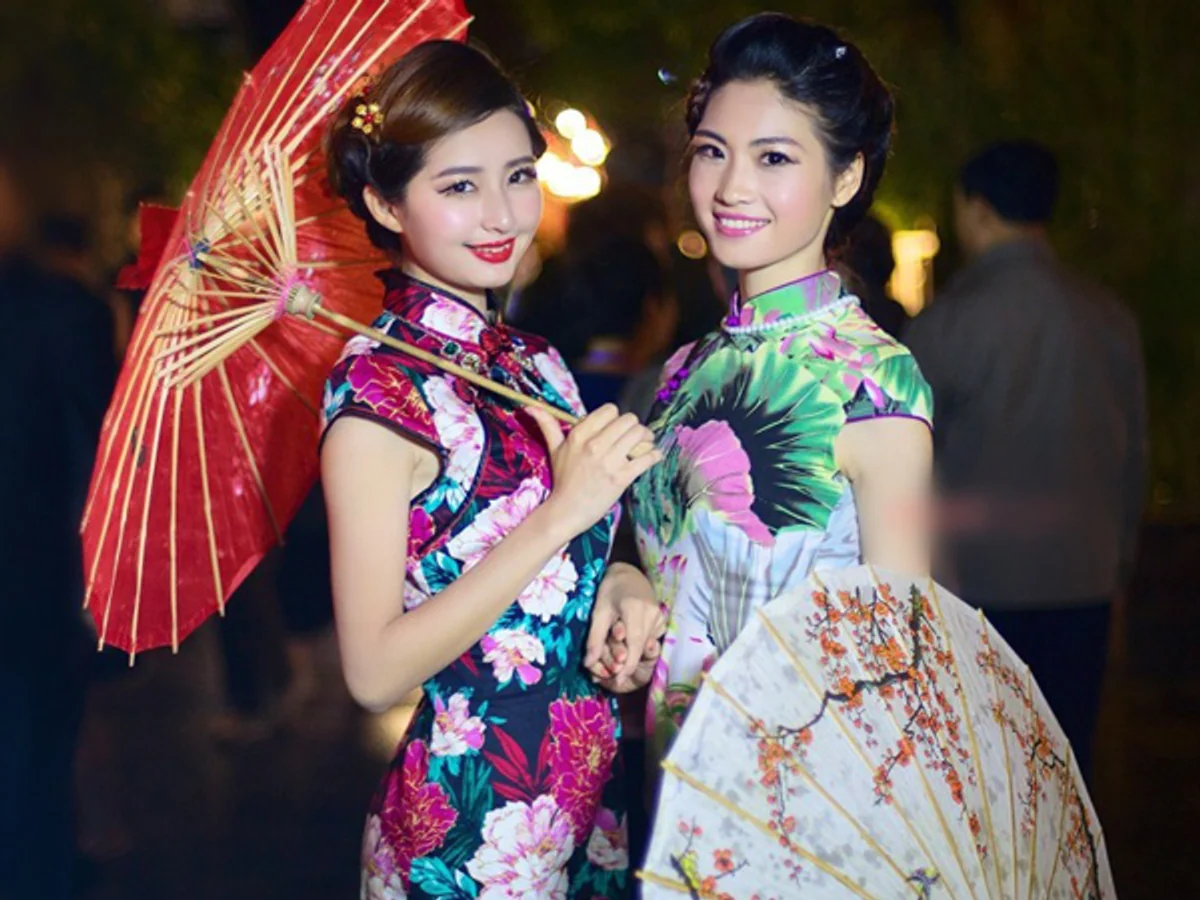
How to Interpret an Object
Record maker, wearer, date, city, material, measurements, alterations and provenance. A period photograph can connect a dress to a person, while a store label or tailor's mark may narrow attribution. Front and back views are essential because closures, darts, side openings and pattern matching can distinguish hand tailoring, alteration and later reproduction.
Fit is not a Measure of Identity
Claims that one cut naturally suits every Chinese body are stereotypes. Bodies, preferences and fashion ideals vary, and comfort depends on pattern, movement, climate and occasion. For the related Republican-era history of menswear and civic symbolism, continue to the Zhongshan suit guide. The two garments developed through overlapping modern debates but should not be presented as male and female halves of one official uniform. Buying Vintage Qipao
Ask for provenance, internal construction photographs and disclosure of repairs. “1930s style” does not mean a dress was made in the 1930s, and embroidery or age-toned fabric is not proof of authenticity. Conservation Do not hang a fragile silk dress by its shoulders for long periods. Support it evenly, avoid direct light and seek textile-conservation advice before cleaning, pressing or replacing fasteners. Use precise terms: Manchu banner robe, Republican-era qipao, Hong Kong cheongsam, stage costume and modern fashion dress describe different evidence. Chinese clothing history becomes clearer when objects are dated and localized, and when reconstruction, fashion adaptation and living personal choice remain visible rather than being blended into one timeless national costume.
Editorial accountability
Hu Lei, CEO. The named owner is responsible for travel-planning accuracy and escalation of time-sensitive checks.
Yuntian Travel (Yunnan) Group is identified in its corporate profile as a licensed professional inbound travel service provider based in Kunming, China. Registration and travel-service documents can be requested before booking.
Page-specific references where cited, official destination, transport and entry notices, YUNSKY route-planning records, and direct provider confirmation before a booking is finalized.
Content is reviewed when rules, transport, access, pricing or route conditions change. Final availability and operating details are reconfirmed for each traveler’s dates.
Quality review: Page updated: