Your China & Yunnan Travel Experts



Chinese stone lions are guardian sculptures placed at tombs, temples, palaces, bridges, offices and residences. Their form changed as lion imagery entered China through trade, diplomacy and Buddhism, then became naturalized in architecture. A pair may communicate protection, rank or auspicious order, but meaning depends on date, site and patron. Ritual practices such as “opening the eyes” exist in particular communities and should not be treated as a belief held by every Chinese person.
Most gate lions are highly stylized because many carvers worked from inherited visual conventions rather than direct observation of living animals. Curled manes, powerful chests, decorative harnesses and exaggerated faces vary by workshop and period. For the architectural setting, begin with the wider Chinese architecture guide.
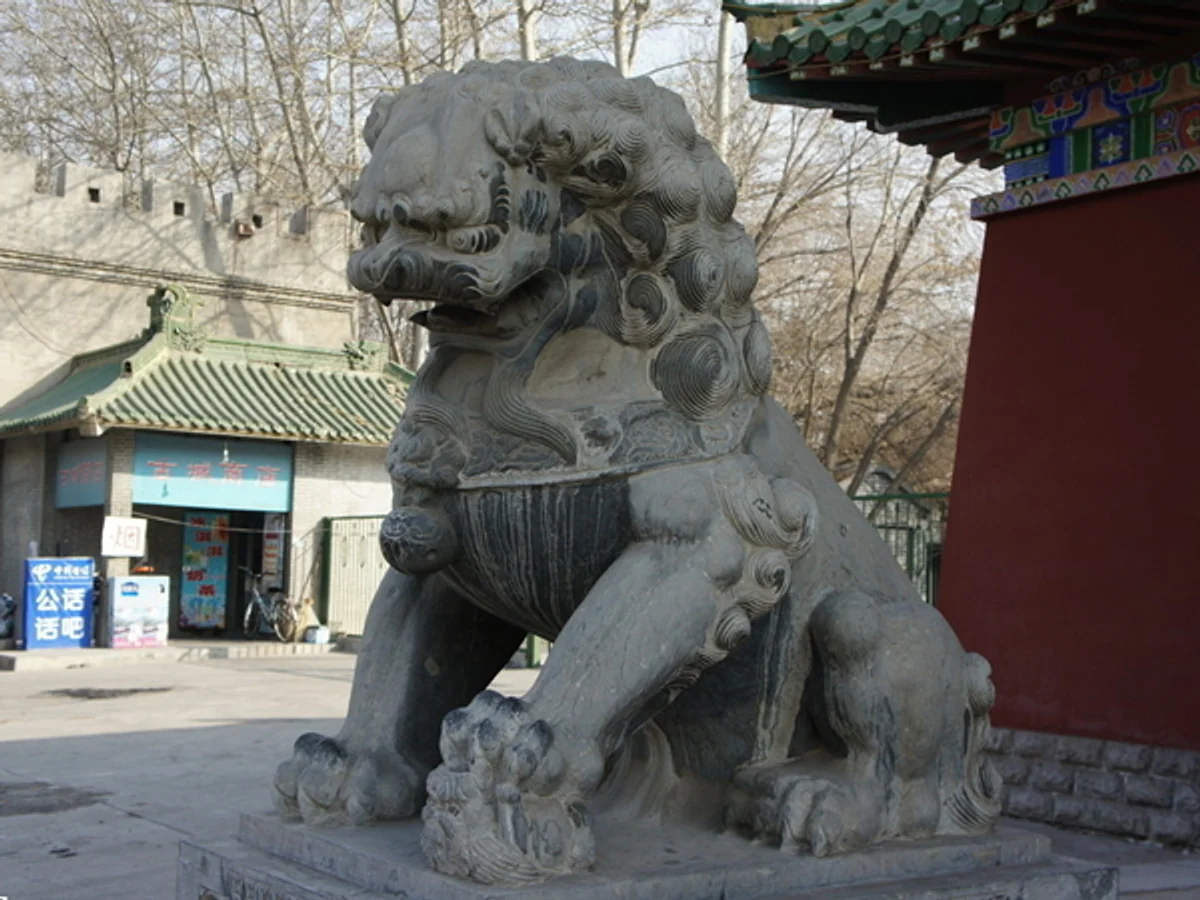
Chinese stone lion
Cultural Meanings
Lion images reached China from regions to the west and became increasingly prominent in Buddhist art and elite tomb sculpture. By the medieval period, lions appeared as protectors in religious and funerary space. Later gate lions could signal authority or prosperity. It is more accurate to describe this long adaptation than to say the animal was purely mythical in China.
Wordplay and local stories sometimes add meanings to stone lions, but sound-based explanations vary and should be attributed to the community or guide sharing them. The sculpture's placement, inscription and associated building usually provide firmer clues to its role.
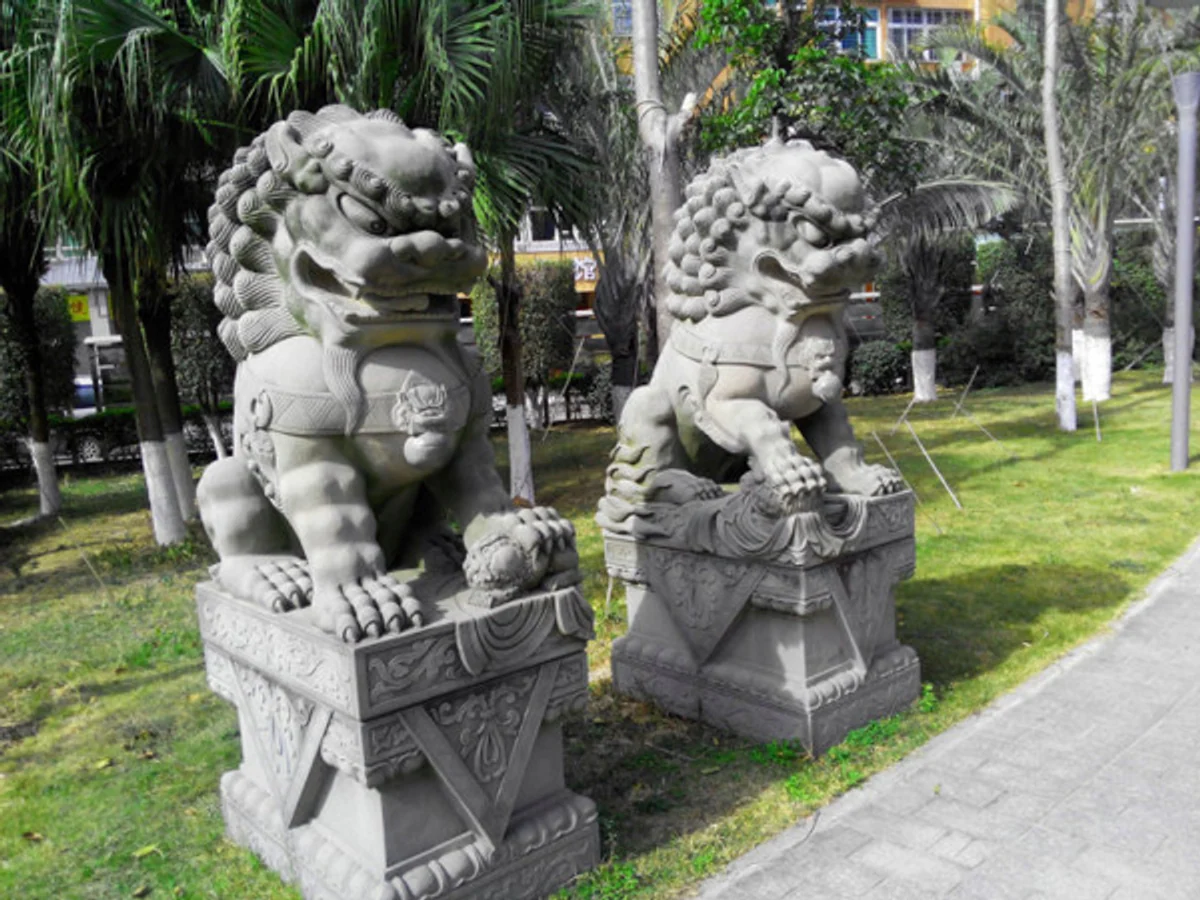
Chinese stone lion
Stone Lions in Different Dynasties
Styles do not change in one simple line from fierce to gentle. Northern Qi and Tang examples can emphasize muscular volume; Song, Yuan, Ming and Qing works include substantial regional and functional variation. Material also matters: limestone, marble and other local stones weather differently. A base resembling a Buddhist or architectural pedestal should be identified from the actual site rather than assumed from any square plinth.
Pairs and Spatial Order
Later gate-lion pairs commonly distinguish one figure with an embroidered ball and the other with a cub. Modern explanations often label them male and female and give left-right rules from the building's viewpoint. Real sites include repairs, relocations and variations, so examine the pair before applying a formula. At the Lion Grove Garden, the name and rock landscape create a different lion association from monumental gate sculpture.
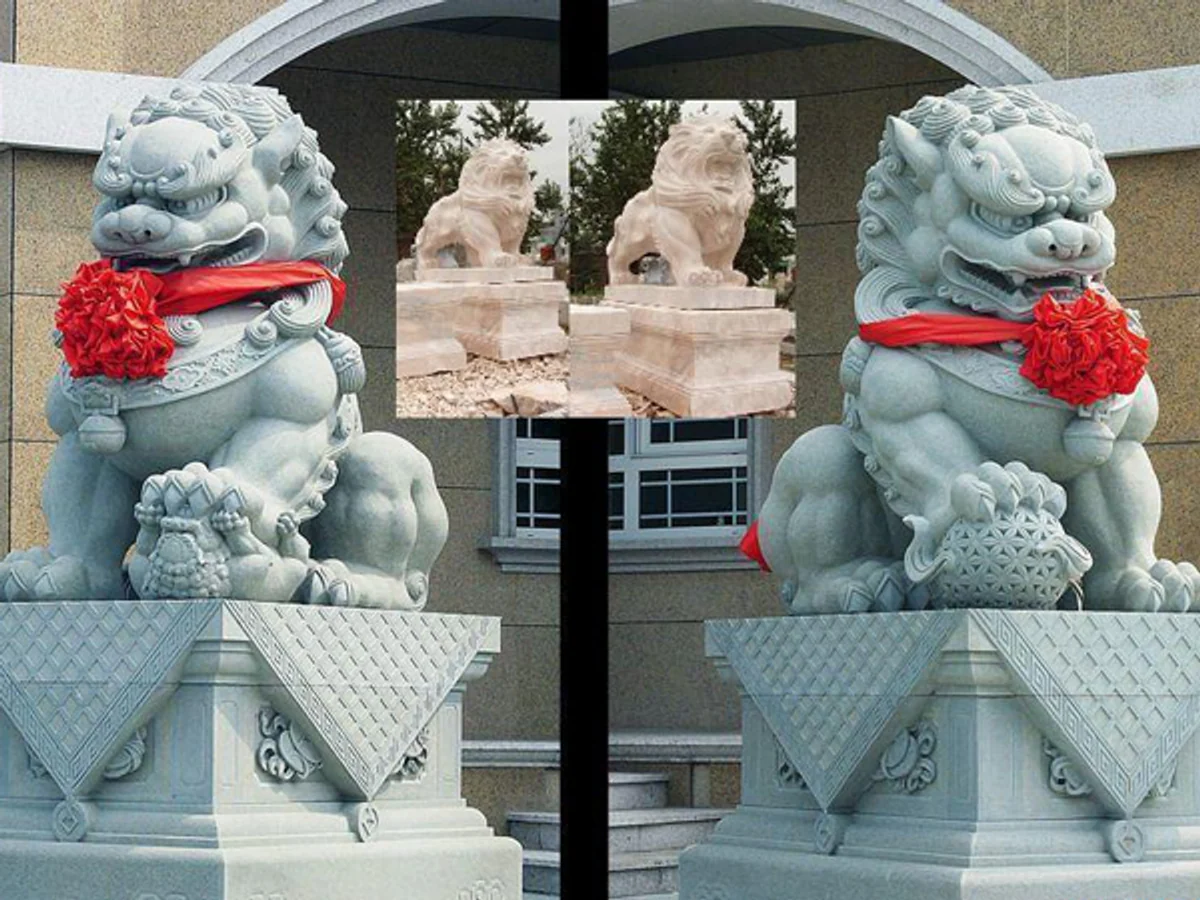
Chinese stone lion
Notable examples appear at imperial complexes, Buddhist cave temples, tomb approaches and bridges. Lugou Bridge is especially known for numerous carved lions of varied size and pose, while the Longmen Grottoes provide a broader context for Buddhist stone carving near Luoyang. Do not climb, touch, rub or place objects on historic sculptures. Weathering, restoration and access controls can change, so follow current site signs and use a zoom lens for detail.
Editorial accountability
Hu Lei, CEO. The named owner is responsible for travel-planning accuracy and escalation of time-sensitive checks.
Yuntian Travel (Yunnan) Group is identified in its corporate profile as a licensed professional inbound travel service provider based in Kunming, China. Registration and travel-service documents can be requested before booking.
Page-specific references where cited, official destination, transport and entry notices, YUNSKY route-planning records, and direct provider confirmation before a booking is finalized.
Content is reviewed when rules, transport, access, pricing or route conditions change. Final availability and operating details are reconfirmed for each traveler’s dates.
Quality review: Page updated: