Your China & Yunnan Travel Experts

Yunnan Province is in southwestern China, with Kunming as its capital and borders with Myanmar, Laos and Vietnam. For a traveler, its defining feature is variety within one province: plateau cities, old towns, lakes, higher northwestern landscapes and a warmer south. Decide which of those settings matters to you before treating Yunnan as one compact destination.
This introduction explains the facts that change a trip. Use the Yunnan destination overview for the broader collection, then follow the topic links here when you need a map, a route or a more specific cultural explanation.

| Fact | What it means for a visitor |
|---|---|
| Chinese name: 云南, Yúnnán | Keep the Chinese names of the actual cities and hotels as well as the province name |
| Provincial capital: Kunming | It is an important gateway to investigate, but not the only possible beginning or end |
| Location: southwestern China | Southern and northwestern regional journeys lead in different directions |
| Landscapes: mountains, valleys, plateau lakes and southern lowlands | Weather and the character of an outing vary by exact place |
| Cultural setting: many communities and languages | A visit to one town does not represent every part of Yunnan |
A province-wide population, average temperature or elevation can be less useful than knowing your overnight base and the highest point of an outing. This guide avoids undated statistical totals that do not help make those decisions.
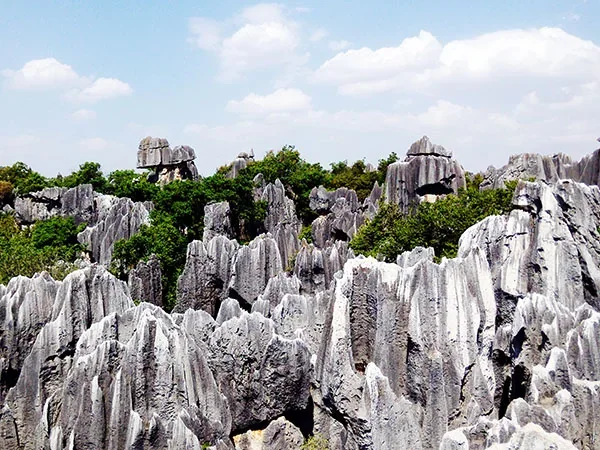
Kunming provides city time and access to selected excursions such as the Stone Forest. Dali combines the Erhai setting, old-town visits and Bai-area cultural interests. Lijiang adds its own old towns, Naxi cultural context and the possibility of a separately planned mountain or gorge outing.
Farther northwest, Shangri-La changes the overnight setting and the practical questions about elevation and climate. Southern journeys around Yuanyang or Xishuangbanna offer different landscapes and regional interests. They should not be added to a short northwest route as if all the places were adjacent.
Use the Yunnan map to place these branches and the geography guide to understand why mountains and valleys complicate a straight-line distance. The places-to-visit comparison helps narrow the choices by interest.
Bai, Naxi, Dai, Yi, Hani, Hui and Han communities are among the people who shape Yunnan. These are not fixed visitor categories, and identity does not tell you an individual's language, religion or daily life. Read the regional communities guide for place-specific context.
Mandarin is useful for travel, while local languages and different written place names can affect communication. The language guide explains how to keep a usable destination card. Ask a person which language or form of address is appropriate rather than assuming from clothing or location.
Food also changes across the province. A bowl of rice noodles, a Dali-area dairy snack and a southern bamboo-rice preparation do not describe one uniform cuisine. The Yunnan food guide explains what to order and what ingredient questions to ask.
Yunnan is often associated with old towns, tea, cultural diversity and dramatic landscapes. Those themes provide a starting point, not a requirement to collect every type of experience. A traveler interested in towns and food can have a worthwhile visit without a high mountain outing; a photographer may prefer extra terrace nights to another city.
For a first week, compare a compact Kunming-Dali-Lijiang route with a more focused stay in fewer places. For ten or fourteen days, add either depth or a well-chosen regional extension. The itinerary planning guide counts nights and transfers so those alternatives can be compared honestly.
A famous place can be worthwhile and still be the wrong addition to this trip. Remove the stop that contributes least to your interests or creates the least useful travel day.
Read the weather guide by region, then check the conditions for each place. Kunming's Spring City nickname does not describe the weather on a higher mountain route or in the tropical south. The altitude guide similarly separates a town base from an excursion.
Use the transport guide to count the journey from one hotel to the next. Tickets, operating hours, access, flight availability and festival dates need current information for the actual visit. This introduction does not turn broad provincial facts into operating promises.
Compare costs by rooms, shared transport, individual admissions and the selected activities using the budget guide. A single province-wide daily amount can hide more than it explains.
It is a province. Kunming is its capital, while Dali, Lijiang and other destinations have their own locations and visitor areas within the province.
Yunnan borders Myanmar, Laos and Vietnam. This is a geographic fact, not a statement that a particular border crossing is available or suitable for your journey.
It is a useful gateway to investigate. Compare the actual route and flights with beginning or ending in another city, especially for a focused northwest trip.
Trying to do so would leave limited time in each place. Choose a compact branch or a few bases and give the experiences you value enough usable days.
No. Region, elevation and season matter. Use separate information for the overnight places and any mountain or rural outings.
Start with the map and itinerary guide. Then choose the climate, transport and cultural articles relevant to your shortlist instead of trying to read every destination page at once.
Compare classic Yunnan itineraries for a practical arrangement of the places that interest you. If your priorities lead to a different combination, request a Yunnan route based on your preferred regions.
Editorial accountability
Hu Lei, CEO. The named owner is responsible for travel-planning accuracy and escalation of time-sensitive checks.
Yuntian Travel (Yunnan) Group is identified in its corporate profile as a licensed professional inbound travel service provider based in Kunming, China. Registration and travel-service documents can be requested before booking.
Page-specific references where cited, official destination, transport and entry notices, YUNSKY route-planning records, and direct provider confirmation before a booking is finalized.
Content is reviewed when rules, transport, access, pricing or route conditions change. Final availability and operating details are reconfirmed for each traveler’s dates.
Quality review: Page updated: