Your China & Yunnan Travel Experts

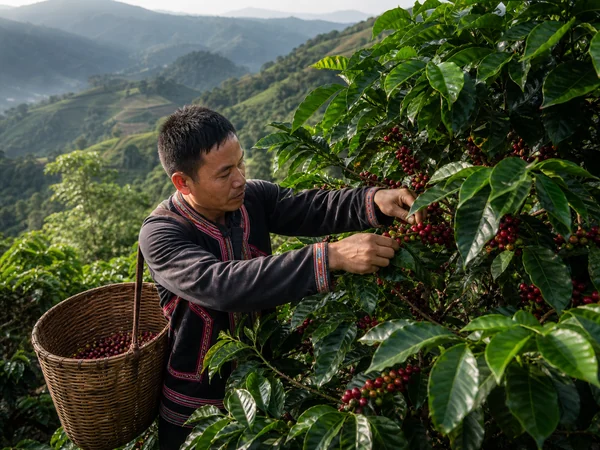
Yunnan coffee can be explored in a cup, a roastery or a growing region, and those are different visitor experiences. Choose a café tasting if your main interest is flavor; choose a farm visit if cultivation and processing justify a separate journey. A photograph of red cherries does not establish what will be happening at a particular farm on your date.
Pu'er and Baoshan are regional names to investigate, alongside other producing areas of Yunnan. An origin label is a starting point for questions about the actual coffee, not proof of a publicly accessible property or a standard tour.
| Information | What it helps explain | What it does not prove |
|---|---|---|
| Growing region or farm | Where the seller says the coffee originated | Public visitor access or the quality of every lot |
| Variety and processing information | Factors that can influence the finished coffee | A guaranteed flavor for every harvest |
| Roast date and roast approach | How the roaster prepared the beans for drinking | That one style is objectively best |
| Brewing method | How this cup was extracted | The character of the same beans under every preparation |
Ask for the specific lot or product rather than compare two cups described only as “Yunnan coffee.” A darker roast and a lighter roast may show different characteristics even when the broad origin is the same.
Begin with two coffees served using the same brewing method where possible. Ask what differs: origin, processing, roast or another variable. If every variable changes at once, the comparison may still be enjoyable but will tell you less about the cause of a particular flavor.
Taste according to your own preference rather than trying to reproduce a list of tasting notes. Ask the barista how the beans are intended to be brewed at home if you plan to buy. A preparation requiring equipment you do not own may be less useful as a souvenir.
The Yunnan tea guide uses a similar principle: separate product identity from presentation and storytelling. Both drinks can be part of a regional interest without claims of special health benefits.
| Visit format | Useful for | Detail to confirm |
|---|---|---|
| Café tasting | Comparing finished cups within an ordinary city day | Actual coffees, method, charge and explanation |
| Roastery session | Learning how roasting and preparation affect the cup | Whether a session is offered, its language and what you will observe |
| Farm or processing visit | Understanding plants, cultivation and processing in place | Access, seasonal activity, route, duration and arrangements |
A farm visit is not automatically more authentic than a thoughtful city session. Its value depends on what you can actually see and learn. If the only available activity is a short commercial demonstration, compare that honestly with the travel time required.
Identify the actual property and obtain permission or a confirmed booking. Ask whether your date overlaps with harvesting, processing or another observable activity. Do not expect a farm to reproduce a harvest scene outside its agricultural schedule.
Clarify what participation, if any, is offered and whether it uses current production or prepared demonstration material. Ask about walking surfaces, shade or shelter, toilets, food, transport and interpretation. A farm name alone does not describe an accessible visitor route.
If photography is important, ask what is permitted and avoid treating workers as a staged part of the experience. The respectful cultural-visit guide offers useful principles for consent and the difference between work and a visitor demonstration.
A tasting can fit into Kunming, Dali or Lijiang when a suitable current provider is identified. This may meet the needs of someone who enjoys coffee but is primarily visiting towns and landscapes.
A production-region focus can lead toward a different regional route. Use the map to see how Pu'er or Baoshan relates to the rest of your itinerary, and the transport guide to count the actual hotel-to-visit journey. Do not add a distant farm pin as if it were a nearby café.
For a southern journey, compare coffee with a tea interest and Xishuangbanna only where the route and available days support the combination. A focused visit can be more informative than several superficial stops.
Ask for the product identity, net weight, roast date where supplied, whole bean or ground format and suggested use. Buy an amount you expect to use rather than assuming a large bag is better value. Keep the label so you can identify what you enjoyed.
A cup price, a structured tasting fee and a farm excursion price cover different things. The last may include transport, interpretation or meals, which should be listed explicitly. Use the budget guide to compare equivalent arrangements and keep optional purchases separate.
If taking coffee home, check the rules relevant to the product and your destination with the appropriate authority. This article does not promise a universal allowance for beans, plants or other agricultural material.
Pu'er and Baoshan are useful regional names to investigate, among other producing areas. Ask for the actual origin of the coffee or property involved in a proposed visit.
No. A farm is a working property, and public access should not be assumed. Arrange permission and a meaningful visitor program before making the journey.
Only if the agricultural timing and the property's arrangements support it. A harvesting photograph or general tour description is not a guarantee for your date.
They answer different questions. A tasting compares finished cups; a well-arranged farm visit can explain cultivation and processing. Choose according to your interest and available time.
Ask about origin, processing information where available, roast date, net weight and a brewing approach that fits your equipment and preferences.
Yes. A suitable city tasting can fit a normal day, while a production-region visit needs its own route and time allocation. State which experience you want.
Use the Yunnan itinerary guide and route ideas to compare the surrounding journey. To add a tasting or an arranged production visit, request a Yunnan itinerary around your coffee interests and the time you want to give them.
Editorial accountability
Hu Lei, CEO. The named owner is responsible for travel-planning accuracy and escalation of time-sensitive checks.
Yuntian Travel (Yunnan) Group is identified in its corporate profile as a licensed professional inbound travel service provider based in Kunming, China. Registration and travel-service documents can be requested before booking.
Page-specific references where cited, official destination, transport and entry notices, YUNSKY route-planning records, and direct provider confirmation before a booking is finalized.
Content is reviewed when rules, transport, access, pricing or route conditions change. Final availability and operating details are reconfirmed for each traveler’s dates.
Quality review: Page updated: