Your China & Yunnan Travel Experts



Population density is a route-planning clue
The heavily urbanized coast and major river corridors support frequent transport and a wide range of hotels, while plateau, desert and mountain regions can require longer transfers and more advance planning. A city's administrative population may include large suburban and rural areas, so headline totals do not always describe the density a traveler feels in the historic center. Compare the specific district, station and attraction instead of assuming every “large Chinese city” has the same layout.
Urbanization and movement
Rapid urban growth has connected former villages, new residential districts and established city centers inside one municipality. Rush-hour pressure may be strongest on a suburban metro line even when a heritage quarter feels quiet. Holiday migration produces a different pattern as students and workers return home or travel for leisure. Avoid scheduling a time-sensitive attraction immediately after an intercity arrival, and reserve transport early when the annual holiday calendar indicates exceptional demand.
According to the National Bureau of Statistics, mainland China's national population was 1.40489 billion at the end of 2025. The official total excludes residents of Hong Kong, Macao and Taiwan and foreigners living in the mainland. There were 7.92 million births and 11.31 million deaths during 2025. People aged 60 or above numbered 323.38 million, or 23 percent of the total, showing why population aging is now central to public policy and family life.
How to read population figures
National totals are revised through annual statistical releases and periodic censuses. A census provides detailed age, residence and ethnic-group data at a point in time, while annual estimates track births, deaths and population change between censuses. Definitions matter: mainland national population, permanent residents and a city's registered household population are not interchangeable. When a travel article quotes a number, it should state the year and geographic scope rather than present it as timeless.
China's family-planning policy changed repeatedly as demographic conditions shifted. Rapid population growth after 1949 was followed by stricter birth limits from the late 1970s. Implementation varied by period and location, and exceptions existed for some families and communities. The policy influenced household size, age structure and the relationship between working adults and older relatives, but individual family experiences were never identical.
Family change is broader than one policy
Smaller household size, longer life expectancy, later marriage, migration for work and rising education costs all affect family life. Grandparents may provide childcare, adult children may support parents across cities and rural households may have members working elsewhere for much of the year. These patterns vary by income, region and personal choice. Travelers should avoid asking intrusive questions about children or assuming that one household represents a national rule.
A nationwide two-child policy took effect in 2016. In 2021, the law was revised to allow married couples to have three children, alongside measures intended to support parenting. Decisions still depend on housing, education, work and personal circumstances. Families arranging a multi-generation holiday can compare practical pacing and room needs in the China family tours collection.
“Overseas Chinese” is a broad term for people of Chinese birth or ancestry living outside China. Communities have developed across Southeast Asia, North America, Europe, Oceania, Africa and Latin America through many periods of migration. Their citizenship, language, identity and connection with ancestral places vary widely. Historic trading ports and hometown districts in Guangdong, Fujian and other regions preserve visible links to these migration histories.
Migration histories in the travel landscape
Kaiping's diaolou, Fujian and Guangdong ancestral villages, treaty-port neighborhoods and remittance-funded schools all reveal links between migration and local development. The architecture may combine Chinese planning with materials or decorative ideas encountered overseas. Interpretation is strongest when it connects the building to a specific family, trade network and period of migration instead of treating every hybrid façade as the same “overseas Chinese style.”
China officially recognizes 56 ethnic groups. The Han form the large majority, while 55 recognized minority groups have distinct and often internally diverse histories, languages and cultural practices. Population size varies greatly among groups, as does geographic distribution. Southwest China is especially diverse; culturally focused visits should emphasize living communities rather than staged stereotypes. The ethnic villages near Longji Rice Terraces page offers one destination-level example.
Visiting culturally diverse regions respectfully
Official ethnic categories are broad and can include communities with different languages, clothing traditions and local histories. Festival dates, religious practice and everyday dress also change by place and generation. A performance arranged for visitors is not the whole of community life. Choose experiences that explain who organized the visit, obtain permission before photographing people and buy crafts from makers or transparent community businesses when possible.
Remote settlements may have limited medical access, narrow roads and seasonal transport. The cultural value of a visit does not remove the need for weather, altitude and accessibility planning.
Markets, crafts and consent
Ask whether a textile, carving or silver object is locally made and whether the price supports the maker. Antique-looking religious or household objects may have unclear origin and should not be removed from communities or protected sites. Photography permission is separate from an admission ticket; a person wearing distinctive clothing is not automatically a public exhibit.
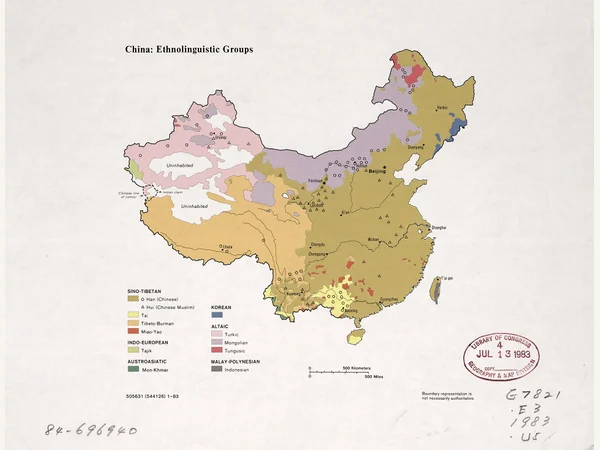
The 2020 national census recorded 1,286,311,334 Han people, or 91.11 percent of the national population, and 125,467,390 people belonging to ethnic minority groups, or 8.89 percent. These nationwide shares do not describe every region: autonomous areas and many counties have very different local compositions. Census categories also cannot capture every aspect of language use, intermarriage or personal identity. Seasonal traditions are introduced separately in Ethnic Group Festivals in China.
China's constitution and laws set out equality among ethnic groups and provide for regional ethnic autonomy in designated areas. Policies also address language, education, cultural heritage and representation; the page's existing ethnic-policy reference is retained for readers who want the historical policy text. Outcomes and local practice can be complex, so readers should distinguish legal frameworks, official statistics and the lived experiences of particular communities. When visiting, respectful photography, appropriate dress and guidance from local hosts are more useful than broad assumptions.
Use specific evidence and careful language
Legal texts, census tables, museum displays and personal accounts describe different aspects of society. They should not be collapsed into one simple claim about every member of a group. Names may also differ between English-language sources, Mandarin transliteration and local self-identification. Preserve the name used by the community or institution, and ask a guide to explain unfamiliar terms.
At religious sites, follow the rules of the active community even when the complex is also a ticketed attraction. Dress modestly, do not interrupt worship and treat graves, prayer objects and household altars as meaningful places rather than photo props.
People in their 70s and 80s
Many people in this age range experienced major political, economic and social changes during their lives. Some live with or near adult children, while others live independently or use community support. Holiday reunions remain important in many families, but household arrangements differ sharply between urban and rural areas.
Multi-generation travel considerations
Older travelers may value slower mornings, shorter walking blocks and reliable access to lifts and toilets, while younger relatives may prefer app-based booking and a fuller evening schedule. A workable family itinerary builds shared anchor activities and optional rest periods instead of forcing every age group through the same pace. Confirm adjoining rooms, breakfast arrangements, vehicle steps and medication storage before arrival.
People in their 50s and 60s
This group includes both working adults and retirees. Pensions, savings, family support and access to public services vary by employment history and location. Many help care for grandchildren or older parents, travel domestically after retirement and take part in neighborhood activities.
People in their 30s and 40s
Adults in their thirties and forties often balance work, housing costs, children's education and care for older relatives. Their experiences differ by profession, city tier and family circumstances. Digital payments, online services and frequent domestic travel are normal parts of life for many, but not universal.
Avoid generational stereotypes
Age can influence memories and technology habits, but occupation, education, city size and family circumstance are just as important. Digital payment use is common across several generations, and domestic tourism includes students, families, retirees and independent travelers. Observing how a particular neighborhood, workplace or museum presents social change is more useful than assigning fixed personality traits to everyone born in one decade.
People in their 20s
People in their twenties include university students, new professionals, entrepreneurs and workers in many industries. Education, employment and housing shape decisions about where to live and whether to marry or have children. Social media and mobile services are widespread, while interests and lifestyles remain highly individual.
Children and teenagers
Most spend much of the year in formal education and with family. Their household may include no siblings, one sibling or more under today's three-child policy. School pressure, leisure, access to technology and opportunities to travel vary considerably between regions and families.
|
Ethnic Group
|
Major Areas of Distribution
|
|
Achang
|
Yunnan
|
|
Bai
|
Yunnan, Guizhou
|
|
Bao'an
|
Gansu
|
|
Bouyei
|
Guizhou
|
|
Bulang
|
Yunnan
|
|
Dai
|
Yunnan
|
|
Daur
|
Inner Mongolia, Heilongjiang, Xinjiang
|
|
De'ang
|
Yunnan
|
|
Dong
|
Guizhou, Hunan, Guangxi
|
|
Dongxiang
|
Gansu, Xinjiang
|
|
Drung
|
Yunnan
|
|
Ewenki
|
Inner Mongolia, Heilongjiang
|
|
Hani
|
Yunnan
|
|
Hezhen
|
Heilongjiang
|
|
Hui
|
Ningxia, Gansu, Henan, Hebei, Qinghai, Shandong, Yunnan, Xinjiang, Anhui, Liaoning, Heilongjiang, Jilin, Shaanxi, Beijing, Tianjin
|
|
Gaoshan
|
Taiwan (population not counted), Fujian
|
|
Gelo
|
Guizhou, Guangxi
|
|
Jing
|
Guangxi
|
|
Jingpo
|
Yunnan
|
|
Jino
|
Yunnan
|
|
Kazak
|
Xinjiang, Gansu, Qinghai
|
|
Kirgiz
|
Xinjiang, Heilongjiang
|
|
Korean
|
Jilin, Liaoning, Heilongjiang
|
|
Lahu
|
Yunnan
|
|
Li
|
Hainan
|
|
Lisu
|
Yunnan, Sichuan
|
|
Loba
|
Tibet
|
|
Manchu
|
Liaoning, Jilin, Heilongjiang, Hebei, Beijing, Inner Mongolia
|
|
Maonan
|
Guangxi
|
|
Miao
|
Guizhou, Hunan, Yunnan, Guangxi, Sichuan, Hainan, Hubei
|
|
Mongba
|
Tibet
|
|
Mongolian
|
Inner Mongolia, Xinjiang, Liaoning, Jilin, Heilongjiang, Gansu, Hebei, Henan, Qinghai
|
|
Mulam
|
Guangxi
|
|
Naxi
|
Yannan, Sichuan
|
|
Nu
|
Yunnan
|
|
Oroqen
|
Inner Mongolia, Heilongjiang
|
|
Ozbek
|
Xinjiang
|
|
Pumi
|
Yunnan
|
|
Qiang
|
Sichuan
|
|
Russian
|
Xinjiang
|
|
Salar
|
Qinghai, Gansu
|
|
She
|
Fujian, Zhejiang, Jiangxi, Guangdong
|
|
Shui
|
Guizhou, Guangxi
|
|
Tajik
|
Xinjiang
|
|
Tartar
|
Xinjiang
|
|
Tibetan
|
Tibet, Qinghai, Sichuan, Gansu, Yunan
|
|
Tu
|
Qinghai, Gansu
|
|
Tujia
|
Hunnan, Hubei
|
|
Uygur
|
Xinjiang
|
|
Va
|
Yunnan
|
|
Xibo
|
Xinjiang, Liaoning, Jilin
|
|
Yao
|
Guangxi, Hunan, Ynnan, Guangdong, Guizhou
|
|
Yi
|
Sichuan, Yunnan, Guizhou, Guangxi
|
|
Yugu
|
Gansu
|
|
Zhuang
|
Guangxi, Yunnan, Guangdong, Guizhou
|
Editorial accountability
Hu Lei, CEO. The named owner is responsible for travel-planning accuracy and escalation of time-sensitive checks.
Yuntian Travel (Yunnan) Group is identified in its corporate profile as a licensed professional inbound travel service provider based in Kunming, China. Registration and travel-service documents can be requested before booking.
Page-specific references where cited, official destination, transport and entry notices, YUNSKY route-planning records, and direct provider confirmation before a booking is finalized.
Content is reviewed when rules, transport, access, pricing or route conditions change. Final availability and operating details are reconfirmed for each traveler’s dates.
Quality review: Page updated: