Your China & Yunnan Travel Experts



The tradition is more than decorative handwriting. A calligrapher coordinates the flexible brush, ink density, absorbent paper and the empty space around each character. Personal expression matters, yet it develops through sustained study of established models. Wang Xizhi, Yan Zhenqing and Su Shi belong to different periods and cannot be reduced to one “Chinese style.” Their work is better approached through dated copies, rubbings, inscriptions and reliable museum labels.
Chinese calligraphy
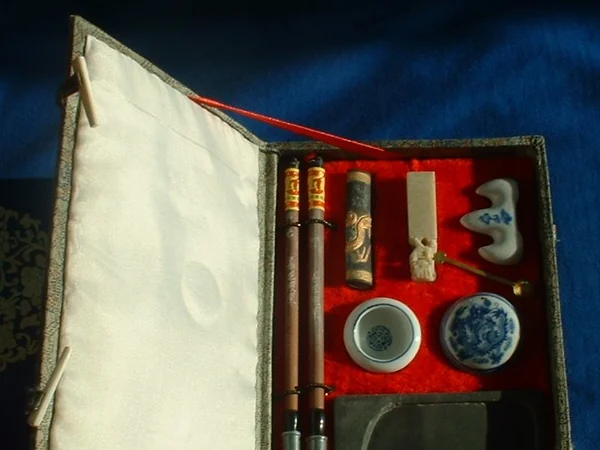
Chinese calligraphy tools
The main schools of calligraphy
Five script families provide a useful map, although styles overlap and individual works may combine features. The table compares their visual logic and representative figures. Script names describe systems of writing, not fixed fonts: period, function, medium and the writer's hand all affect the result.
|
Script
|
Representative figure
|
How to recognize it
|
|
|
Seal Script / Zhuan
|
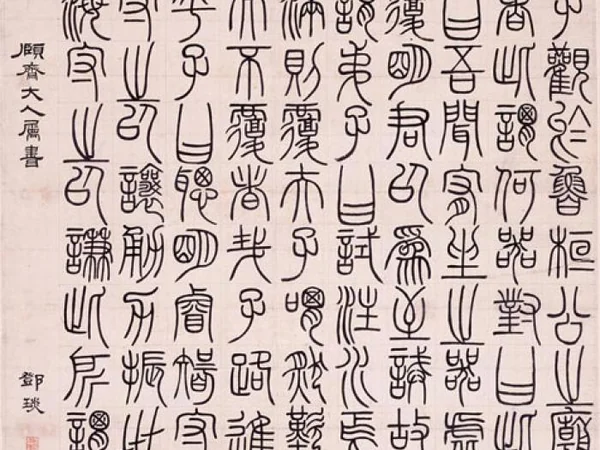 |
Li Si
|
Seal script preserves archaic, often symmetrical forms with relatively even line weight. Small Seal Script was standardized under the Qin, while “large seal” is a broad label for earlier forms. Modern viewers commonly encounter it on seals, plaques and works that evoke antiquity.
|
|
Clerical Script / Lishu
|
 |
Cai Yong
|
Clerical script became prominent in the Han administrative world. Characters tend to be broad, with clearly articulated horizontal strokes and, in many examples, flared endings. It marks a major shift away from the rounded structures of seal script.
|
|
Regular Script / Kaishu
|
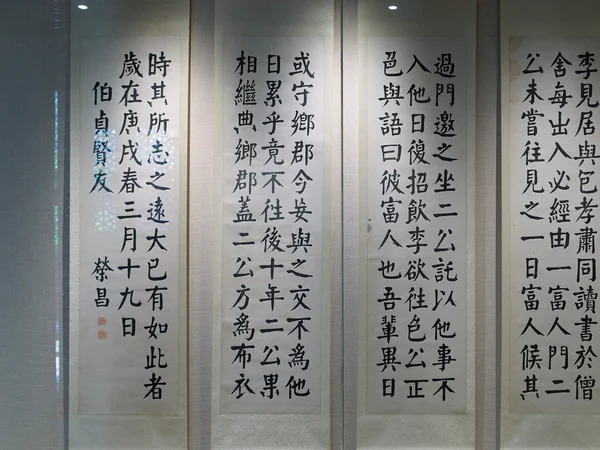 |
Ouyang Xun, Yan Zhenqing and Liu Gongquan
|
Regular script makes each stroke and component legible within a stable square structure. It is the most accessible starting point for many learners, but mature examples differ greatly in tension, weight and proportion.
|
|
Cursive Hand / Caoshu
|
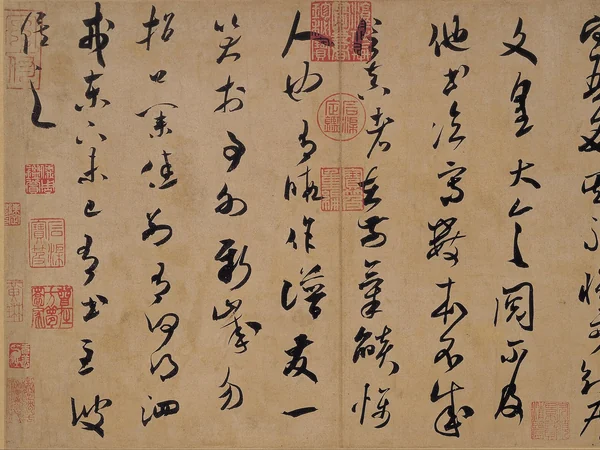 |
Zhang Xu and Huaisu
|
Cursive script abbreviates and connects forms to sustain momentum. It is not careless writing: the transformations follow learned conventions, and reading highly cursive work requires specialist knowledge.
|
|
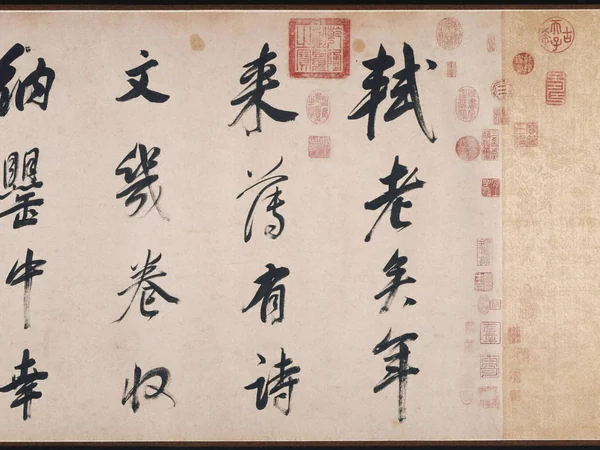
Running Hand / Xingshu
|
 |
Wang Xizhi
|
Running script sits between the separation of regular script and the compression of cursive writing. Strokes may join and structures may relax, making it suitable for letters as well as expressive works.
|
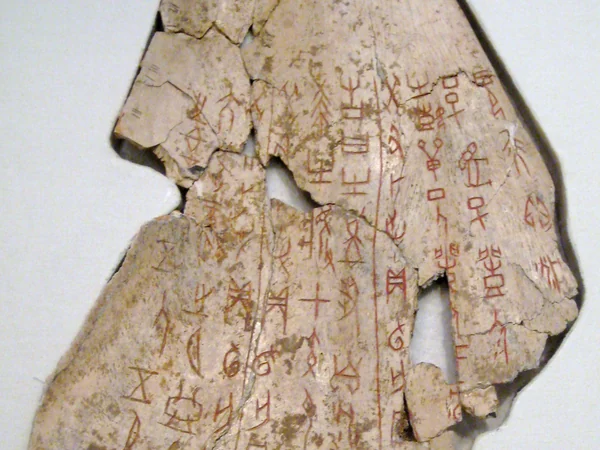
Early writing survives especially on oracle bones, bronze vessels, pottery and stone. These materials preserve different purposes—from divination records to commemorative inscriptions—and should not be treated as one uniform “first calligraphy.” The act of incision also looks different from writing with a brush, even when a brush-drawn model preceded carving.
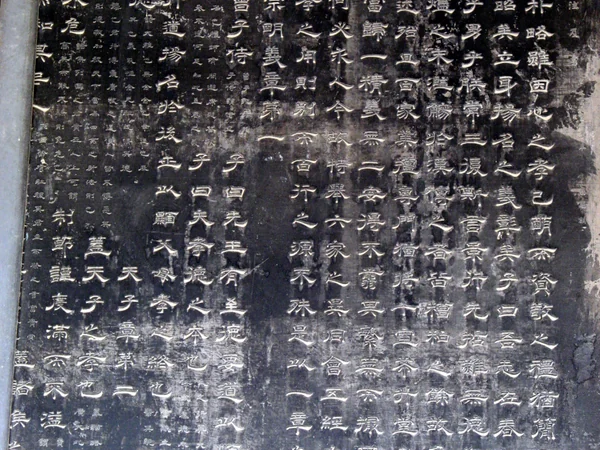
Imperial unification encouraged standardization of writing, with Small Seal Script associated with official Qin inscriptions. Clerical tendencies also developed through practical writing. The Mount Tai inscriptions are important to the transmitted story, although surviving versions involve later recutting and preservation histories that labels may explain.
Clerical script flourished in Han documents and monuments, while early forms of cursive, running and regular writing developed over time. Bamboo slips, silk manuscripts and stone steles reveal that change was not a clean replacement of one script by another. Mawangdui manuscripts and major Han steles allow viewers to compare everyday writing materials with formal commemorative carving.
This period was decisive for the prestige of individual calligraphic style. Zhong Yao became associated with the development of regular script, while Wang Xizhi and Wang Xianzhi shaped later standards for running and cursive hands. Famous works such as the Preface to the Orchid Pavilion are known through copies and rubbings rather than an uncontested surviving autograph, an important distinction in museum interpretation.
Sui and Tang calligraphers consolidated regular-script models while also extending running and cursive expression. Stele carving, state institutions and the culture of copying helped circulate styles. Rather than describing the period as one uninterrupted “golden age,” look at how particular writers solved structure, pressure and scale.

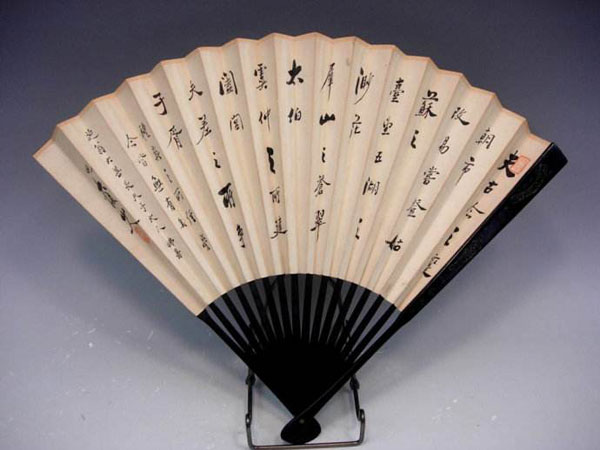
Ming artists including Wen Zhengming and Dong Qichang developed influential studio and collecting traditions. Qing scholars' study of ancient inscriptions encouraged renewed interest in seal and clerical scripts. Multiple schools coexisted, so court taste, epigraphy and commercial urban culture should be considered separately.
Editorial accountability
Hu Lei, CEO. The named owner is responsible for travel-planning accuracy and escalation of time-sensitive checks.
Yuntian Travel (Yunnan) Group is identified in its corporate profile as a licensed professional inbound travel service provider based in Kunming, China. Registration and travel-service documents can be requested before booking.
Page-specific references where cited, official destination, transport and entry notices, YUNSKY route-planning records, and direct provider confirmation before a booking is finalized.
Content is reviewed when rules, transport, access, pricing or route conditions change. Final availability and operating details are reconfirmed for each traveler’s dates.
Quality review: Page updated: