Your China & Yunnan Travel Experts



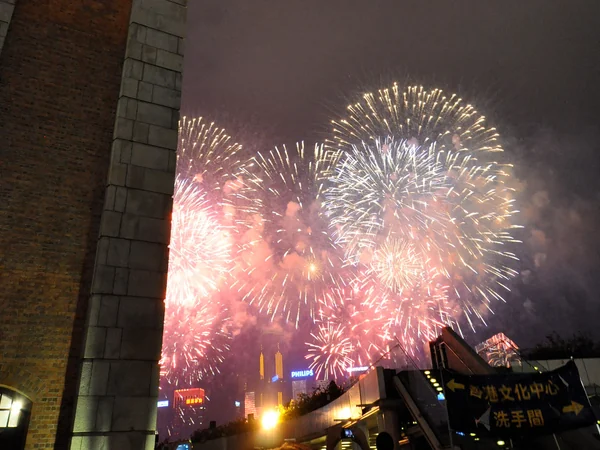
When and How Long Is Spring Festival?
Spring Festival begins on the first day of the first month in the traditional Chinese calendar. Its Gregorian date changes each year, while preparations and the travel rush start before New Year's Day. The customary cycle often continues to the fifteenth lunar day, the Lantern Festival. Use the Chinese New Year planning guide for the current date and holiday distinction.
Origins of Spring Festival
Spring Festival developed from long-standing practices of marking a new year, honoring ancestors, welcoming favorable forces and strengthening family and community ties. The exact origin cannot be reduced to one story.
The popular Nian monster legend explains red decorations, noise and “crossing the year” in folklore. It should be told as cultural narrative rather than literal history.

Two Central Themes
The first theme is transition: clearing away the old year and welcoming renewal.
The second is reunion. Families may travel long distances for New Year's Eve dinner, which is one reason transport demand rises before the holiday.
Common Spring Festival Customs
Spring couplets: paired lines written on red paper convey wishes for the new year and are placed around doorways.
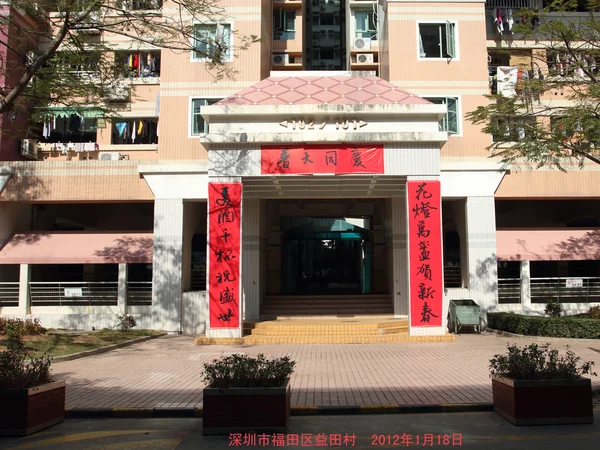
Spring couplets on a doorway
Reunion dinner: families share a substantial meal on New Year's Eve; dishes differ by region and household.
Staying up late: some households remain awake to welcome the new year, while others celebrate more quietly.
Red envelopes: elders or married adults may give money in red envelopes; digital versions are now common.
Firecrackers and fireworks: rules vary by city and can change, so never assume private fireworks are legal.
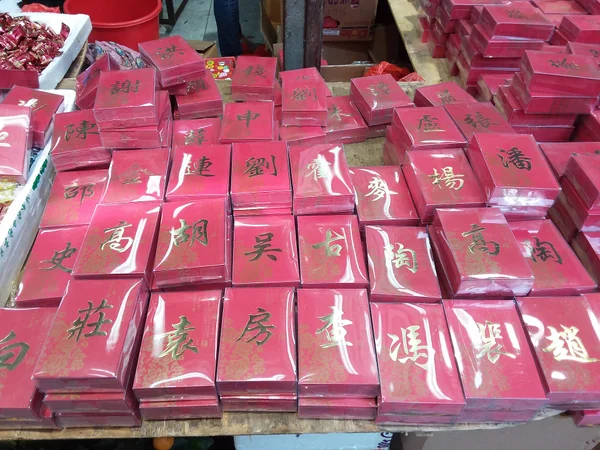
Red envelopes prepared for New Year greetings
New Year's Eve Celebrations
After dinner, families may talk, watch a gala, play games or exchange greetings. Household routines differ, and a television program is not a requirement.
Reserve restaurants early and confirm opening hours.
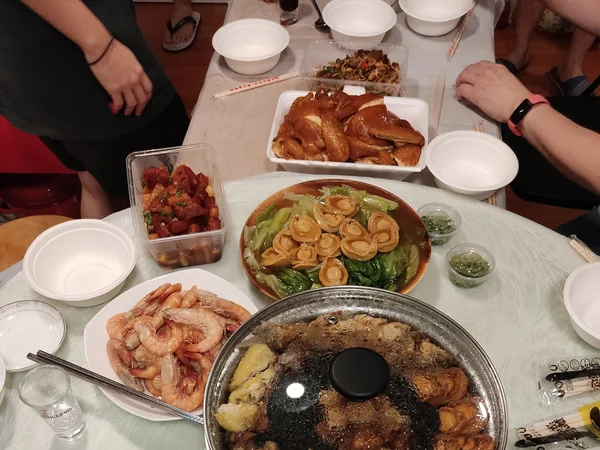
Family reunion dinner at Chinese New Year
What to Do During the New Year Period
Mobile messages and digital red envelopes connect relatives who cannot meet in person.
Digital greetings
A short, personal greeting is usually more appropriate than forwarding an impersonal mass message.
Commercial matchmaking themes
Media stories about pressure to bring a partner home reflect social discussion, not a custom visitors should imitate or joke about with strangers.
Jiǎozi: dumplings are especially prominent in parts of northern China; fillings and shaping traditions vary.
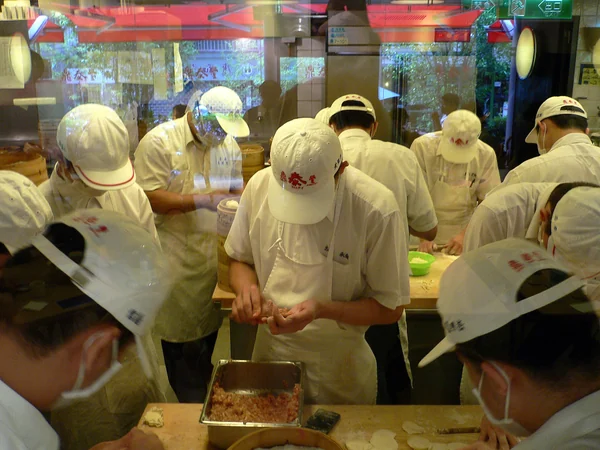
Family making dumplings together
Tāngyuán: round glutinous-rice balls, often with sweet fillings, symbolize togetherness and are strongly linked with the Lantern Festival.
Zòngzi: leaf-wrapped rice parcels are more closely associated nationwide with Dragon Boat Festival than with Spring Festival, though individual families may serve them.
Regional Activities across China differ in performance, food and timing.
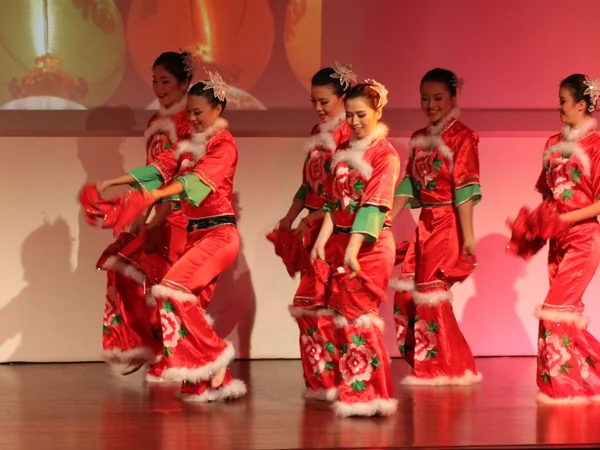
temple fairs may combine folk performance, crafts and food; dates, venues and admission change. In Guangzhou
Day-by-Day Guide to Spring Festival
| New Year's Eve | Prepare the home, place decorations and share a reunion dinner; specific rites vary. |
|
First day
|
Exchange greetings and make visits according to family arrangements.
|
|
Second day
|
Some families visit the wife's parents or honor ancestors and deities.
|
|
Third and fourth days
|
Visiting patterns differ; do not apply one regional taboo as a universal rule.
|
|
Fifth day
|
Some traditions welcome the God of Wealth; public observance is not guaranteed.
|
|
Sixth to tenth days
|
Visits, temple programs and community celebrations may continue. The seventh day is known in some traditions as Rénrì, the symbolic birthday of humankind.
|
|
Ninth day
|
Some communities make offerings associated with the Jade Emperor.
|
|
Tenth to twelfth days
|
Meals and visits may continue, depending on work and family schedules.
|
|
Fifteenth day
|
The Lantern Festival closes the customary cycle with lanterns, riddles and rice dumplings.
|
Travel Cautions During Spring Festival
Transport: rail and air demand can be intense before and after the statutory break; book as soon as plans are firm.
Restaurants: some close or shorten hours, while popular reunion venues sell out.
Hotels: availability and rates vary by city; confirm reservations and cancellation terms. Use the pre-festival preparation guide to build a resilient itinerary.
Separate the lunar festival cycle from the public-holiday schedule
Spring Festival is a cultural season that begins before Lunar New Year's Day and traditionally extends to the Lantern Festival. The statutory holiday is an administrative period announced for a particular year and does not cover every family custom or transport peak. Factories, small businesses, attractions and restaurants may use different closure dates. Plan with three calendars: the lunar date, the official holiday notice and the operating schedule of each service you need.
The pre-holiday travel rush can start weeks before the first day, and return travel occurs in several waves. A city may feel quiet on New Year's morning while a temple fair or shopping district becomes busy later. Do not interpret one neighborhood's opening pattern as a national rule. Confirm every fixed connection and keep a flexible meal or attraction option.
Understand regional and household differences
There is no single Spring Festival menu, decoration sequence or visiting timetable shared by every family. Northern households may emphasize dumplings, parts of the south may favor rice cakes or other dishes, and coastal, inland and minority communities maintain distinctive foods and performances. Urban apartment life, migration, mixed families and work schedules also reshape practice.
If invited to a home, ask the host about arrival time, shoes, seating, gifts, dietary restrictions and whether photographs are welcome. Follow the household's way of greeting elders and handling incense or ancestral rites. A custom described online as a taboo may be important in one family, unknown in another or observed mainly by an older generation. Listening is more respectful than correcting a host with a checklist.
Plan the reunion dinner as a real reservation
For many families, New Year's Eve dinner is the emotional center of the holiday. Restaurants with reunion menus can sell out early, require a deposit or offer only fixed sittings. Ask for the full menu, serving size, drinks, service charges, cancellation terms and the time by which the table must be released. Travelers with allergies should provide a written Chinese ingredient card and confirm sauces, stocks and cross-contact rather than relying on a dish name.
A home meal may include symbolic foods, but symbolism varies. Fish can suggest surplus, dumplings can evoke historical ingots and niangao can suggest rising higher through wordplay. These meanings enrich the meal without making any one dish compulsory. Wait for the host before starting, take moderate portions from shared dishes and avoid turning an intimate reunion into continuous content production.
Choose public celebrations with clear provenance
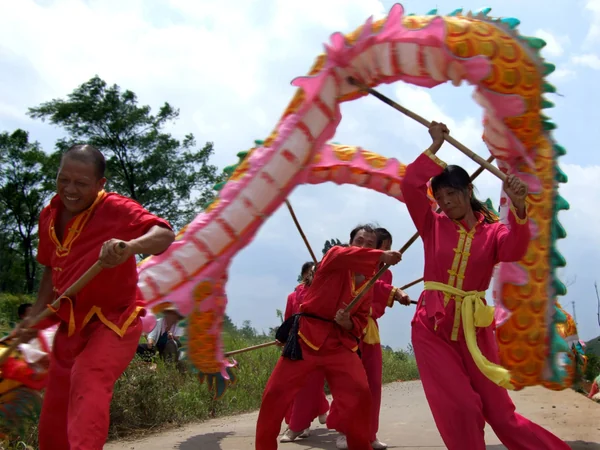
Temple fairs, lantern displays, lion and dragon dances, folk-art markets, concerts and museum programs are public-facing ways to experience the season. Use the named organizer and venue for the current year. A video from a previous edition does not prove that a parade will return to the same street or that a market remains free. Save the event notice and transport map offline.
At a temple fair, distinguish religious spaces from commercial stalls. Do not block worshippers, touch offerings or photograph a rite without consent. Around lion and dragon teams, stay behind barriers and give performers room to move. Drums, cymbals and amplified stages can be loud; children and sound-sensitive visitors may need hearing protection or a quieter viewing position.
Fireworks, firecrackers and lantern safety
Fireworks rules vary by city, district, venue and year. Some places prohibit private use, restrict dates or designate licensed displays. Never buy or ignite fireworks based only on the assumption that they are traditional. Follow the current local notice, watch professional displays from the public zone and protect hearing. Smoke can aggravate respiratory conditions, and debris can remain hot after the noise ends.
Decorative lanterns should not be released into the air or water unless a lawful managed event specifically provides for it. Open flame, candles and incense create fire risk in crowded heritage areas. Keep exits clear, supervise children and do not attach decorations to protected buildings, trees or electrical equipment.
Transport during chunyun
High-demand rail tickets, flights and intercity buses require an early, realistic plan. Use the exact passenger names and identity documents required by the booking channel. Station names can be similar and a high-speed terminal may be far from the old city. Allow time for traffic, identity checks, security and navigation inside a large hub.
A waitlist or connecting itinerary should be understood before purchase. Do not create a chain of separate nonrefundable tickets with no recovery time. Keep medicine, chargers, water and one change of essentials in hand luggage. If traveling with children or older relatives, agree on a meeting point and store the hotel name and address in Chinese. Private drivers should provide a verified company, vehicle and price rather than requesting an untraceable personal payment.
Hotels, restaurants and daily services
Confirm that a hotel will accept the traveler's identity document, maintain the reserved reception hours and keep breakfast or restaurant service during the holiday. A low prepaid rate can carry strict cancellation conditions. Ask whether the property is near the event or station actually being used, because reduced taxi availability and road controls can make a short map distance inconvenient.
Convenience stores and larger chains may open while family-run businesses close. Keep a simple food backup without overbuying. Pharmacies, clinics, banks, museums and parcel services can use special hours. Save insurance and emergency contacts offline and do not postpone essential medicine until the holiday period.
Red envelopes, gifts and money etiquette
Red envelopes express good wishes and relationships; they are not a tourist admission fee. If a visitor is unsure whether to give one, ask the host privately. The amount, recipient and method vary. Use clean new notes if a physical envelope is appropriate and avoid displaying or comparing amounts publicly. Digital red envelopes require a compatible verified account and should never be used as a reason to request access to another person's phone.
Fruit, tea or another modest host gift may be suitable, but context matters. Avoid an extravagant object that creates obligation. Present a gift with both hands when appropriate and do not insist that it be opened immediately. Some numbers, colors and objects carry associations, yet personal taste and family custom matter more than a generic superstition list.
Photography, privacy and children
Public decorations do not remove a person's right to privacy. Ask before making a close portrait of a child, elder, worshipper, craftsperson or performer offstage. Do not publish a home interior, altar or family meal without permission. A red doorway or couplet may belong to a residence rather than a visitor attraction.
Crowds make supervision essential. Photograph a child's clothing at the start of the day, provide a contact card and identify staff or a fixed reunion point. Avoid placing children on walls or barriers for a better view. Strollers may be difficult on temple steps and in dense markets, so ask about accessible entrances and storage before arrival.
Accessibility and sensory planning
Temporary barriers, queues, snow, cables and street stalls can change an otherwise accessible route. Contact the exact event about step-free entry, wheelchair viewing, accessible toilets, seating and companion arrangements. A lantern park may involve long dark paths even when the entrance is level. Carry a small light for uneven ground without shining it at performers or artworks.
People who tire easily can choose a daytime museum program, seated performance or neighborhood decoration walk instead of a late crowded countdown. Build warm-up or quiet breaks into the schedule. If a traveler uses medication, mobility equipment or a service animal, obtain current venue guidance rather than assuming ordinary-day access rules remain unchanged.
Three workable itinerary styles
A city culture plan can combine one museum exhibition, a decorated historic district and a confirmed public performance with plenty of meal and transit time. A family plan can center on a reunion visit, one child-friendly lantern program and a flexible daytime outing. A winter route can combine Beijing or another northern city with public New Year activities, but only if cold-weather clothing and holiday transport are treated as essential logistics.
Do not try to collect every famous custom in one trip. The strongest experience follows one place through preparation, reunion and public celebration while leaving room for closures and family privacy. Build the trip so that it remains worthwhile if fireworks are canceled, a fair is crowded or a restaurant changes hours.
Use current information without rewriting tradition
Stable cultural explanations and current operating details are different kinds of information. The meaning of reunion or a couplet can be discussed over time, while train schedules, fireworks rules, visa conditions and event tickets must be checked for the exact year. Record the date of every operational source and verify it again shortly before departure.
A responsible visitor avoids claiming that one urban show is the authentic form of a national festival. Ask who organized the event, which community tradition it draws on and how local people describe it. That approach respects both continuity and the real diversity of Spring Festival today.
Preparations and decorations
House cleaning, food preparation, haircuts, shopping and travel can concentrate before New Year's Day, but the timing follows household needs. Couplets, paper cuts, door gods, lanterns and the character fu all have specific visual and verbal meanings. Do not paste a decoration upside down or across a doorway merely because an internet caption calls it lucky. Ask a knowledgeable host or vendor about the wording, direction and appropriate location.
Historic districts and hotels may install decorative displays for visitors. These are useful public settings for photographs, but they should not be described as a private family altar or centuries-old object unless the label supports that claim. Do not attach anything to a protected surface, and avoid buying decorations made from protected wildlife or misleadingly presented as antiques.
Using the day-by-day calendar
Traditional accounts assign activities, visits or taboos to particular days, but practice varies greatly. Use the calendar as a guide to stories and family rhythms, not as proof that a museum, bank or restaurant will follow the same schedule. The Lantern Festival on the fifteenth day has its own foods and public programs, and a traveler arriving late in the cycle should verify whether displays continue beyond the named date.
If the trip includes more than one city, compare event calendars before purchasing transport. A lantern show may open before New Year's Day, continue afterward or use timed weekends. A community parade can be canceled by weather or crowd management. Keep the ordinary attractions and neighborhoods that make the destination worthwhile even without the special event.
Greetings and language
Simple good wishes are usually more welcome than a memorized joke about money, marriage or zodiac stereotypes. Use the recipient's preferred language and relationship. Younger relatives may greet elders more formally, while friends exchange casual messages. If pronunciation is uncertain, a written card can carry the intended wording clearly.
The zodiac animal changes with the lunar year, but a person's sign does not determine personality or compatibility in a way that licenses teasing. Do not ask intrusive questions about age, income, marriage or fertility because a holiday article mentioned them. Visitors build trust by following the conversation led by the host.
After the headline holiday
Return travel, school reopening, freight movement and business restocking can remain busy after the official break. Confirm the date a supplier, guide or restaurant actually resumes normal service. A city that appears open may still have reduced staffing or limited deliveries. Leave recovery time before an international departure and avoid scheduling a critical same-day transfer through a high-demand hub.
For travelers staying through Lantern Festival, compare daytime lantern craftsmanship, evening lighting, riddle activities and food traditions without assuming that every display is open all day. Keep warm or rain protection, supervise children in dark crowded areas and follow one-way routes. The close of the customary cycle is an opportunity to understand continuity, not simply one last crowded photograph.
A final booking checklist
Reconfirm the traveler names, identity documents, ticket dates, station or airport, hotel acceptance, event venue and refund terms. Download confirmations and the Chinese address of every essential stop. Carry more than one lawful payment option and keep emergency contacts accessible without a network connection. Check the weather, air quality where relevant and any crowd notice on the morning of the event.
Finally, ask whether each activity still fits the group's energy and interests. Removing one crowded late-night program can protect sleep, safety and the next day's journey. Spring Festival travel works best when logistics support the cultural experience rather than competing with it.
Keep the plan calm, verify changing details and leave enough time to enjoy the people, food, craft and meaning behind the celebration.
Editorial accountability
Hu Lei, CEO. The named owner is responsible for travel-planning accuracy and escalation of time-sensitive checks.
Yuntian Travel (Yunnan) Group is identified in its corporate profile as a licensed professional inbound travel service provider based in Kunming, China. Registration and travel-service documents can be requested before booking.
Page-specific references where cited, official destination, transport and entry notices, YUNSKY route-planning records, and direct provider confirmation before a booking is finalized.
Content is reviewed when rules, transport, access, pricing or route conditions change. Final availability and operating details are reconfirmed for each traveler’s dates.
Quality review: Page updated: