Your China & Yunnan Travel Experts


Reviewed: August 27, 2026. This guide helps European travelers plan a focused 7–14 day China trip. It does not determine visa eligibility: ordinary-passport holders using China's unilateral visa-free policy must still meet the current nationality, purpose and border-inspection conditions. Count the immigration window separately from hotel nights and verify the rule again before departure.
Under the current unilateral policy, an eligible visit can last up to 30 days and the count begins on the day after entry. A short itinerary should still keep a departure buffer. Confirm the passport covers the stay, carry onward travel and accommodation evidence, and obtain the correct visa in advance for work, study, journalism or a planned stay beyond the waiver.
Seven days usually supports one major gateway plus one nearby destination; ten days can support two regions; 12–14 days can support three regions when rail or flight times are sensible. Count door-to-door movement, check-in, security, station transfers and recovery from the Europe–China flight—not only the scheduled time on a train.
Use nights rather than city names as the planning unit. Three nights create two full sightseeing days; a two-night stop often creates only one. Add a night where an attraction requires a timed ticket, the landscape is weather-sensitive, or a traveler needs a slower pace. The result may be fewer pins on a map but more usable experience.
Build around a question—imperial and modern capitals, archaeology and urban change, food regions, or city and landscape—rather than collecting unrelated highlights. The recommended China itineraries under 15 days can be used as route sketches; confirm current transport and admission before adopting one.
Beijing
Allow three to four nights for a first visit if the Forbidden City, a Great Wall section and the historic central axis matter. Timed admission, security checks and cross-city travel make these poor half-day add-ons. Select a Great Wall section by terrain, access and crowd tolerance, and use official ticket channels where available.
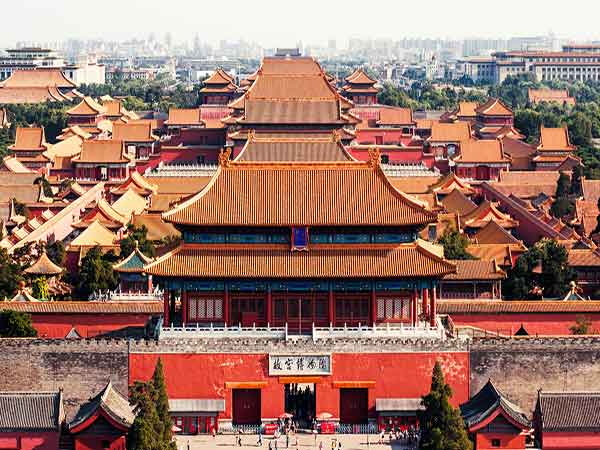
The Forbidden City in Beijing—keep this image with the Beijing planning section and verify its current timed-entry process before travel.
Xi'an
Two or three nights can cover the Mausoleum of the First Qin Emperor site area, the city wall and one museum or neighborhood study without compressing everything into arrival day. The Big Wild Goose Pagoda and Small Wild Goose Pagoda are distinct historic sites; use precise names and check each site's opening and reservation information.
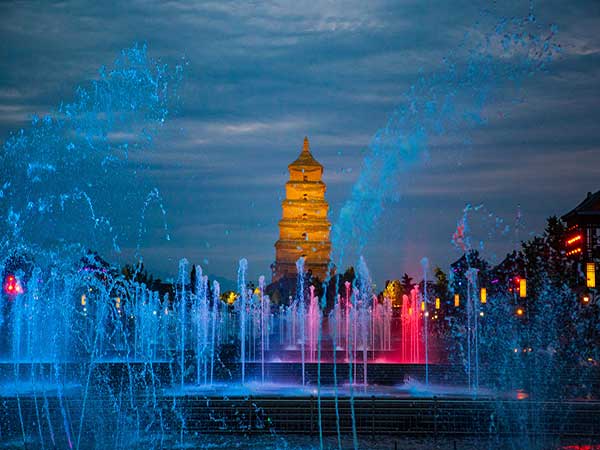
Zhangjiajie
Allow at least three nights when the national-park landscapes are a principal reason for travel. Mountain weather, queues, lifts, buses and walking surfaces affect the day more than map distance. Keep an indoor or lower-elevation alternative and do not promise a specific view when cloud or rain is possible.
Guilin and Yangshuo
Three nights can combine karst landscape, a river or countryside day and transport recovery. Decide whether to sleep in Guilin or Yangshuo from the next rail connection and the field experience desired. Check river conditions, cycling safety and permissions; rural communities and working fields are not open-air displays.

Shanghai
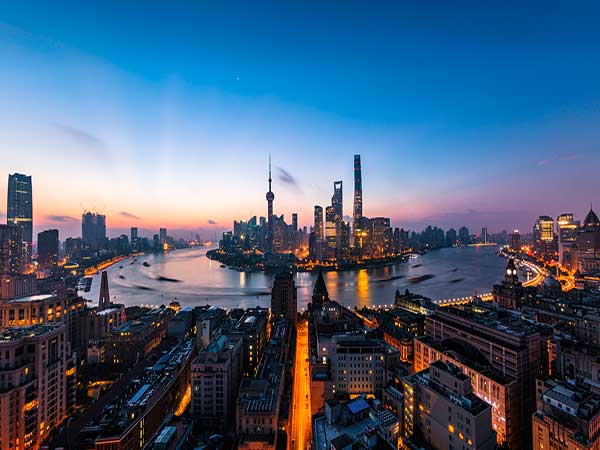
Two or three nights work well at the beginning or end of a route because the city is a major international gateway. Pair the Bund–Pudong cityscape with a museum, neighborhood or planning question so the stop is more than skyline photography. Allow airport time based on the airport and terminal actually used.
Chengdu
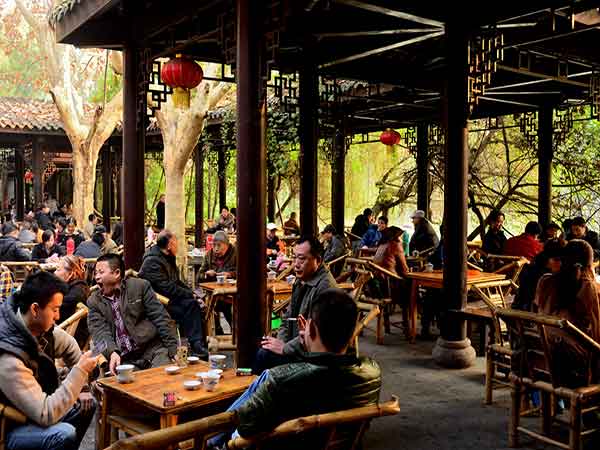
Two or three nights can support a responsibly managed panda visit, a museum or heritage site and food culture. Visit a recognized conservation or research facility, follow animal-welfare rules and avoid products that advertise direct contact. Early hours can suit panda activity, but confirm current admission and transport.
Chongqing
Two nights can introduce the municipality's vertical urban form, river geography and layered transit. Choose viewpoints and routes that are safe and accessible for the group; do not treat a residential building or transit space as a film set. A Yangtze cruise requires separate schedule, season and embarkation checks.
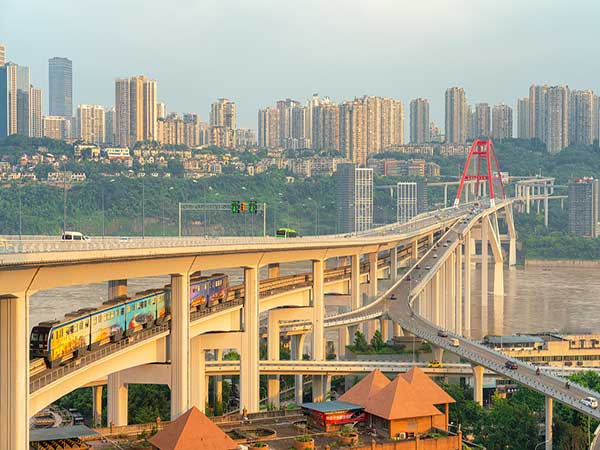
Transportation in Chongqing—the image remains beside the city's vertical-transit discussion, not a generic China transport claim.
Spring and autumn often offer workable temperatures in several major cities, but China has multiple climate zones and no single best month. Compare destination-level weather with the current national holiday calendar, school breaks and timed-entry supply. Avoid fixed promises: heat, rain, typhoons, snow, air quality and crowding vary by place and year.
Pack for the specific route, not for an abstract national forecast. Include rain and sun protection, footwear already tested for long walking days, medication in original packaging and a layer for conditioned interiors or altitude. Travelers with mobility or sensory needs should request current step-free routes and quiet alternatives directly.
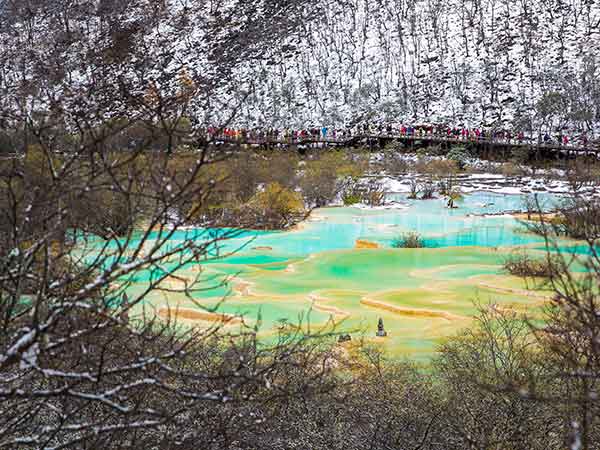
Huanglong in winter—this photograph illustrates seasonal snow and should remain with the weather and equipment section; it does not establish present access conditions.
Independent travel offers control but places ticketing, language, transport, payment and disruption decisions on the traveler. A private guide may add context and pacing; a small group may lower planning effort but fixes dates and daily rhythm. Compare the exact itinerary, guide credentials, cancellation terms, accessibility and shopping policy instead of assuming one format is always better.
Independent travelers should set up more than one payment method using the China payment guide for European visitors, and should book rail only through an authorized channel after checking the China high-speed rail planning guide. Use the passport details exactly as printed and carry that same passport for the journey.
First, verify entry eligibility and the passport. Second, choose arrival and departure gateways. Third, secure the hardest timed attraction or long-distance leg before filling minor stops. Fourth, book accommodation that can complete foreign-guest registration and matches access needs. Fifth, store confirmations, addresses and emergency contacts offline. Sixth, recheck official transport, weather, attraction and policy sources shortly before each use. This evidence trail makes the itinerary adjustable without becoming vague.

From $ 22782050
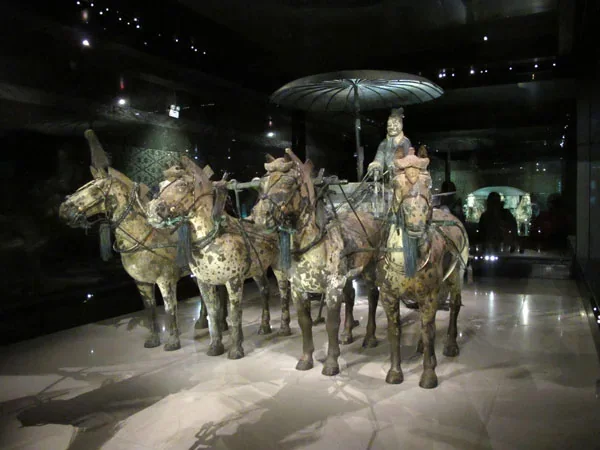
From $ 2983
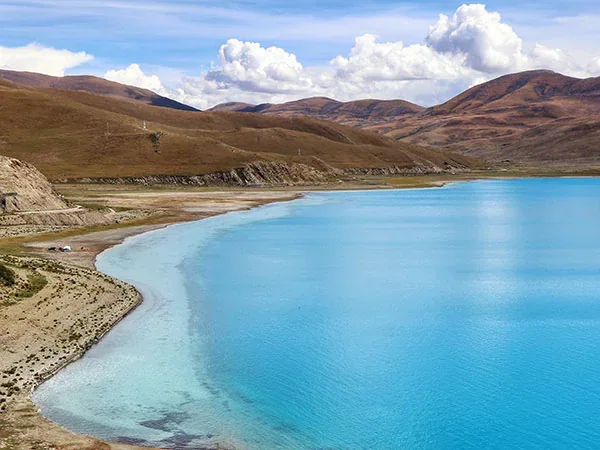
From $ 28612575
Editorial accountability
Hu Lei, CEO. The named owner is responsible for travel-planning accuracy and escalation of time-sensitive checks.
Yuntian Travel (Yunnan) Group is identified in its corporate profile as a licensed professional inbound travel service provider based in Kunming, China. Registration and travel-service documents can be requested before booking.
Page-specific references where cited, official destination, transport and entry notices, YUNSKY route-planning records, and direct provider confirmation before a booking is finalized.
Content is reviewed when rules, transport, access, pricing or route conditions change. Final availability and operating details are reconfirmed for each traveler’s dates.
Quality review: Page updated: