Your China & Yunnan Travel Experts


Reviewed: August 27, 2026. Where to visit in China depends on available nights, arrival gateway, season, mobility and the kind of evidence or experience you want—not on a universal “top cities” list. For a first 10–14 day journey, select two or three regions with a clear route logic. Beijing, Xi'an and Shanghai make a strong history-to-modernity axis; Guilin or Zhangjiajie adds landscape; Chongqing adds river and vertical-city questions; Hangzhou or Suzhou offers a compact lower-Yangtze extension. Tibet is a separate high-altitude and permit-planning decision covered in the Tibet travel planning hub.
Choose Beijing for imperial institutions, the Great Wall, museums and the historic central axis. The Palace Museum and a Great Wall excursion need separate full blocks because timed admission, security, cross-city travel and terrain matter. The Palace Museum currently uses real-name advance booking and no same-day ticket sales; recheck its official international visitor instructions and Monday closure before confirming transport. The broader Beijing travel guide can help compare districts and day trips.
Beijing rewards comparison. Read the Forbidden City as a palace institution, the Temple of Heaven as a ritual landscape and a Great Wall section as one part of a multi-period defense system. Add a hutong or museum with permission-aware photography and a named interpretive purpose. Three nights can cover two major days; four are better when jet lag, mobility or a weather alternative matters.
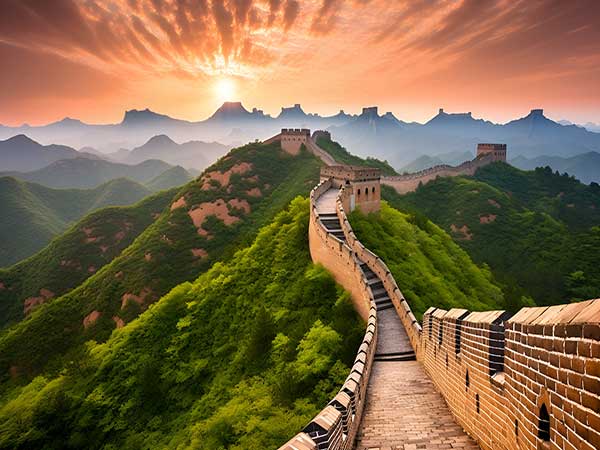
The Great Wall photograph remains beside Beijing because it shows a Beijing-area section; it does not imply every section has the same masonry, access or crowd level.
Best for:
First-time heritage travelers who can devote two full days plus arrival recovery
Route pairing: Beijing with Xi'an by verified high-speed rail, or with Shanghai for an open-jaw international itinerary
Choose Xi'an for archaeology and the long history of a former capital. UNESCO identifies the Mausoleum of the First Qin Emperor as a large protected complex, with the burial mound and extensive associated pits; allow most of a day for the site outside central Xi'an. In town, select the city wall, a museum or one pagoda area according to interest rather than collecting every landmark.
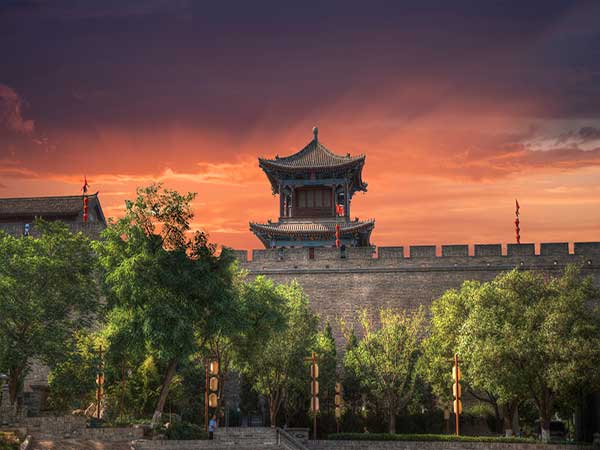
Xi'an City Wall is pictured here because it belongs to the urban-history option. Check current opening, access and bicycle rules before arrival; walking a short section may be more inclusive than cycling.
Best for:
Archaeology, early imperial history and travelers who enjoy object-based museum interpretation
Route pairing: two or three nights between Beijing and Shanghai, with passport details matched exactly across rail bookings
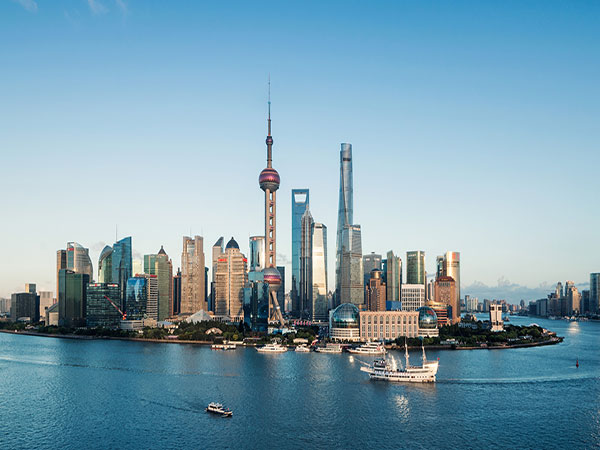
Choose Shanghai to examine port history, migration, architecture and rapid urban change. The Bund and Pudong skyline create a useful comparison, but neither represents the whole city. Add a museum, former industrial site, lane neighborhood or contemporary design district, and distinguish documented history from nostalgic storytelling.
Shanghai also works as an arrival or departure buffer because it has major international gateways. Confirm whether the flight uses Pudong or Hongqiao, calculate the transfer from the actual hotel and avoid using the last day for a fragile domestic connection. Two nights provide one full day; three allow a more meaningful contrast between waterfront and neighborhood scale.
Best for:
Architecture, urban history, museums, food and travelers needing an international gateway
Route pairing: Beijing–Xi'an–Shanghai, or Shanghai with Hangzhou and Suzhou as a lower-Yangtze cluster
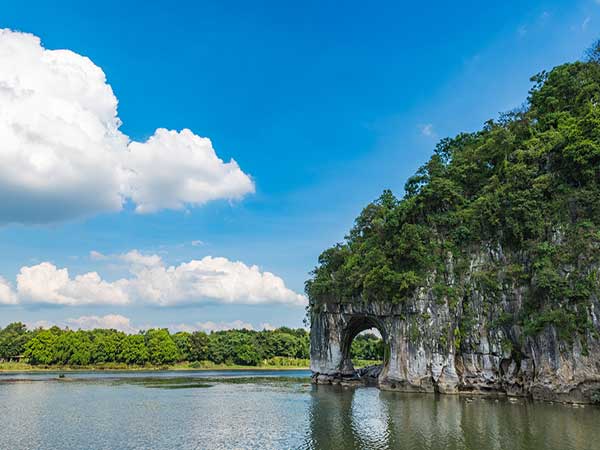
Choose Guilin for riverine karst and a slower countryside component. UNESCO includes Guilin within the South China Karst serial property and describes its tower and cone karst as an internationally important landscape. A useful stay combines one verified river or viewpoint day with one ground-level rural experience; keep a land alternative when weather or river operations change. The Guilin travel guide explains the wider destination context.
Best for:
Karst geomorphology, landscape photography and travelers who can respect working fields and village privacy
Route pairing: use Guilin or Yangshuo as the base according to the onward rail or airport connection rather than switching hotels for one night
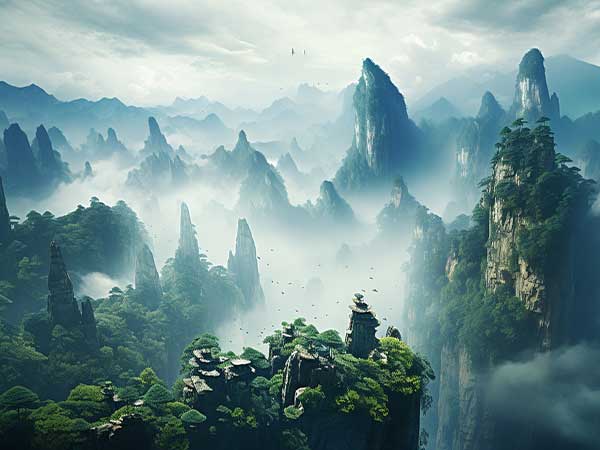
Choose Zhangjiajie for steep sandstone pillars, forested valleys and the relationship between protected landscape and visitor infrastructure. Weather, visibility, shuttle buses, cableways, lifts, stairs and queues can dominate the day. A famous panorama is never guaranteed, so plan a lower-intensity or lower-elevation alternative and verify the specific park entrance and transport sequence.
The misty pillar photograph belongs to this mountain section. It should not be used to promise “Avatar views,” clear weather or step-free access. Travelers with vertigo, limited mobility or sensory needs should treat glass walkways and high exposed paths as optional and request current access details.
Best for:
Mountain scenery and active travelers with enough time for weather flexibility
Route pairing: combine with one city gateway, not several one-night transfers; check the exact rail or flight connection before choosing the order
Choose Chongqing to explore a municipality built across steep terrain and river junctions. Elevated roads, rail, bridges, stairs and layered entrances make map distance misleading. Hongya Cave is a commercial architectural complex and evening viewpoint, not an untouched ancient town. Balance it with a neighborhood, museum, river perspective or food experience that has a clear context.
For a Yangtze cruise, verify the vessel, date, pier, embarkation time, cabin access and actual disembarkation point; “Chongqing departure” is not enough. Hot pot is a shared meal with strong flavor and heat, so discuss allergies, broth ingredients and spice tolerance before ordering.
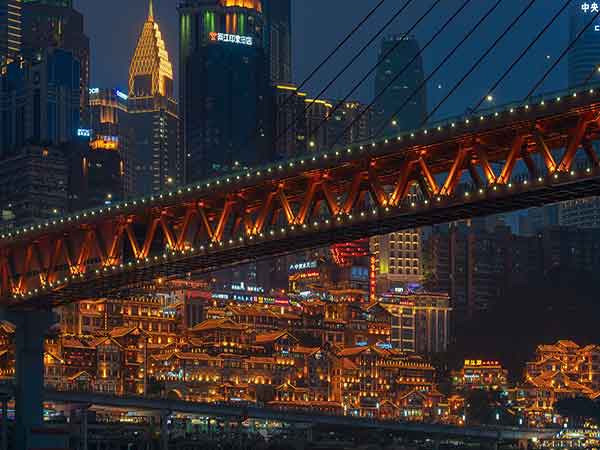
Hongya Cave is pictured here because this section discusses Chongqing's layered nightscape; crowds and wet stairs require attention.
Best for:
Urban geography, food culture and travelers considering a separately verified Yangtze cruise
Route pairing: Chengdu–Chongqing by rail, or Chongqing as a cruise gateway with a protected onward buffer
Choose Hangzhou for the West Lake cultural landscape, tea culture, canal history and a major contemporary city. UNESCO describes West Lake as a designed cultural landscape of causeways, islands, bridges, temples, pagodas and planted views shaped over centuries. Walk or cycle only where permitted, and compare a named historic viewpoint with the present city rather than treating the lake as untouched nature.
For a tea visit, use an identifiable producer or learning program, ask before entering working plots and separate cultivation evidence from sales claims. Two nights allow one lake-focused day and one tea, museum or canal block; a day trip from Shanghai is possible but compresses interpretation and increases transfer risk.
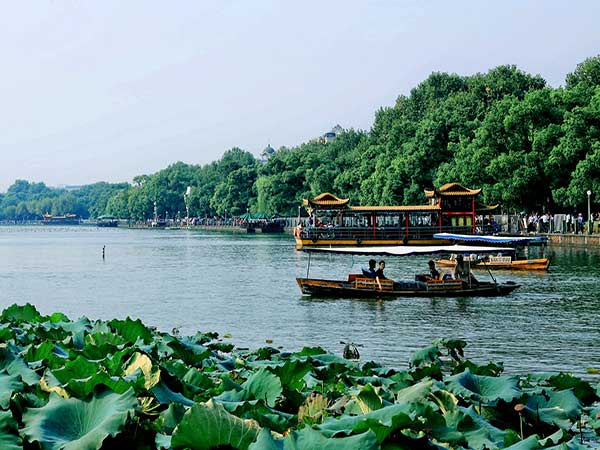
West Lake is pictured here because the text discusses its cultural landscape; the photograph should not be labeled as a generic Chinese lake.
Best for:
Landscape design, tea, walking and a lower-intensity contrast with Shanghai
Route pairing: Shanghai–Hangzhou–Suzhou when the exact station names and hotel transfers make a coherent loop
Choose Suzhou for classical gardens, canals and the craft of composing nature within urban space. UNESCO's World Heritage property contains nine named classical gardens dating from the 11th to 19th centuries. Visit one or two slowly—reading framed views, rocks, water, inscriptions and circulation—rather than claiming every attractive garden or water town is part of the UNESCO property.
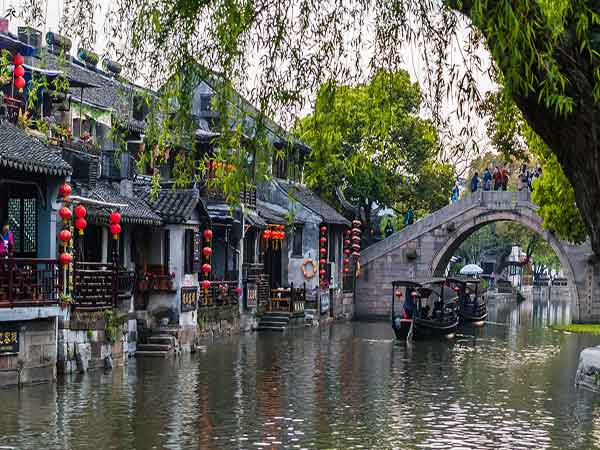
Water towns around Suzhou differ in scale, access and resident life. Select one for a specific reason, avoid intrusive photography and remember that bridges and homes are working places. Two nights allow a garden day and a water-town, museum or craft block without turning Suzhou into a hurried Shanghai excursion.
Best for:
Garden design, photography, canals and travelers who prefer close observation over landmark volume
Route pairing: Suzhou with Shanghai and Hangzhou; book the correct Suzhou station and confirm last-mile transport

From $ 22782050
From $ 2983
From $ 28612575
Editorial accountability
Hu Lei, CEO. The named owner is responsible for travel-planning accuracy and escalation of time-sensitive checks.
Yuntian Travel (Yunnan) Group is identified in its corporate profile as a licensed professional inbound travel service provider based in Kunming, China. Registration and travel-service documents can be requested before booking.
Page-specific references where cited, official destination, transport and entry notices, YUNSKY route-planning records, and direct provider confirmation before a booking is finalized.
Content is reviewed when rules, transport, access, pricing or route conditions change. Final availability and operating details are reconfirmed for each traveler’s dates.
Quality review: Page updated: