Your China & Yunnan Travel Experts


Reviewed: August 27, 2026. This page answers a narrow question: which European ordinary passports are currently listed for visa-free entry to China, and what should a traveler verify before relying on the list? Nationality is based on the passport presented. Residence, a Schengen visa or departure from Europe does not transfer another country's eligibility.
China uses more than one visa-exemption framework. The current unilateral programme and a bilateral mutual visa-exemption agreement can have different passport types, stay calculations and cumulative limits. Albania, Belarus, Bosnia and Herzegovina, San Marino and Serbia are examples of European states with published mutual agreements covering ordinary passports, but travelers must read the exact agreement instead of assuming the unilateral rules below apply.
The Ministry of Foreign Affairs currently lists 50 unilateral countries in total, including 35 current European entries. For Europe, the list begins with France, Germany, Italy, Spain and the Netherlands, then continues beyond the European Union. Switzerland, Ireland, Hungary, Austria and Belgium are included, together with Luxembourg. Poland, Portugal and Greece are also listed, along with Cyprus, Slovenia and Slovakia. Nordic and microstate entries include Norway, Finland, Denmark, Iceland, Andorra, Monaco and Liechtenstein. The current list also names Bulgaria, Romania, Croatia, Montenegro, North Macedonia, Malta, Estonia and Latvia, plus Sweden, the United Kingdom and Russia. Eligible travelers may use the unilateral policy for business, tourism, visiting family or friends, exchange visits or transit, normally for up to 30 days. For the legal details and inspection questions, read the 2026 visa-free entry FAQ for Europeans.
| Country or grouped microstates | Maximum stay and current published policy window |
|---|---|
| France | Up to 30 days; current programme through December 31, 2026 |
| Germany | Up to 30 days; current programme through December 31, 2026 |
| Italy | Up to 30 days; current programme through December 31, 2026 |
| Spain | Up to 30 days; current programme through December 31, 2026 |
| Netherlands | Up to 30 days; current programme through December 31, 2026 |
| Switzerland | Up to 30 days; current programme through December 31, 2026 |
| Ireland | Up to 30 days; current programme through December 31, 2026 |
| Hungary | Up to 30 days; current programme through December 31, 2026 |
| Austria | Up to 30 days; current programme through December 31, 2026 |
| Belgium | Up to 30 days; current programme through December 31, 2026 |
| Luxembourg | Up to 30 days; current programme through December 31, 2026 |
| Poland | Up to 30 days; current programme through December 31, 2026 |
| Portugal | Up to 30 days; current programme through December 31, 2026 |
| Greece | Up to 30 days; current programme through December 31, 2026 |
| Cyprus | Up to 30 days; current programme through December 31, 2026 |
| Slovenia | Up to 30 days; current programme through December 31, 2026 |
| Slovakia | Up to 30 days; current programme through December 31, 2026 |
| Norway | Up to 30 days; current programme through December 31, 2026 |
| Finland | Up to 30 days; current programme through December 31, 2026 |
| Denmark | Up to 30 days; current programme through December 31, 2026 |
| Iceland | Up to 30 days; current programme through December 31, 2026 |
| Andorra, Monaco and Liechtenstein | Up to 30 days; current programme through December 31, 2026 |
| Bulgaria | Up to 30 days; current programme through December 31, 2026 |
| Romania | Up to 30 days; current programme through December 31, 2026 |
| Croatia | Up to 30 days; current programme through December 31, 2026 |
| Montenegro | Up to 30 days; current programme through December 31, 2026 |
| North Macedonia | Up to 30 days; current programme through December 31, 2026 |
| Malta | Up to 30 days; current programme through December 31, 2026 |
| Estonia and Latvia | Up to 30 days; current programme through December 31, 2026 |
| Sweden | Up to 30 days; current programme through December 31, 2026 |
| United Kingdom | Up to 30 days; current programme through December 31, 2026 |
| Russia | Up to 30 days; current programme through December 31, 2027 |
Use an eligible ordinary passport whose validity covers the intended stay. Carry confirmed onward or return travel, accommodation details and evidence of the allowed purpose; an invitation or meeting information may be relevant for a business or family visit. Immigration inspection makes the admission decision. Hotels register foreign guests; when staying outside a hotel, the traveler or host generally completes local accommodation registration within 24 hours. Online registration is available only in participating pilot areas, so confirm the local method.
For a 7–14 day trip, count the immigration window separately from hotel nights. The official 30-day period begins on the day after entry. 1 Keep a practical departure buffer rather than planning to the legal limit. 2 Weather, transport disruption or a missed connection can affect the intended exit, so keep confirmed onward travel and a fallback route.
Choose two or three regions rather than maximizing city count; this preserves time for observation, rest and changes.
Planning aid: Build a realistic 7–14 day China route from Europe with nights, transfers and departure buffer visible.
A longer visit can support slower travel or a focused regional study, but it should not become a list of distant cities. Group places by rail corridor or gateway, reserve rest and laundry time, and keep the final sector near the international departure point. Check attraction closures, holiday pressure and climate by destination before fixing non-refundable legs.
Use extra days for depth: a second museum, a neighborhood walk, a weather alternative or time with a named local guide. Travelers with mobility, medication or sensory needs should build around documented access and recovery time. Reconfirm every domestic leg because a long legal stay does not guarantee transport or admission supply.
Longer-route context: Evaluate why China fits this trip from Europe before increasing distance, cost or carbon simply to add destinations.
| Beijing | Use the capital to examine imperial institutions, the historic central axis, museum interpretation and present-day urban governance. The Palace Museum, Temple of Heaven and a suitable Great Wall section need separate access, timing and mobility decisions; one hurried day cannot support all three responsibly. |
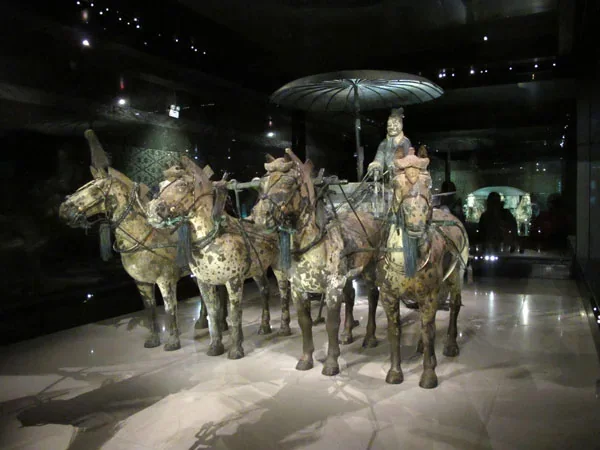
| Xi'an | Xi'an can support archaeology, early imperial history and Silk Road interpretation. Distinguish the Mausoleum of the First Qin Emperor site area from the city center, and use the correct names Big Wild Goose Pagoda and Small Wild Goose Pagoda. Check museum and site reservation rules through current official channels. |
| Zhangjiajie | Choose Zhangjiajie for sandstone landforms, mountain infrastructure or landscape management—not a promise to enter an imaginary film world. Weather, visibility, queues and walking surfaces materially change the experience, so plan a lower-intensity alternative and verify current park transport. |
| Guilin | Guilin and Yangshuo can support study of karst, rivers, agriculture and tourism change. Decide the base from onward transport and field purpose. Use licensed activities, respect working land and residents, and check river, cycling and weather conditions rather than assuming every photographed activity is available. |
| Hangzhou | Hangzhou combines West Lake's cultural landscape with tea production, canal history and a major technology economy. Separate heritage evidence from marketing language, ask permission in working tea areas and choose a visit that names the site, season and learning purpose. |
| Shanghai | Shanghai is useful for comparing port history, concession-era urban fabric, museums, the Bund and Pudong's later skyline. Avoid presenting one commercial district as proof of all modern China. Compare transport, housing, public space and historical sources across more than one neighborhood. |
Choose mode by the whole journey: door-to-door time, passport controls, baggage, accessibility, station or airport location, schedule resilience and carbon. Confirm the service through an official or authorized source; an old timetable is not operational evidence.
Domestic Flights
Flights can be practical on long cross-country legs, but airports may be far from the center and weather or air-traffic controls can affect schedules. Match the booking name to the passport, check baggage and terminal rules, and avoid a tight self-transfer before an international departure.
High-Speed Rail
China Railway uses real-name ticketing. Foreign travelers can book with a valid passport through the official 12306 channels or an authorized seller, subject to identity verification and current sales rules. Use the same passport to collect, change or board where required.
Rail often reduces city-center transfer time, but not every station is central and not every pair of cities has a direct high-speed service. Compare the exact station names, transfer time, last-mile access and ticket conditions before choosing rail over air.
Metro and Local Transit
Major cities have different metro maps, payment methods, operating hours, security procedures and accessibility. Download or save the current city map, identify the correct exit and keep a payment fallback. Ask staff when uncertain; English signage is common on many central networks but should not be assumed on every route or local service.

From $ 22782050
From $ 2983

From $ 28612575
Editorial accountability
Hu Lei, CEO. The named owner is responsible for travel-planning accuracy and escalation of time-sensitive checks.
Yuntian Travel (Yunnan) Group is identified in its corporate profile as a licensed professional inbound travel service provider based in Kunming, China. Registration and travel-service documents can be requested before booking.
Page-specific references where cited, official destination, transport and entry notices, YUNSKY route-planning records, and direct provider confirmation before a booking is finalized.
Content is reviewed when rules, transport, access, pricing or route conditions change. Final availability and operating details are reconfirmed for each traveler’s dates.
Quality review: Page updated: