Your China & Yunnan Travel Experts



Chinese New Year customs differ across provinces, cities and families. A north-versus-south comparison can reveal broad patterns, but it is not a rulebook: climate, dialect, migration, religion and household history all matter. Use the Chinese New Year overview for the national festival sequence before comparing regional examples.
Xiaonian, often translated as Little New Year, marks the approach of Spring Festival and is associated in many places with cleaning and traditions concerning the Kitchen God. It is not the first day of spring and should not be confused with the Beginning of Spring solar term.
A familiar convention places northern Xiaonian on the twenty-third day of the twelfth lunar month and southern Xiaonian on the twenty-fourth. Actual observance is more varied: some regions and occupational traditions use other dates. Check the local calendar rather than applying the two-date summary everywhere.
Dumplings are strongly associated with many northern reunion meals, while niangao and tangyuan are especially visible in parts of the south. This is a useful starting point, not a boundary. Families on both sides of the Yangtze may serve whole fish, meat, vegetables and local specialties. The lucky New Year foods guide explains symbolism and dietary cautions.
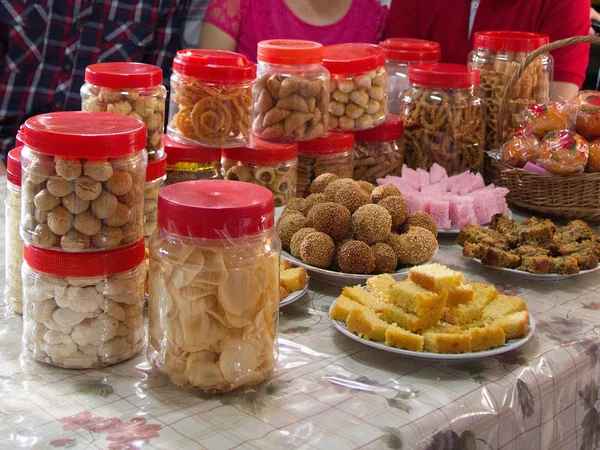
Dumplings and tangyuan illustrate different regional festival textures
Northern dumplings may contain pork, lamb, beef, seafood or vegetables. Making them together can be as meaningful as eating them. Long noodles and steamed breads also appear in some northern traditions.
Putting a coin inside a dumpling is a folk custom but creates choking and hygiene risks. Families who want a symbolic surprise can use safer fillings and tell diners in advance.
Southern reunion tables are extremely diverse. Cantonese, Fujianese, Jiangnan, Hakka and southwestern traditions cannot be reduced to one menu; fish, poultry, rice cakes, soups and hot pot take different forms.
Niangao is not always a sweet pellet-shaped cake. It includes many glutinous-rice preparations, from sweet northern versions to sliced savory dishes in Jiangnan and coastal cuisines. Tangyuan may be sweet or savory.
Couplets, lanterns and the character 福 are visible across many regions, while specific plants, paper crafts and New Year pictures reflect local markets and family preference. Cleaning generally happens before decoration.
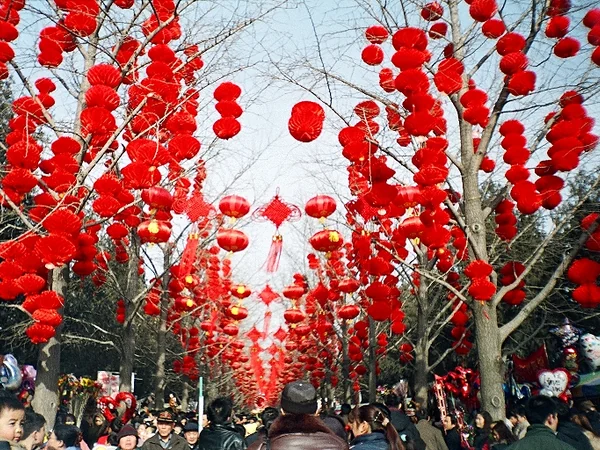
Red and gold decorations used for Spring Festival
Window paper cuttings are especially associated with northern folk art, where winter windows create a strong visual setting. Contemporary designs also use zodiac animals and modern motifs.
Flower markets, peach blossom, narcissus, orchids and kumquat trees are particularly prominent in parts of southern China. Climate makes fresh plants more practical, and Cantonese word associations give some plants additional festive appeal.
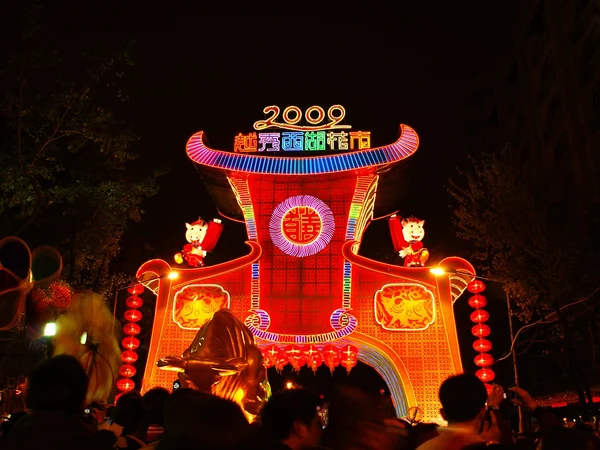
Seasonal flowers at a southern Chinese New Year market
The CCTV Spring Festival Gala, or Chūnwǎn, has been a major New Year's Eve broadcast since 1983, with the first live nationwide gala in 1983 often treated as the beginning of the annual format. Families may watch closely, leave it playing in the background or choose other entertainment.
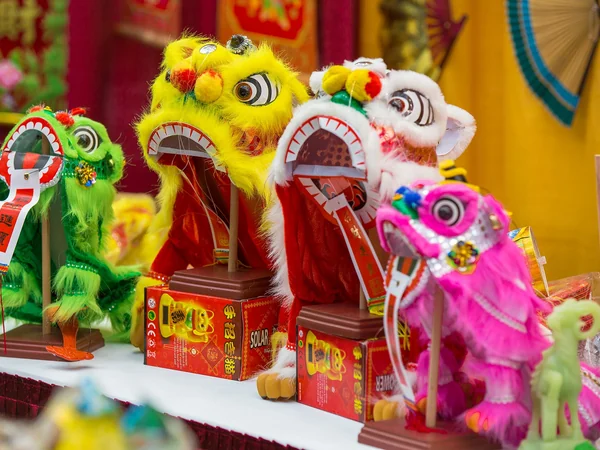
A family watching the Spring Festival Gala together
It is safer to describe viewing as a household choice than to claim a fixed north-south divide without current evidence. Work patterns, age, internet media and dinner timing can influence whether people watch.
Ancestor remembrance appears in many Chinese New Year traditions, but timing and practice differ. Offerings may be made at a home altar, ancestral hall, temple or gravesite, while other families do not observe the rite. Visitors should treat it as a private or sacred practice unless invited.
Home observances can include food, incense or respectful bows. Fire and smoke rules must be followed, especially in apartments, heritage buildings and dry winter conditions.
In parts of southern China, lineage halls and graveside visits may have particular importance. This should not be generalized to every southern household or scheduled without local advice.
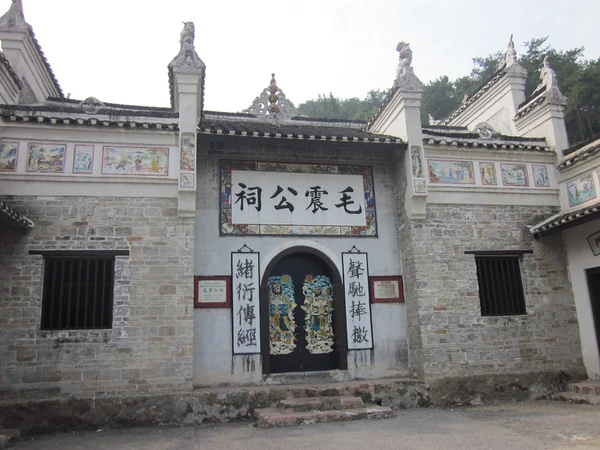
Ancestral remembrance during the Spring Festival season
New Year visits, greetings, shared meals and time with relatives are widespread, while public programs reflect local climate and urban planning. Temple fairs, lantern shows and flower markets may require reservations or timed entry.
Northern winter destinations may emphasize indoor gatherings, ice-and-snow activities and temple fairs, but major cities also offer outdoor shows when weather permits.
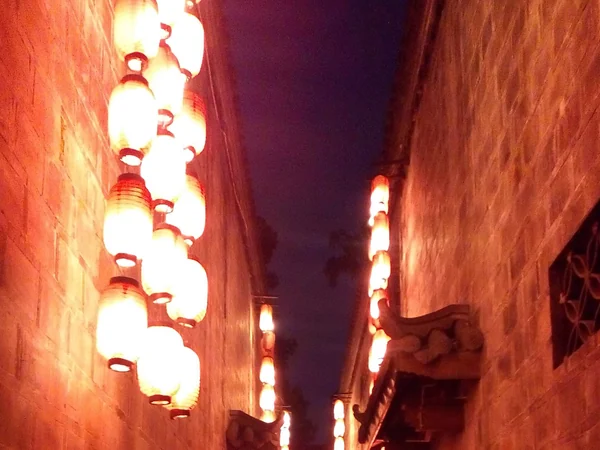
A lantern display illuminating a historic street
Southern cities may organize flower fairs, garden displays and outdoor performances in milder weather. Rain and crowd controls still affect access.
Cinema visits and domestic travel are contemporary holiday choices across China. Expect heavy transport demand and verify venue schedules close to departure.
Choose a destination for a specific custom rather than for a vague promise of “authenticity.” Beijing may suit temple-fair history, Guangzhou flower markets, and Shanghai lantern displays, subject to annual programs. The Chinese New Year cities guide helps compare options.
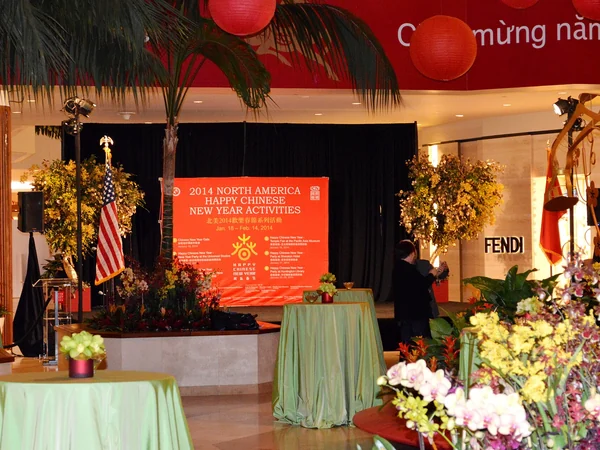
Celebrate Spring Festival in More Than One Region
Editorial accountability
Hu Lei, CEO. The named owner is responsible for travel-planning accuracy and escalation of time-sensitive checks.
Yuntian Travel (Yunnan) Group is identified in its corporate profile as a licensed professional inbound travel service provider based in Kunming, China. Registration and travel-service documents can be requested before booking.
Page-specific references where cited, official destination, transport and entry notices, YUNSKY route-planning records, and direct provider confirmation before a booking is finalized.
Content is reviewed when rules, transport, access, pricing or route conditions change. Final availability and operating details are reconfirmed for each traveler’s dates.
Quality review: Page updated: