Your China & Yunnan Travel Experts



This 2026 list ranks the ten tallest completed buildings in mainland China by height to architectural top, using the Council on Tall Buildings and Urban Habitat (CTBUH/CVU) database checked on 26 August 2026. That common measurement includes an architectural spire but excludes antennae and other technical equipment. It also keeps buildings separate from telecommunications or observation towers, so Canton Tower, Oriental Pearl Tower and Tianjin TV Tower do not qualify. Taipei and Hong Kong entries are outside this page's mainland scope, while unfinished or merely topped-out projects—including Tianjin 117—are excluded until they meet the database's completion test. Equal heights share a rank. Floor totals follow CTBUH methodology and may differ from an operator's public numbering. Only Shanghai Tower and Ping An Finance Center have current, clearly documented public observatories in this top ten; access elsewhere may be limited to offices, hotels, retail areas or exterior viewpoints, so check the operator before making a special trip.
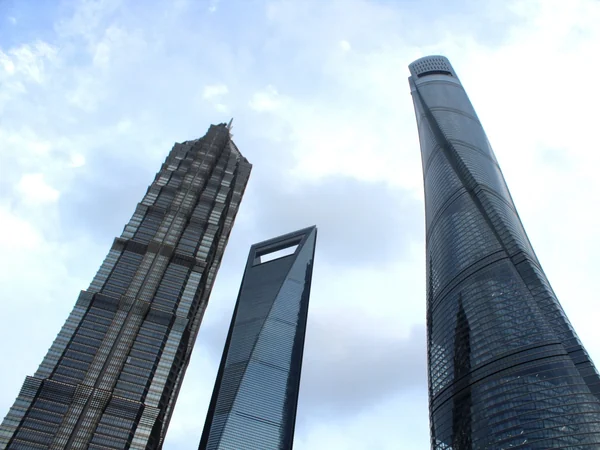
Height and status: 632 metres (2,073 ft), 128 above-ground floors under CTBUH counting, completed in 2015. Why it matters: Gensler shaped the tower as a gently twisting, mixed-use “vertical city.” Its double-skin façade creates tall internal atria and helps the rounded form reduce wind pressure; offices, hotel, retail, exhibition and cultural spaces share the building rather than forming a single-purpose stack. It remains the tallest completed building in mainland China. Visitor context: The official Top of Shanghai route currently includes an exhibition hall and the enclosed floor-118 observatory at 546 metres. Clear weather matters more than sunset hype: haze, cloud and reflections can erase the view. Carry the passport or ID requested by the operator, check same-day admission and allow time for security. Explore the wider Lujiazui and Bund context in the Shanghai travel guide, then compare the neighboring Shanghai World Financial Center.
Best skyline reading: From the Bund, the tower's rotation is clear against Jin Mao Tower and the Shanghai World Financial Center; the nearby Oriental Pearl TV Tower helps identify the older layer of the Pudong skyline. From inside the observatory, the Huangpu River explains why the cluster developed here. Buy only through a current official channel and do not assume the upper SKY632 art-space programme is included in a standard observation ticket.
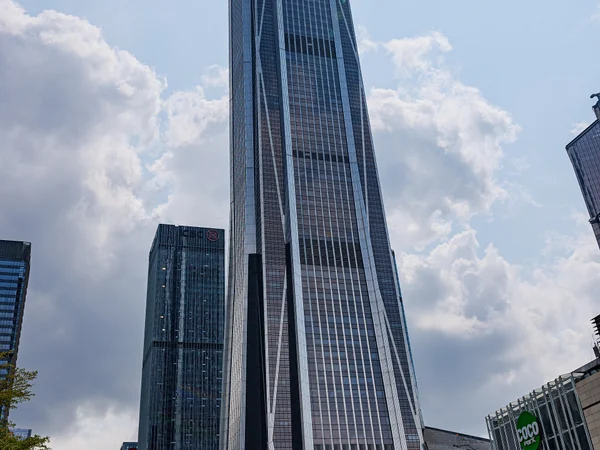
Height and status: 599.1 metres (1,965 ft), 115 above-ground floors in the CTBUH record, completed in 2017. Design and city context: KPF's office-led tower rises in Futian CBD with a five-level retail and conference podium linked to surrounding commercial space and public transport. The tapered, prismatic crown and eight expressed super-columns sharpen its silhouette; corrosion-resistant stainless steel was selected for Guangdong's humid coastal environment. Visitor context: FREE SKY is a ticketed observation level on floor 116, published by its operator at 547.6 metres above ground. Verify its current hours, weather policy and ticket channel before travelling. The building is close to Shopping Park metro and Futian's civic axis; the Shenzhen guide helps place it within a wider city day rather than treating the deck as an isolated stop.
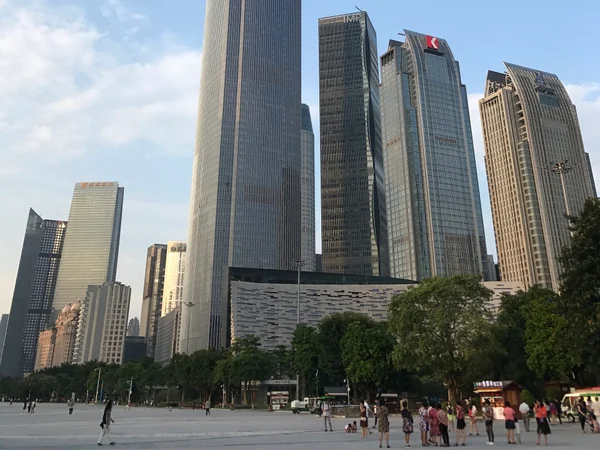
Height and status: 530 metres (1,739 ft), 111 above-ground floors under CTBUH counting, completed in 2016. Design and use: KPF organized offices, residences and a hotel around four major setbacks, using terracotta-clad vertical piers to shade the glazed façade and give the tower a warmer texture than an all-glass slab. Basement connections tie the complex to transit and the Zhujiang New Town retail network described in the Guangzhou guide. Visitor context: This is a mixed-use commercial building, not a guaranteed public observation tower. Huacheng Square provides a clearer exterior reading of the CTF tower, Guangzhou IFC and Canton Tower together. Retail, restaurant and hotel access follows the current tenant or operator's rules; do not book a skyline visit on the assumption that upper office floors are open.
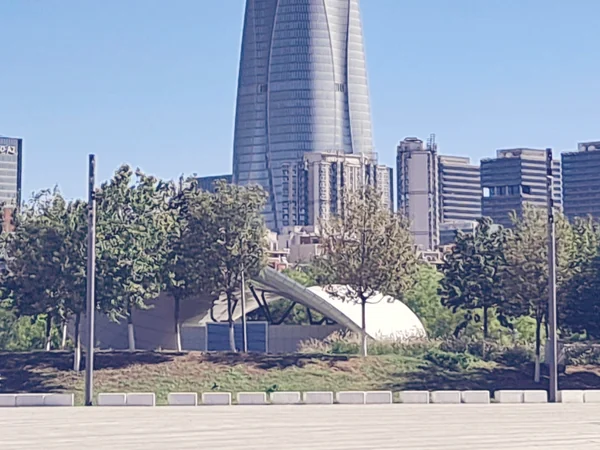
Height and status: 530 metres (1,739 ft), completed in 2019. CTBUH records 97 above-ground floors, while SOM describes 96 stories—an ordinary difference in floor-count conventions, not a height dispute. Design and use: SOM placed offices, serviced apartments and a hotel within a square plan whose rounded corners and tapering profile reduce wind effects. The porous crown and changing floor plates are structural responses as well as visual ones. Visitor context: The tower is in TEDA/Binhai rather than Tianjin's historic central districts, so transfer time should be planned separately. Its mall or hotel may admit customers, but that does not make the upper tower a public observatory. Confirm any interior visit with the current venue, use public streets or designated plazas for exterior photography, and compare Binhai with central stops in the Tianjin tour collection.
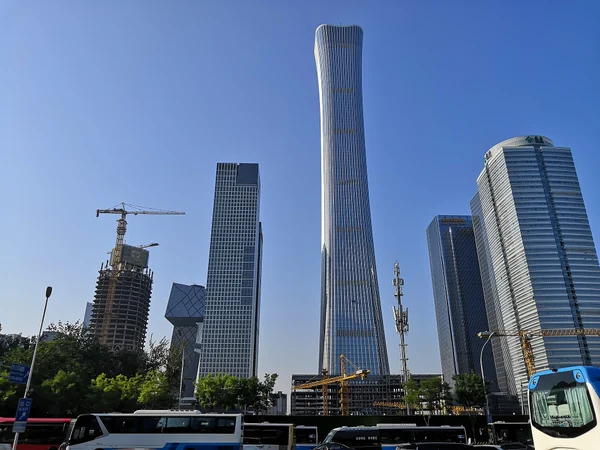
Height and status: 527.7 metres (1,731 ft), 109 above-ground floors in the current CTBUH data, completed in 2018. Design and city context: Often called China Zun, the KPF-designed office tower expands at its base and crown around a narrower waist, an abstract reference to the zun vessel form rather than a literal copy of one historic object. It anchors Beijing's modern CBD and is the capital's tallest completed building. Visitor context: It is primarily an office building and does not offer the dependable public-observatory experience implied by old promotional copy. View the skyline from lawful public space around the CBD, avoid photographing security-controlled entrances, and use the Beijing guide to balance the modern business district with the city's historic core. The Beijing tour collection is useful when the CBD is only one part of a longer route.
Height and status: 492 metres (1,614 ft), 101 above-ground floors, completed in 2008. Design and use: KPF's mixed office-and-hotel tower is recognized by the trapezoidal opening near its crown. That aperture and the tapering sides reduce wind pressure while giving the Lujiazui cluster a form distinct from the neighboring Jin Mao and Shanghai towers. Visitor context: The official operator still identifies observatory/Sky Arena space and publishes enquiry contacts, but sessions, floors and ticket arrangements can change. Confirm directly before visiting rather than relying on an old “100th-floor deck” itinerary. The building is still useful from outside as a chronological marker between Jin Mao Tower and Shanghai Tower.
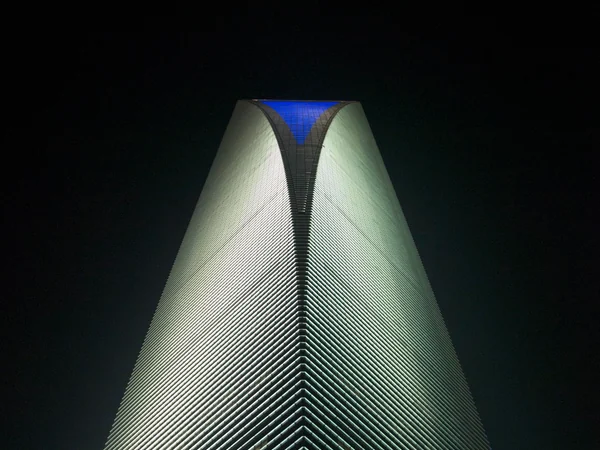
Height and status: 475.6 metres (1,560 ft), 101 above-ground floors, completed in 2023. Why the number needs care: Early designs proposed a much taller 636-metre tower, and that figure still circulates online. The completed, separately recorded CTBUH building is 475.6 metres; a current ranking must use the as-built form. Design and use: The completed mixed-use tower accommodates office, serviced-apartment and hotel functions with a tapered profile along the Yangtze waterfront. Visitor context: Do not interpret “mixed use” as permission to enter tenant floors. Check the current hotel or commercial operator for legitimate interior access, and photograph the full silhouette from designated riverside public areas. The Wuhan guide and wider Hubei guide help place the riverfront district in a realistic regional itinerary.
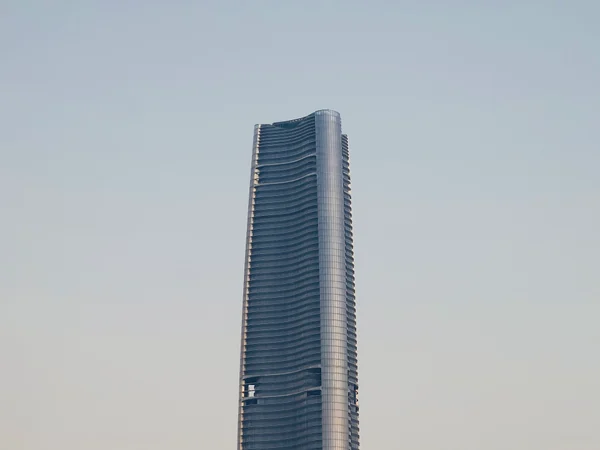
Height and status: 452.1 metres (1,483 ft), 94 above-ground floors, completed in 2018. Design and district context: Tower T1 is the taller half of the Changsha IFS pair. Its stepped crown distinguishes it from the 315-metre companion tower, while the large podium connects offices and hotel space with a major retail complex near Wuyi Square and Huangxing Road. Visitor context: The mall and hotel are public-facing uses; the office tower is not automatically a sightseeing deck. This is one of the easier entries to understand from street level because the podium, pedestrian district and twin-tower relationship are visible together. Use the Changsha guide for local sequencing and the Hunan guide when the city is part of a wider route. Verify rooftop events independently and never treat a hotel booking as unrestricted tower access.
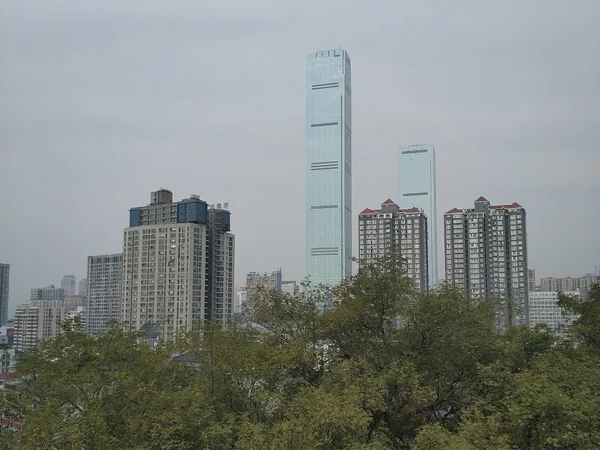
Height and status: 450 metres (1,476 ft), 95 above-ground floors under CTBUH counting, completed in 2019. Design and setting: The mixed-use tower combines office and hotel functions beside Jinji Lake in Suzhou Industrial Park. Its long vertical lines bend into a curved crown, giving the newer lakefront skyline a different identity from Suzhou's historic garden districts. Visitor context: The most reliable experience is contextual: view the tower across Jinji Lake, then decide separately whether a hotel, restaurant or retail venue is open to non-guests. Do not imply that a high hotel floor is a public observation deck. Use the Suzhou guide for district context and the Suzhou tour collection for route ideas; keep heritage-garden visits in the old city as a separate plan rather than compressing both areas into a rushed photo stop.
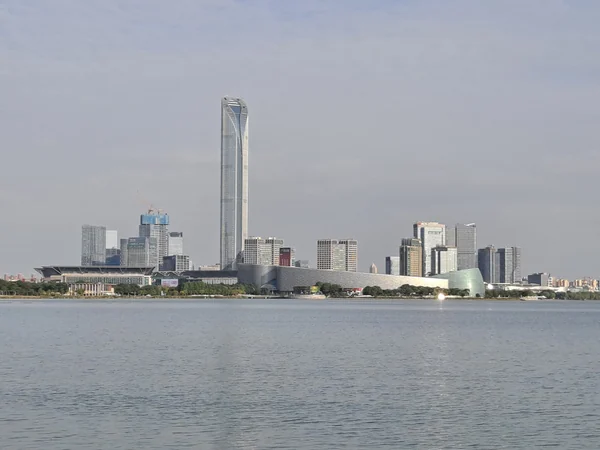
Height and status: 450 metres (1,476 ft), tied with Suzhou IFS and completed in 2010. CTBUH uses 66 above-ground floors in its standardized table, while local or commercial numbering may be higher; architectural height, not marketed floor count, determines the tie. Design and use: The SOM-designed tower combines office and hotel functions. Its stepped profile and textured, offset façade panels break down a very large vertical mass, while the site near Gulou places the tower against Nanjing's older urban layers. Visitor context: Public access to upper floors is operator-dependent. Use legitimate hotel, restaurant or ticketed access only, and confirm it shortly before arrival. The Nanjing guide and Nanjing tour collection offer alternatives: authorized hill and city-wall viewpoints often show the relationship between the modern skyline and historic fabric more clearly than an indoor tower visit.
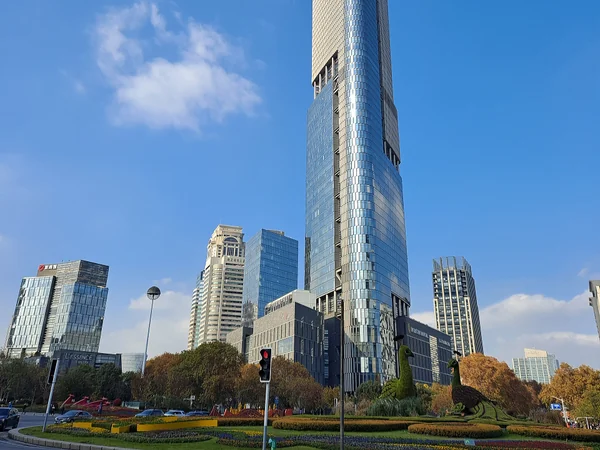
How to use this ranking: Choose Shanghai Tower or Ping An for a clearly documented observation experience; choose Guangzhou, Tianjin, Beijing, Wuhan, Changsha, Suzhou or Nanjing when the building fits an existing city itinerary. Weather, security, private tenancy and special-event closures can change access. Recheck CTBUH for completion status and the building operator for entry details whenever a newer supertall opens—this list is an August 2026 snapshot, not a permanent league table.
Editorial accountability
Hu Lei, CEO. The named owner is responsible for travel-planning accuracy and escalation of time-sensitive checks.
Yuntian Travel (Yunnan) Group is identified in its corporate profile as a licensed professional inbound travel service provider based in Kunming, China. Registration and travel-service documents can be requested before booking.
Page-specific references where cited, official destination, transport and entry notices, YUNSKY route-planning records, and direct provider confirmation before a booking is finalized.
Content is reviewed when rules, transport, access, pricing or route conditions change. Final availability and operating details are reconfirmed for each traveler’s dates.
Quality review: Page updated: