Your China & Yunnan Travel Experts



Family matters in China and in the many societies grouped as “Western,” but values do not map neatly onto two opposing household types. Region, generation, migration, housing, income, religion, law and individual preference all influence who lives together, who provides care and how decisions are made. Traditional ideals such as filial piety remain culturally visible in China, while modern families negotiate work, schooling, marriage and eldercare under changing conditions. This guide distinguishes broad themes from universal rules and links family behavior to practical travel etiquette. Read the wider Chinese and Western culture guide before generalizing from one household.
Chinese public culture often emphasizes family continuity, reciprocal care and responsibility across generations. Holidays, ancestor remembrance and family meals can make those ties highly visible. Yet Chinese households include people living alone, couples without children, migrant families, blended families, single parents and multigenerational homes. Living arrangement alone does not reveal affection or obligation.
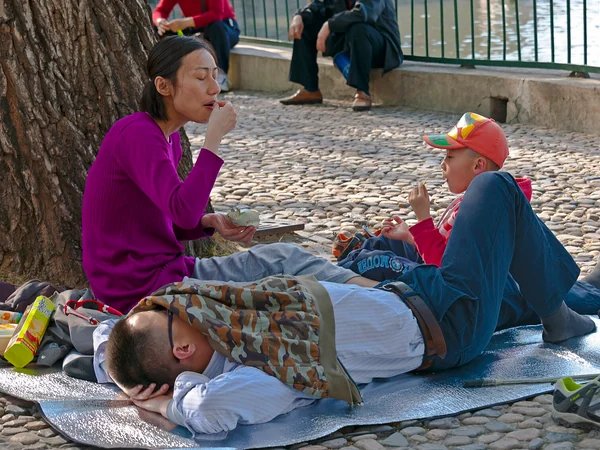
A family picnic in Beijing illustrates everyday care, not a universal household model.
Families in Europe, North America and other Western societies also provide deep emotional, financial and practical support. Some legal and welfare systems make independent residence more common, but adult children may still live with parents or provide long-term care. Compare specific institutions and families rather than equating separate homes with weak ties.
Respect for older people is expressed through language, seating, holiday visits, financial support and caregiving, but the form varies. China's legal framework includes duties concerning the support and interests of older parents. A travel article can explain that context but cannot determine a family's legal obligations; official guidance or qualified advice is needed for an individual case.
Modern eldercare may involve adult children, spouses, community services, hospitals and residential facilities. Distance created by study or migration can lead families to coordinate care digitally or financially. Do not ask a host why an older relative lives separately unless they invite the subject.
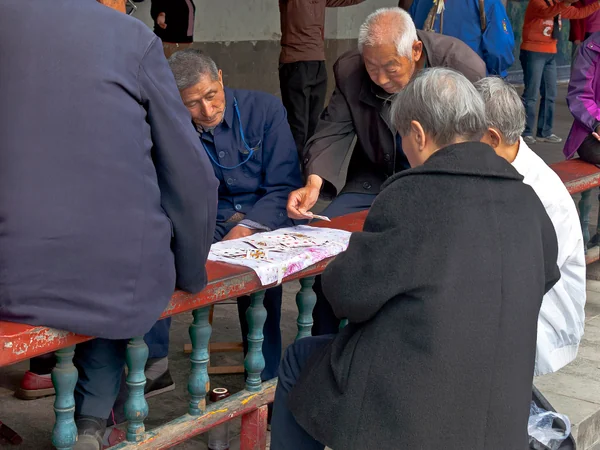
Older residents playing cards in a Beijing park.
Western societies likewise contain strong traditions of elder respect and care, although public services, inheritance rules and residential options differ by jurisdiction. “Chinese families care; Western families do not” is both inaccurate and disrespectful.
Marriage in China can connect two wider families, and parents may offer advice, introductions or practical support with housing and childcare. The couple's preferences remain central, and the influence of relatives differs substantially. Urbanization, later marriage, intercultural relationships and changing expectations make any single “traditional Chinese marriage” description incomplete.
Families elsewhere also shape weddings and relationships through religion, inheritance, finance and social networks. Ask what the couple wants instead of assuming that a Chinese wedding belongs to the parents or that a Western wedding concerns only two isolated individuals.
Children do not automatically leave home at eighteen in Western societies, and Chinese adult children do not automatically remain with parents. Education costs, housing markets, employment and caregiving affect both. Independence and interdependence can coexist: a young adult may choose a career independently while sharing a home or supporting relatives.
Parents across cultures combine encouragement, limits, monitoring and negotiation. How openly children disagree depends on age, family and setting. Treat “strict Chinese parent” and “permissive Western parent” as media stereotypes, not diagnostic categories.
Chinese parents may place strong emphasis on education, but priorities vary by child and household. China's Family Education Promotion Law frames family education around children's development and parental responsibility; it should not be summarized as a command to pursue test scores.
Schools and families now discuss wellbeing, arts, sport, vocational pathways and digital life as well as examinations. Our guide to education in China and Western systems explains why school level and jurisdiction matter.
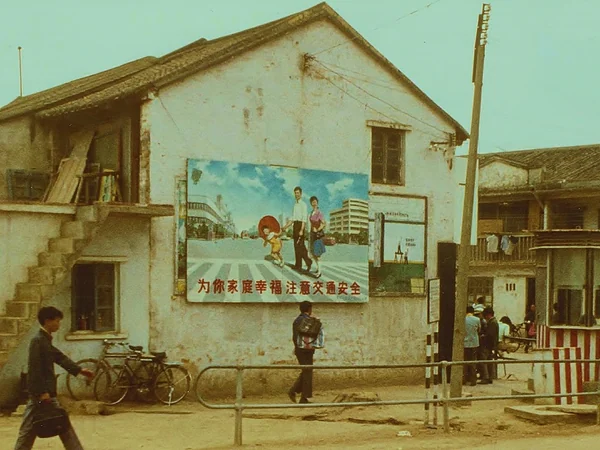
A 1982 one-child-family poster is evidence of its period's public messaging, not a photograph of today's family life.
Historical family systems often assigned authority and paid work to men while concentrating domestic labor on women. That legacy still shapes expectations in some households, but it does not describe every period, region or ethnic community.
Women and men in contemporary China pursue education and careers, care for relatives and negotiate housework in varied ways. Work schedules, childcare access and eldercare can reproduce unequal burdens even when couples support equality.
Western families contain the same range from traditional division to shared or same-gender parenting. Do not assume who makes decisions, earns income or provides care. Address the person responsible and use the titles or kinship terms the family prefers.
A home meal can reveal one family's routines, not “how Chinese families live.” Confirm that the visit is genuinely welcomed, whether the host is paid fairly and what may be photographed. Share dietary needs early and bring a modest host gift if advised by the organizer. China family tour ideas or a private arrangement can include community activities without intruding on private life. Request a tailor-made tour with accessibility, diet and privacy preferences recorded in advance.
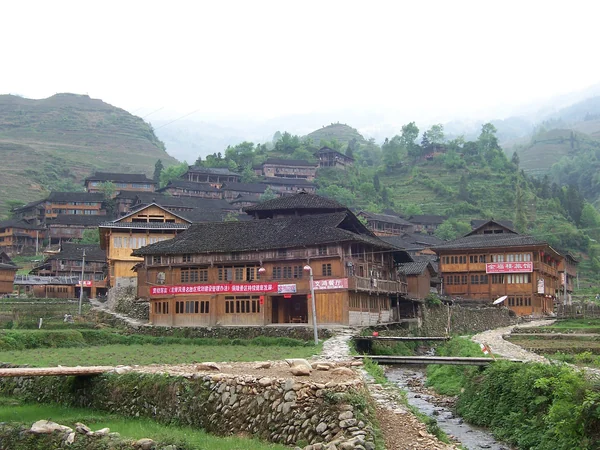
A Zhuang village near the Longji rice terraces.
Try a hosted local-life activity in Shanghai only when participation and photography rules are clear. Visit a Shanghai lane neighborhood with a guide who can explain how housing and community life have changed.
In Longji, follow village access rules, ask before entering homes and remember that residents are not exhibits. Context-aware thinking—described in our cross-cultural communication guide—helps visitors replace assumptions with respectful questions.
Editorial accountability
Hu Lei, CEO. The named owner is responsible for travel-planning accuracy and escalation of time-sensitive checks.
Yuntian Travel (Yunnan) Group is identified in its corporate profile as a licensed professional inbound travel service provider based in Kunming, China. Registration and travel-service documents can be requested before booking.
Page-specific references where cited, official destination, transport and entry notices, YUNSKY route-planning records, and direct provider confirmation before a booking is finalized.
Content is reviewed when rules, transport, access, pricing or route conditions change. Final availability and operating details are reconfirmed for each traveler’s dates.
Quality review: Page updated: