Your China & Yunnan Travel Experts


Poyang Lake in northern Jiangxi is a seasonally changing wetland system and the principal wintering area for the eastern population of Siberian cranes. The Convention on Migratory Species reports that this population winters at or near Poyang Lake, while current Jiangxi monitoring describes hundreds of thousands of winter waterbirds across the broader lake region. Use the Jiangxi orientation guide for regional access, but verify the exact observation zone locally. This is not a guaranteed close-up wildlife venue. Water level, food, weather, farming activity and protection measures change where cranes feed and rest. A site reported online last week may be empty today, restricted, flooded or too sensitive for access.
The ethical objective is to record natural behavior without making birds walk, flush or abandon feeding. Long lenses, scopes and patience matter more than proximity. Never cross a barrier, enter a closed lake bed, imitate calls, use bait or pressure a local driver to approach a flock.
Field review: August 29, 2026. Seasonal counts and access conditions must be reconfirmed for the actual winter.
The Siberian crane is a large, mostly white crane with black flight feathers visible in flight; adults show red bare skin on the face. At long range it can be confused with white storks, spoonbills, egrets or other cranes. Photograph the bill, legs, wing pattern and surrounding birds, then confirm with a qualified guide or field reference rather than labeling from color alone.
Winter is the relevant season, broadly from late autumn into early spring, but arrival, peak distribution and northward departure vary. A March 2026 official Jiangxi report described winter birds beginning their northward movement and expected most to leave by early April.
Plan flexible observation mornings within the winter window. Ask the reserve or local monitoring team about current water level, flock location, road access and closures; do not advertise a fixed November-to-March guarantee.
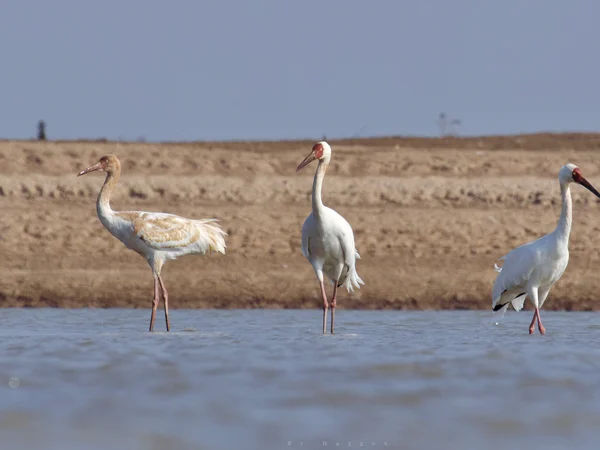
Siberian cranes feeding at a protected shallow-water site
Wucheng is a practical birding base associated with the national reserve and seasonal sub-lakes. Access depends on current protection zones and water. Use established roads and viewing facilities, hire someone who understands reserve rules, and keep agricultural tracks clear.
Southern and western lake-edge wetlands can hold diverse waterbirds, but a historic location name does not guarantee Siberian cranes. Confirm same-day observations and whether the land is public, managed or agricultural. Treat local wardens' directions as controlling.
A protection or management station is not an invitation to enter operational habitat. Ask which viewpoints are open, park only where permitted and avoid surrounding a flock with vehicles. If birds raise their heads repeatedly or move away, increase distance immediately.
Duchang can provide alternate wetland viewpoints when conditions distribute birds eastward. Road shoulders, mud, fog and changing water make access variable. Build a backup landscape or general waterbird session rather than chasing a precise species at unsafe speed.

From $ 1568

From $ 850
From $ 2583
Editorial accountability
Hu Lei, CEO. The named owner is responsible for travel-planning accuracy and escalation of time-sensitive checks.
Yuntian Travel (Yunnan) Group is identified in its corporate profile as a licensed professional inbound travel service provider based in Kunming, China. Registration and travel-service documents can be requested before booking.
Page-specific references where cited, official destination, transport and entry notices, YUNSKY route-planning records, and direct provider confirmation before a booking is finalized.
Content is reviewed when rules, transport, access, pricing or route conditions change. Final availability and operating details are reconfirmed for each traveler’s dates.
Quality review: Page updated: