Your China & Yunnan Travel Experts



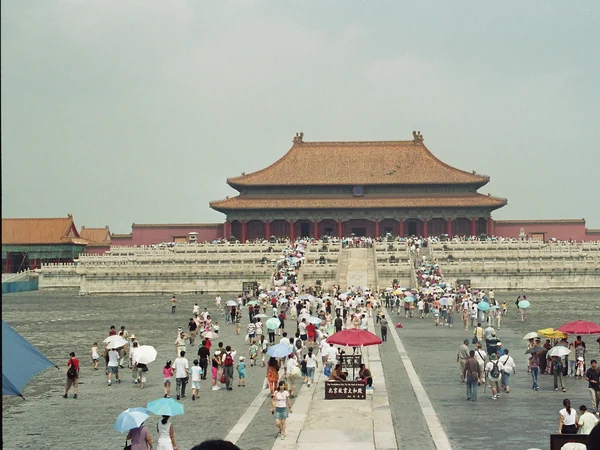
Dragons appear throughout Beijing's Forbidden City because the Ming and Qing courts used them to express imperial authority, cosmic order and auspicious power. Look for them on thrones, ceilings, roof tiles, stone ramps, ceramics, robes and metalwork. Their meaning depends on object, location and date; not every coiled creature carries the same rank. This self-guided overview highlights visible places while avoiding unsupported claims about an exact palace-wide dragon total. For opening hours, ticket rules and the current visitor route, use our Forbidden City travel guide and confirm details with the Palace Museum before arrival.
The Forbidden City was the ceremonial and residential center of the Ming and Qing emperors. Its route moves from monumental outer-court halls toward inner-court living spaces. Dragon density and scale can help frame a building's importance, but interpretation also relies on roof form, platform height, color, access and recorded function. A single motif should not be read in isolation. Nine and five carry associations with yang, rank and rulership in later imperial culture, and visitors will encounter groupings or phrases linked to those numbers. The Yijing's Qian hexagram includes the line “flying dragon in the heavens,” which later commentators connected with a ruler at full power. These textual associations help explain court symbolism, but they do not mean every decorative count is a hidden code. The number nine Nine was strongly associated with the highest yang number in traditional numerological systems. Palace names, hardware patterns and dragon compositions may use it, yet physical counts can vary through restoration, replacement and the boundaries a guide chooses. Verify a specific claim against the Palace Museum's label or scholarly catalogue. Five and court rank: five can evoke the center, five phases and court hierarchy; five-clawed dragons are prominent in Qing imperial art. Regulations and workshop practice changed, however, and claw count alone cannot authenticate an object. Location, material, iconography and provenance are essential. Read the whole building Dragons work within a larger architectural language of vermilion walls, yellow-glazed tiles, bracket sets, marble terraces and axial planning. Our Chinese architecture guide explains those elements so the palace does not become a one-symbol scavenger hunt. Photography tip Use a moderate zoom for roof ornaments and ceiling details, and avoid blocking narrow doorways. Flash, tripods and access rules can change by gallery. Never cross barriers for a closer image; official collection photographs provide safer detail for objects inside dark halls.
The Hall of Supreme Harmony is the Forbidden City's largest and highest-ranked surviving hall, used for major state ceremonies rather than ordinary daily government. Dragons concentrate attention around the throne, columns, ceiling and furnishings. The carved lacquer throne and surrounding screen create a visual center of imperial legitimacy. Exterior roof ornaments and stone terraces extend that message into the building's approach. Viewing is usually from a distance, so binoculars or the Palace Museum's online collection can reveal details without pressing against the crowd.
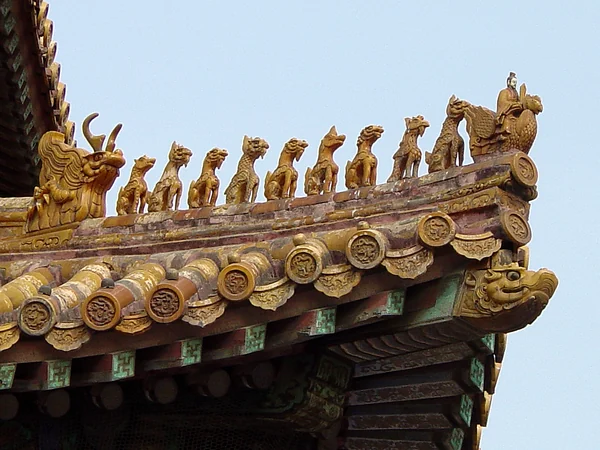
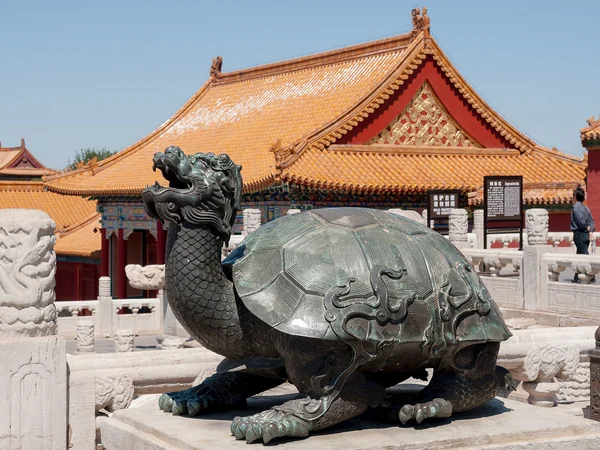
Continue north and compare how dragon motifs change across ceremonial and residential spaces. Bronze incense burners, water vessels, roof-ridge ornaments and carved balustrades combine practical functions with auspicious design. A dragon-headed tortoise-like creature may be identified as bixi or baxia in popular guides, but names for dragon sons vary across later lists; use the label nearest the object.
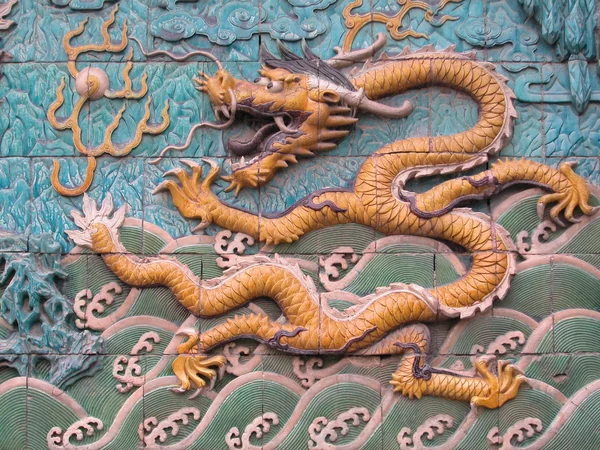
The Nine Dragon Wall near the Palace of Tranquil Longevity is a glazed-tile screen with nine dragons moving through clouds and waves. It was built during the Qianlong period and rewards close comparison of color, posture and relief. Keep to the visitor path, since glazed surfaces are vulnerable to touch and weathering. Inner-court displays may rotate, and some famous robes or ceramics are not permanently on view; search the Palace Museum collection by object title and inventory record rather than assuming that every illustrated treasure will be exhibited during your visit.
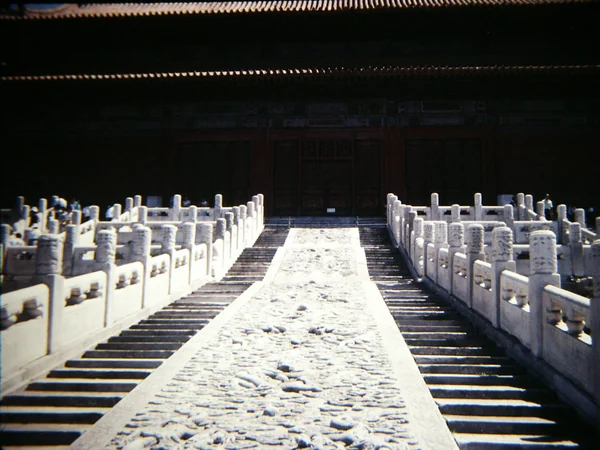
Behind the Hall of Preserving Harmony, a monumental stone ramp carved with dragons, clouds and waves marks the central imperial route. The emperor was carried above such ramps while attendants used the side stairs. Its relief demonstrates how architecture turned movement along the central axis into a statement of rank. “Dragons chasing” or “playing with a pearl” is a common modern description for compositions where dragons face a flaming orb; interpretations include celestial, auspicious and power-related meanings, and the orb should not be assigned one universal definition.
The best visit connects details rather than trying to count every dragon. Compare how stone, glazed ceramic, wood, textile and bronze change the creature's form; note which spaces were public, ceremonial or residential; and read object labels for date and function. For living festival meanings beyond the court, continue to Chinese dragon culture. This evidence-based approach respects both the palace's complexity and the practical limits of what can be seen on a single route.
Editorial accountability
Hu Lei, CEO. The named owner is responsible for travel-planning accuracy and escalation of time-sensitive checks.
Yuntian Travel (Yunnan) Group is identified in its corporate profile as a licensed professional inbound travel service provider based in Kunming, China. Registration and travel-service documents can be requested before booking.
Page-specific references where cited, official destination, transport and entry notices, YUNSKY route-planning records, and direct provider confirmation before a booking is finalized.
Content is reviewed when rules, transport, access, pricing or route conditions change. Final availability and operating details are reconfirmed for each traveler’s dates.
Quality review: Page updated: