Your China & Yunnan Travel Experts



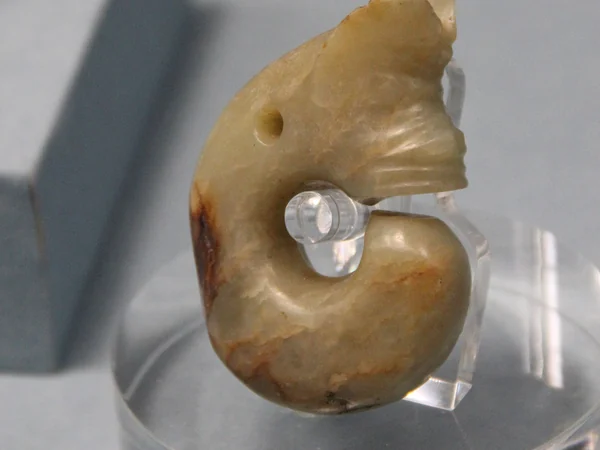
There is no single proven moment when the Chinese dragon was “invented.” Archaeologists have found curved jade creatures and composite animal forms in several Neolithic cultures, while later bronze, lacquer, silk and written sources show continued transformation. Similar-looking motifs do not automatically name themselves: an excavated object may be called a “dragon” by modern scholars because of comparison, not because a surviving Neolithic caption identifies it. Dates, excavation context and museum records therefore matter more than a confident origin myth.
Hongshan culture jades from northeastern China, often dated to the fourth or third millennium BCE, include coiled forms popularly called pig-dragons (zhūlóng). Their rounded snouts and curled bodies are distinctive, but their exact ritual meanings remain debated. Other Neolithic sites produced different serpentine or composite images. The diversity argues against treating one artifact as the direct ancestor of every later dragon. Totem theories became influential because later histories describe tribes, ancestral lineages and animal emblems. Some popular accounts say the Yellow Emperor combined defeated tribes' totems into one dragon. That is a compelling national origin story, but it is not verified by contemporary records from the supposed era. The Records of the Grand Historian was compiled much later and should be read as an essential early history with its own literary and political context. Written Evidence Arrives Later
Oracle-bone inscriptions and Bronze Age objects bring scholars closer to datable written and visual systems, though identifying early forms of the character 龍 still requires paleographic expertise. Shang and Zhou art includes curling, horned and scaled beings on jade and ritual vessels. Their functions may involve status, protection, cosmology or ritual, and interpretations change as new excavations are published. Early dictionaries and commentaries The Shuowen Jiezi, completed around the early second century CE, defines the dragon within Han intellectual categories and describes extraordinary transformations. It is invaluable evidence for Han-period language, not a firsthand report from the Neolithic. Later encyclopedias added “nine resemblances” and other anatomical lists. Those lists document how educated writers systematized a long-existing motif; they should not be mistaken for biological observation or an artist's rulebook.
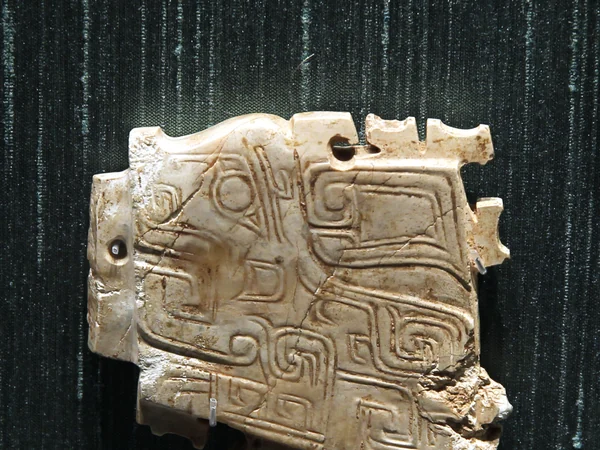
Chinese dragon imagery changed with materials and visual needs. A compact jade pendant curls into a shape that protects the stone; a bronze pattern fills a vessel band; a tomb painting creates directional movement; a textile winds among clouds; and architectural relief must read from a distance. Long body, horns, scales, claws and energetic curves became recognizable features, but no official design governed every place and century.
Texts such as the Shuowen Jiezi emphasize transformation: the dragon can rise, hide, lengthen or shrink according to season and circumstance. In art, that flexibility allows the creature to connect water below with clouds above. The connection with rain helps explain appearances on ritual, religious and decorative objects, though any individual object must be interpreted from its own provenance. Later writers compared parts of the dragon to deer, camel, snake, fish, eagle, tiger and other animals. The lists vary. They reveal a composite imagination rather than a recipe assembled once from tribal symbols. Read them as literary taxonomy and visual description.
Claw number can help date and interpret some later imperial objects, especially when combined with color, garment type, motif placement and regulations. It is not a universal timeline in which all dragons evolved mechanically from two to five claws. Workshops reused designs, neighboring states adapted motifs and regulations shifted. A museum catalogue should take priority over an undated online chart.
Long, serpentine beings occur in many cultures, but resemblance alone does not prove direct descent or contact. Our Chinese and Western dragon comparison explains how translation later grouped distinct creatures under the English word “dragon.”
Dragons became powerful Chinese symbols through several overlapping systems: concern for rain and waterways, correlative cosmology, local religious practice, elite art and dynastic politics. No single cause explains the result. As courts connected good rule with cosmic balance, the rain-bringing dragon could communicate both environmental power and legitimate authority. Imperial origin legends linked rulers with unusual births, heavenly signs or dragon encounters. Such stories strengthened dynastic memory, but historians distinguish their narrative purpose from independently verified biography. A motif on a throne or robe is direct evidence that a court used dragon imagery; it is not proof that an emperor was literally descended from a dragon. The palace setting made rank visible. On robes and ceramics, dragons interact with clouds, waves, mountains, pearls and bats in carefully planned compositions. In architecture, they protect rooflines, occupy carved ramps and focus ceremonial spaces. See how this visual language works in the Forbidden City dragon guide.
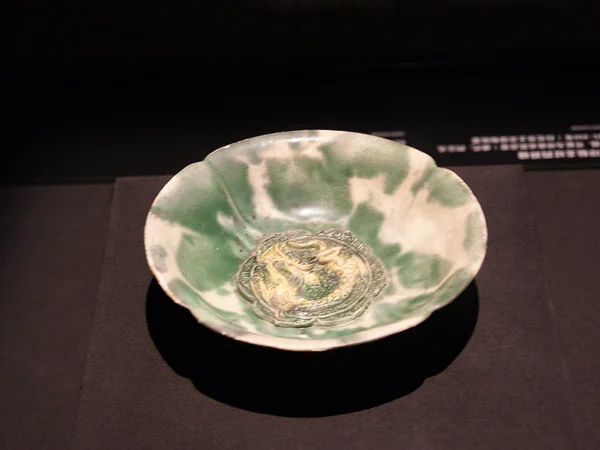
Imperial imagery is one important layer, but the dragon also belongs to festivals, regional stories, religious communities, crafts and contemporary popular culture.
The phrase “descendants of the dragon” is a modern cultural and national expression used by some Chinese speakers. It is metaphorical, not a biological or universally preferred identity. Context matters, especially across different communities and diasporas.
The Azure Dragon is one of the Four Symbols associated with directions and constellations, alongside the Vermilion Bird, White Tiger and Black Tortoise. These cosmological figures should not be collapsed into the twelve-animal zodiac, which is a different system.
Lists of “mythical creatures” vary by source and later popular media. Names such as Yinglong, Huanglong and Qinglong have distinct textual histories; a modern top-ten list is not an ancient canon.
The dragon is the fifth animal in the twelve-year zodiac cycle. That calendar role coexists with, but does not explain, every dragon image. Living traditions continue to change through museum research, craft revival and performance; the Chinese dragon culture guide connects this history with festivals observed today.
Editorial accountability
Hu Lei, CEO. The named owner is responsible for travel-planning accuracy and escalation of time-sensitive checks.
Yuntian Travel (Yunnan) Group is identified in its corporate profile as a licensed professional inbound travel service provider based in Kunming, China. Registration and travel-service documents can be requested before booking.
Page-specific references where cited, official destination, transport and entry notices, YUNSKY route-planning records, and direct provider confirmation before a booking is finalized.
Content is reviewed when rules, transport, access, pricing or route conditions change. Final availability and operating details are reconfirmed for each traveler’s dates.
Quality review: Page updated: