Your China & Yunnan Travel Experts



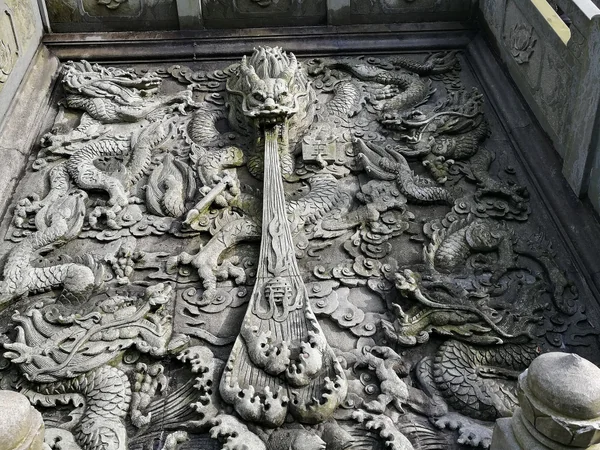
Chinese dragon art appears in architecture, painting, ceramics, textiles, metalwork and popular craft. The dragon's meaning changes with period, object and setting: it can signal imperial authority, cosmic forces, water, auspicious power or a particular story. It should not be treated as one unchanging emblem. The broader Chinese dragon culture guide explains the ideas around the motif, while this page focuses on how artists made it visible.
Dragon sculpture ranges from stone reliefs and glazed architectural tiles to carved wood, jade and metal. Material determines both technique and survival: an outdoor stone dragon weathers differently from a painted timber bracket. On a building, record where the motif appears—roof ridge, stair, screen, beam or column—and read the site label before assigning rank or ritual meaning.
Temples, palaces, tombs and elite residences used dragon imagery in different ways. Protective or auspicious interpretations may be relevant, but ownership alone does not prove that every dragon was an imperial symbol. Claw count, companions, inscriptions, color and architectural position can help, yet rules varied across periods and media. A museum catalogue is more reliable than a souvenir seller's claim.
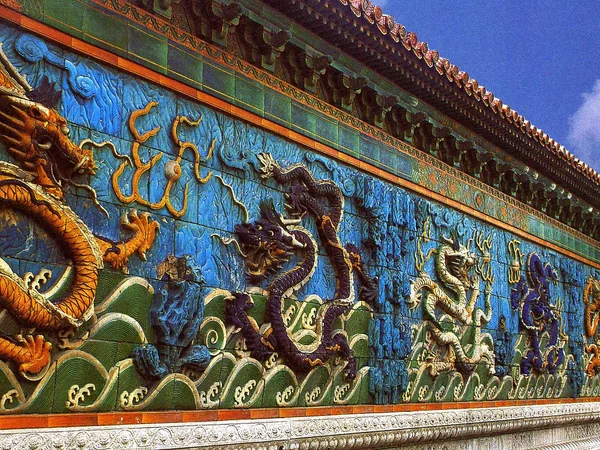
The Forbidden City's Nine Dragon Wall was made in 1772 during the Qianlong reign for the Ningshou Palace area. Its nine high-relief glazed dragons move across clouds and waves in five visual compartments. Travelers can compare it with the separate Nine Dragon Screen Wall guide, paying attention to ceramic modules, relief depth, color and the relationship between the central yellow dragon and the surrounding pairs.
Numbers such as nine and five have long associations with rank and cosmology, but numerology should not replace close looking. On this wall, five compartments also organize a long surface, while repeated ceramic blocks make construction possible. Interpretive claims about the exact number of components should be checked against the Palace Museum's current description and conservation research.
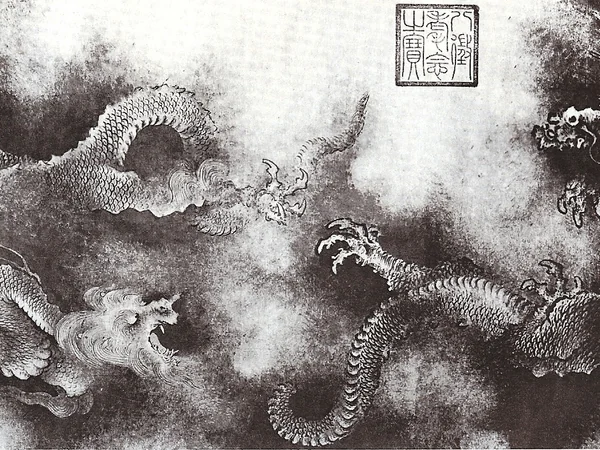
Painted dragons can emerge from waves and cloud, coil through a handscroll or appear as compact emblems. Ink painting is especially suited to mist, movement and partial revelation, but dragons also occur in brilliant mineral colors and decorative formats. The surrounding water, pearl, landscape, inscription and seals all contribute to the image's meaning.
Chen Rong's thirteenth-century Nine Dragons handscroll is a key example of dragons unfolding through ink, wash and shifting weather. Because a handscroll is viewed one section at a time, the sequence of appearance and concealment matters as much as the total length. Confirm the object's current location and display status before planning a visit; light-sensitive works are not necessarily on permanent view.
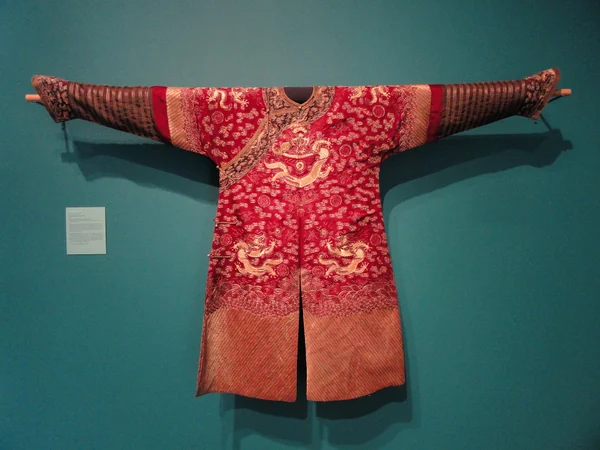
“Dragon robe” is a convenient English label for several types of court dress, not one universal garment. Qing imperial robes may combine dragons with waves, mountains, clouds and auspicious emblems, produced through embroidery, tapestry weave or other textile techniques. Color, sleeve form, border, insignia and documented wearer help identify function. Do not infer rank only from a yellow ground or count of claws.
Placement creates a designed view around the body: front, back and shoulder dragons become visible as the wearer moves, while a hidden or folded motif can complete a conventional count. Regulations changed, and related garments could be granted to princes or officials. Compare dragon forms with the Chinese and Western dragon guide, but avoid turning either tradition into a single stereotype. In museums, inspect weave, embroidery and mounting through the case; for purchases, avoid objects represented as court antiques without documented provenance and lawful export status.
Editorial accountability
Hu Lei, CEO. The named owner is responsible for travel-planning accuracy and escalation of time-sensitive checks.
Yuntian Travel (Yunnan) Group is identified in its corporate profile as a licensed professional inbound travel service provider based in Kunming, China. Registration and travel-service documents can be requested before booking.
Page-specific references where cited, official destination, transport and entry notices, YUNSKY route-planning records, and direct provider confirmation before a booking is finalized.
Content is reviewed when rules, transport, access, pricing or route conditions change. Final availability and operating details are reconfirmed for each traveler’s dates.
Quality review: Page updated: