Your China & Yunnan Travel Experts



Characteristics
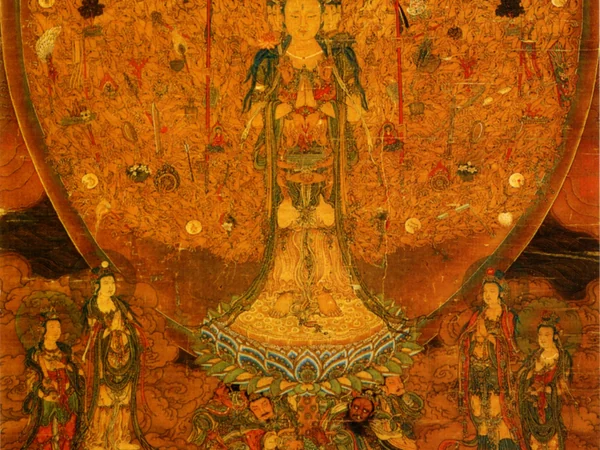
Chinese painters use line, texture strokes, ink washes, color and empty space in different combinations. Some works pursue close description; others compress forms to convey mood or cultivated expression. The viewer should compare brush pressure, ink saturation, scale and the relation between inscription and image rather than assume that every sparse composition has the same philosophy.
Chinese landscape painting
The origin and early ages
Painting and writing share tools, but neither can be explained by a legend about one inventor. Archaeological evidence—painted pottery, tomb murals, lacquer, silk and decorated objects—shows many early image-making practices. Their materials and functions differ, so later scroll painting should not be projected unchanged into the Neolithic period.
Neolithic painted pottery preserves geometric, animal and human designs from several regional cultures. The Banpo fish motifs and the dancing figures on a basin from Qinghai are valuable evidence of early visual culture, but they are not “Chinese painting” in the same format or social setting as later handscrolls. Museum labels provide the excavation context and current dating.
The development and heyday
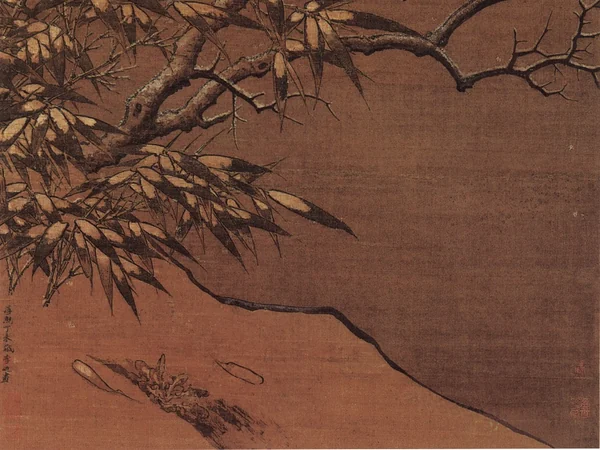
Surviving silk paintings from the Warring States and Han periods demonstrate early command of contour and narrative arrangement. Buddhist art, court patronage and changing social worlds expanded figure and landscape subjects through the Six Dynasties and Tang. Monumental landscape flourished in the Northern Song, while later scholar-painters used brushwork, poetry and reference to older styles as forms of reflection. Yuan, Ming and Qing painting contains multiple regional, court and individual traditions rather than one final peak.
The main schools of Chinese painting
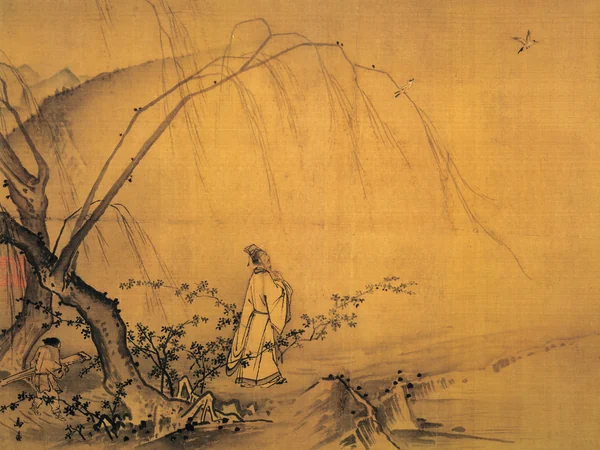
Subjects are commonly grouped as figures, landscapes, and flowers-and-birds. These categories developed through different institutions and audiences. Landscape can carry political, poetic or personal associations, but meaning depends on date, inscription and context; it should not be inferred from mountains alone. For a modern market perspective, compare the separate landscape painting guide.
Figure painting ranges from tomb and religious images to portraits, court records and scenes of everyday life. Gu Kaizhi and Wu Daozi became major names in later art history, though famous compositions may survive through copies rather than certain originals. Always check whether a museum label says “attributed to,” “after,” or “copy of.”
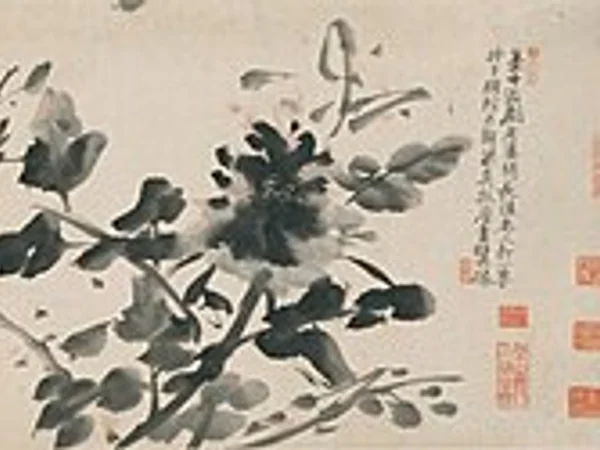
Flowers, birds, insects and animals can be observed closely, arranged decoratively or used through literary association. The genre became especially prominent from the Tang and Song onward. Courtly naturalism and scholar ink painting answer different aims, so a detailed colored bird and an ink orchid should not be judged by the same expectation.
Ink-and-wash painting varies black ink through water, brush loading and paper response. It is not colorless by default: artists may add mineral or vegetable pigments, and monochrome ink itself can range from dry pale gray to saturated black. See the Li River and ink-painting comparison for how travelers use this visual language to describe landscape.
Chinese flowers-and-birds painting
Subjects in paintings
Symbolism in Chinese painting
Chinese painting
Zhan Ziqian (c. 550–604)is traditionally associated with Strolling About in Spring, an early landmark in the development of landscape composition. Questions of attribution and dating are best followed through the holding museum's catalogue rather than repeated as settled fact.
Yan Liben (c. 600–673)served the Tang court and is associated with historical portraiture and diplomatic narrative. The Thirteen Emperors Scroll tradition and Emperor Taizong Receiving the Tibetan Envoy show how painting could construct political memory.
Wu Daozi (active 8th century)became legendary for forceful line and religious murals. Few securely attributable originals survive, making later descriptions and copies important to his reputation.
Zhang Zeduan (active early 12th century)is credited with Along the River During the Qingming Festival, a long handscroll crowded with transport, commerce, architecture and social detail. Its sequential format rewards slow viewing rather than a single postcard glance.
Li Gonglin (c. 1049–1106)was a scholar-artist particularly influential for baimiao, or plain-line drawing. His works demonstrate how disciplined outline can carry volume and character without heavy color.
Shen Zhou (1427–1509)was a leading Ming scholar-painter associated with the Wu School. Poetry, calligraphy and painting interact closely in his albums and scrolls.
Zheng Xie, known as Zheng Banqiao (1693–1765)is especially associated with ink orchids, bamboo and rocks. His distinctive calligraphy and painting became widely imitated, so market attributions require caution.

Riverside Scene at Qingming Festival
Chinese painting appears on fans, porcelain, textiles and modern souvenirs, but a printed motif is not the same object type as a hand-painted scroll. When buying, ask whether a work is original, workshop-produced or reproduced; request the artist, title, medium and date in writing; and check how it is mounted. Dafen provides a useful modern contrast through its oil-painting village, which belongs to a different medium and production history. For historic works, museum shops and documented contemporary studios are safer learning environments than unsupported “antique” claims.
Editorial accountability
Hu Lei, CEO. The named owner is responsible for travel-planning accuracy and escalation of time-sensitive checks.
Yuntian Travel (Yunnan) Group is identified in its corporate profile as a licensed professional inbound travel service provider based in Kunming, China. Registration and travel-service documents can be requested before booking.
Page-specific references where cited, official destination, transport and entry notices, YUNSKY route-planning records, and direct provider confirmation before a booking is finalized.
Content is reviewed when rules, transport, access, pricing or route conditions change. Final availability and operating details are reconfirmed for each traveler’s dates.
Quality review: Page updated: