Your China & Yunnan Travel Experts


Hongcun photography guide Reviewed August 28, 2026. Hongcun in Yi County, Anhui, is one component of the UNESCO property ‘Ancient Villages in Southern Anhui—Xidi and Hongcun.' UNESCO highlights the surviving street plan, residences and engineered water system within a landscape that still supports village life. This means the strongest photographs connect architecture, water, mountains and present use; they do not treat white walls and residents as a costume set. Exact building counts, age claims and opening details vary across sources, so verify current facts before publication.
This guide builds a coherent assignment around Nanhu, Yuezhao, canals and selected interiors, then separates nearby Tachuan from Hongcun itself. It adds light decisions, crowd and weather fallbacks, resident consent, heritage protection, equipment handling and one- or two-day routes. Start with the Huangshan travel hub for regional transport and check Hongcun's current official notice for tickets, last entry and room-specific restrictions.
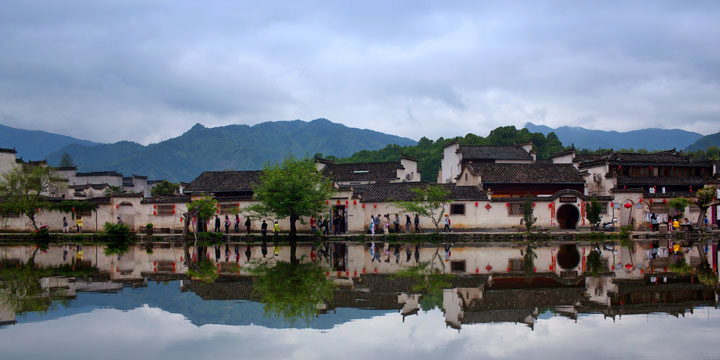
White-walled Hui-style houses and water reflections in Hongcun Village
Hui-style features include whitewashed walls, dark tile, stepped gables, courtyards and carved timber, brick or stone details. Avoid reducing them to a colour palette: height, drainage, fire separation, family halls and lane width reveal how the settlement worked. The serial World Heritage inscription covers both Xidi and Hongcun, but they are separate villages. A photograph made in Hongcun must not be captioned as a generic image of every southern Anhui village.
Hongcun's often-described ‘ox-shaped' plan is an interpretive device. The more verifiable photographic story is the relationship among the mountain setting, South Lake, Moon Pond, canals, streets and homes. Make one orientation frame, one image of water serving a lane or threshold, and one architectural detail. Keep drains and channels clear; do not place a tripod, bag or person in the water for a cleaner reflection.
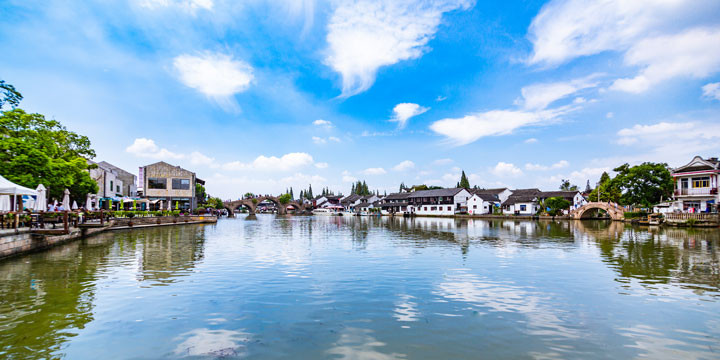
Hui-style walls, tiled roofs and a canal within Hongcun's historic settlement
Nanhu provides the broad arrival view, Yuezhao gives an intimate central water-and-facade relationship, the canals explain circulation, and Chengzhi Hall reveals interior craftsmanship when open. Nearby Tachuan is a different village and needs separate time and a separate caption. Choose two main subjects per light window; repeatedly circling the same ponds at peak crowd hours produces near-duplicate images and disrupts residents. A useful sequence is orientation, water function, domestic scale, protected detail and one consented human moment. If a frame does not add a new relationship, move to a different subject rather than a neighbouring stone on the same pond.
Stay overnight only when dawn, blue hour or a slower documentary sequence justifies it. Confirm whether the accommodation is inside the controlled area, how repeat entry works, where a driver can stop and whether luggage must cross stone lanes. Ask about room heating or cooling, breakfast time, payment and early departure rather than assuming urban-hotel service. At dawn, quiet does not mean privacy rules disappear. Ask before photographing an identifiable resident, a doorway interior, laundry, worship or children. Keep voices low, disable attention-grabbing camera sounds where lawful and avoid placing lighting equipment outside homes.
South Lake, whitewashed houses and arched bridge at the Hongcun entrance
From Nanhu, first include enough shoreline, bridge, roofs and mountain context to identify the village. Then wait for a clean relationship among architecture and reflection instead of removing every person. A polarizer can control glare but may erase useful reflection; rotate it while watching the water, not by formula. Morning mist and summer lotus are possible seasonal elements, never deliverables. Rain, wind, maintenance and algae can change the water surface. In flat midday light, turn away from the panorama and study roof layers, bridge movement or reflected detail instead of forcing a dramatic landscape.
Nanhu Academy on the north side can add educational and social context when its rooms are open. Treat the academy as an interior sequence—entrance, courtyard, hall and one permitted detail—not a list of unverified room measurements. Raise ISO or use lens stabilization before considering flash or a tripod, and follow room-specific restrictions around carving, plaques and painted surfaces.
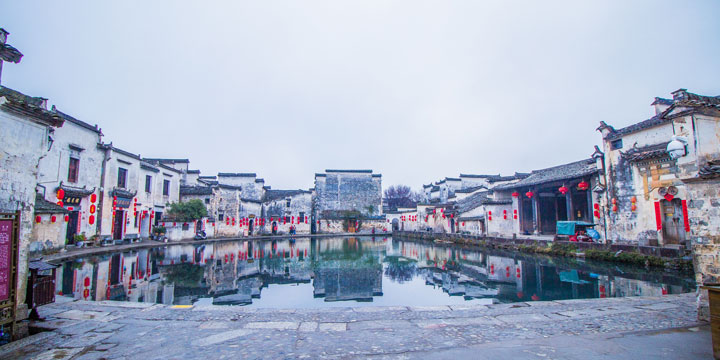
Moon Pond is compact and visually dense. A normal lens often explains the curve and surrounding homes better than an extreme wide angle. Arrive early, identify a standing place that does not block doors or the narrow stone edge, and wait for natural gaps. Use a short telephoto from farther back when the edge is busy rather than squeezing between people. Residents washing, carrying goods or talking are not props; obtain consent for identifiable close images and never direct daily activity. At night, protect highlights from lamps, carry a small light for your feet and leave before wet stones become difficult to judge.
The canals are part of Hongcun's historic water-management system, not decorative gutters. Show how water turns, crosses a lane or meets a household edge. A low angle can reveal flow, but keep feet and equipment out of the channel. Record upstream and downstream frames so the final edit explains connection rather than presenting isolated blue lines. Do not repeat exact construction dates or total lengths without a reliable site source; restoration and modern maintenance are also part of the living system. After heavy rain, obey closures and avoid fast or contaminated water. Never wash equipment or discard food into the channel.
Chengzhi Hall is known for dense wood carving and spatial hierarchy. Begin with a frame that locates the carving within beam, door or courtyard structure, then make a close detail only where photography is permitted. Expose for highlights on polished timber, check shutter speed and avoid flash unless expressly allowed. Mixed daylight and electric light can shift colour, so include a neutral reference and do not ‘clean' aged timber into a uniform tone. Nicknames such as ‘Folk Forbidden City' are promotional shorthand; captions should identify the actual subject and avoid unsupported scale claims.
Tachuan can complement a Hongcun assignment with a hillside village and autumn vegetation, but it requires separate admission/access checks and transfer time. Do not repeat unsourced ‘top four autumn places' rankings. Use a wider frame to retain fields, roofs and slope, respect cultivated land, and confirm any path or overlook with residents or staff rather than following an unofficial pin.
Autumn colour depends on species, temperature, rain and annual timing. Mid-October to late November is a broad planning window, not a peak-colour guarantee. Check recent local images and weather, then retain a fallback: village architecture in soft light, harvest detail with permission, or another Huangshan-area subject. Do not recolour foliage beyond what the file supports.
Stepped gables, roof ridges, canal edges and door frames can lead the eye, but they should clarify a building relationship rather than create an abstract pattern with no location. Keep the camera level for facades, then use an intentional diagonal only when it describes a lane or roof sequence. Check the frame edges for signs, cables and bystanders before pressing the shutter; cropping later should not erase evidence needed to understand the place.
A reflection can connect water infrastructure to architecture, show wind or reveal time of day. Make a wide identifying frame before a tight abstract one. Wait for ripples when they add movement, or use a slower shutter only from a stable position that keeps the walkway clear. Do not throw objects into the pond, feed animals or ask people to repeat an action for visual effect.
A telephoto lens isolates facade-and-water relationships, while a normal lens preserves spatial context. A polarizer reduces glare but can remove the mirrored layer entirely. Bracket only static scenes; moving residents, ducks or leaves can create merge artifacts. Record one neutral exposure and disclose material composites rather than presenting a constructed reflection as a single documentary moment.

Architectural reflections and daily life beside Moon Pond in Hongcun
Hongcun's tonal walls and dark roofs can work in monochrome, but black-and-white does not automatically make an image more authentic or historic. Photograph a full-colour raw file, convert later, and use luminance contrast to separate plaster, tile, timber and water. Compare a colour edit before committing: red lanterns, green algae or warm timber may carry useful present-day information. Avoid artificial grain, removed modern elements or heavy local contrast that implies damage or age not present. Caption the conversion when editorial context requires it, and retain the original raw file for editorial accountability.
A half day can cover Nanhu, one canal sequence, Yuezhao and one permitted interior, but it will not include every building and nearby village. One night supports blue hour plus dawn; two days allow a weather fallback and Tachuan or Xidi. Check current crowd controls, rain, road and building access, and state mobility needs because stone lanes, thresholds and narrow waterside paths make step-free routes inconsistent. Carry one compact zoom, spare battery, rain cover and lens cloth; keep the bag narrow in lanes. Save the property address and return transport in Chinese, and schedule a midday rest instead of working every crowded hour.

Hongcun water system and Hui-style architecture
From $ 1568
From $ 850
From $ 2583
Editorial accountability
Hu Lei, CEO. The named owner is responsible for travel-planning accuracy and escalation of time-sensitive checks.
Yuntian Travel (Yunnan) Group is identified in its corporate profile as a licensed professional inbound travel service provider based in Kunming, China. Registration and travel-service documents can be requested before booking.
Page-specific references where cited, official destination, transport and entry notices, YUNSKY route-planning records, and direct provider confirmation before a booking is finalized.
Content is reviewed when rules, transport, access, pricing or route conditions change. Final availability and operating details are reconfirmed for each traveler’s dates.
Quality review: Page updated: