Your China & Yunnan Travel Experts


Ili lavender photography guide—
reviewed August 28, 2026. Lavender in the Ili River Valley is an agricultural crop and regional industry, not a permanent purple backdrop. Ili government material records cultivation beginning in 1964 and identifies the valley as China's largest lavender-growing area. Recent official reports place the main Huocheng bloom broadly in June, with cutting beginning around early July; a smaller second flowering may occur in September or October, but it is usually less abundant. Start with the Xinjiang travel guide, then request current field and harvest updates shortly before travel. Photography tips for lavender in Ili should therefore begin with crop stage, access and weather rather than a fixed date copied from a previous year.
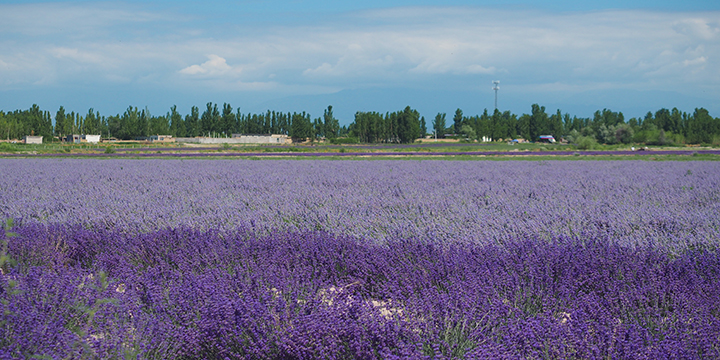
Lavender rows and mountain light in the Ili River Valley
Lavender is a group within the mint family, grown for flowers and aromatic oil. Do not label every field as Lavandula angustifolia from appearance alone; cultivars and production purposes can differ. The visual story includes rows, workers, bees, irrigation, harvest and processing as well as purple colour. Ask a grower or site interpreter which crop and stage you are photographing, and retain that information in the caption. Avoid medical or therapeutic claims unless supported by an appropriate health authority.
Use a planning window, not a bloom guarantee. Ili's official seasonal guide says flowering commonly begins around June 10 and lasts more than 15 days, while a 2024 agricultural report identifies June 10–30 as Huocheng's main nectar period before the crop is cut. Weather and field management move those dates; a 2025 official forecast expected an earlier-than-normal season. The second bloom in September or October is less vivid. Ask for a dated field photo or agricultural update 7–10 days before arrival and confirm again 48 hours before the shoot.
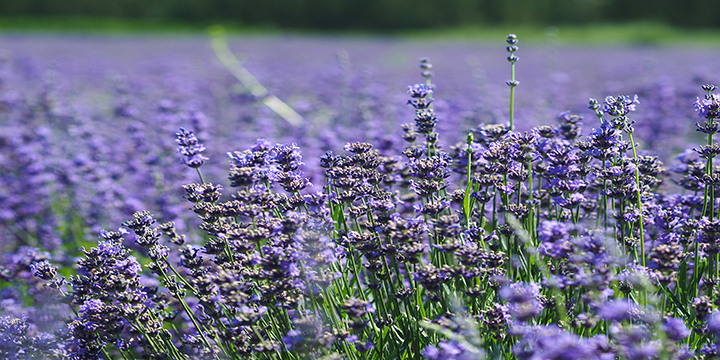
Main-season lavender in Ili before the early-summer harvest
Huocheng County is the most established first base, with cultivation around Lucaogou, Sigong Village and Qingshuihe. Official Ili information also lists fields near Yining, the 70th Regiment and Qapqal. These are not interchangeable: a ticketed garden may provide signed paths, toilets and designed foregrounds, while a production field may have stronger agricultural context but no visitor access. Select one place for landscape rows and another only if it adds processing, village or mountain context.
Do not stop on an expressway shoulder because purple rows are visible. Use a legal parking area, confirm whether the track is public, and keep the vehicle out of farm entrances. Field ownership and harvest schedules can change within the same village. A guide may know a grower, but permission must cover the exact plot, group size, tripod and commercial use. Stay within marked rows, touch no plants, move no irrigation lines and keep clear of machinery and beehives.
Princess Jieyou Lavender Garden near Qingshuihe is a managed visitor option with interpretation and planted displays, but its current opening, ticket, flowering blocks, museum access and commercial-shoot rules must be checked directly. A display garden may offer varied foreground colour yet look less like a production field. Decide whether your assignment is botanical interpretation, tourism or agriculture, and caption it honestly rather than calling every designed bed a wild lavender sea.
The 70th Regiment and production fields appear in current official distribution lists; older guides often name a different regiment number, so verify the exact location rather than reusing that claim. Production landscapes can show longer rows, harvest and beekeeping, but only with farm permission. Never promise that a field will be open, uncut or free of workers. If access is refused, use an authorized visitor garden or a public landscape view instead of entering from another side.
A diffusion filter, foreground flower or wide aperture can create a soft layer, but an entire gallery of blur hides crop structure and location. First make a sharp establishing image showing rows, access path and horizon. Then use a 50–100 mm equivalent with a controlled aperture to isolate a flower group while retaining recognizable field context. Check the frame for clipped purple channels and excessive vignetting; apply the effect deliberately rather than as a default “romantic” treatment.
Low backlight can reveal fine hairs, flower edges, insects and airborne dust. Meter the bright rim, shade the lens and make one exposure for the overall field. Spot-metering the single brightest petal can underexpose everything else, so check the histogram and bracket only static frames. Never spray water, disturb bees or step across rows to manufacture sparkle. If a portrait is included, obtain consent, keep the model on an authorized path and do not flatten crops with clothing or equipment.
A 70–200 mm equivalent can align purple rows with trees, villages or distant Tianshan slopes and can simplify untidy edges. Heat shimmer, wind and haze may reduce detail, so compare a shorter focal length and faster shutter before assuming more reach is better. A long lens does not authorize photographing workers closely without consent. Use continuous autofocus for insects only from the path, avoid blocking pollinator movement and never handle a plant or bee for positioning.
Face along the rows for convergence, or work across them to show repeating bands and irrigation. Include a tree, mountain, building or permitted person only when it anchors scale. Keep camera and tripod within the authorized lane; a lower viewpoint can be made by tilting a rear screen rather than kneeling on plants. Wide-angle lines exaggerate the foreground, so check that the image does not imply a field is larger or more continuous than it is.
Purple shifts quickly with white balance, haze, polarized light and camera profiles. Photograph a neutral reference, expose without clipping red or blue channels, and compare the raw file with the field before editing. Yellow flowers, green shelterbelts, blue sky and pale mountains can provide contrast, but avoid collecting every colour in one frame. Do not replace a sky, recolour a cut field or push saturation until different crops become visually indistinguishable.
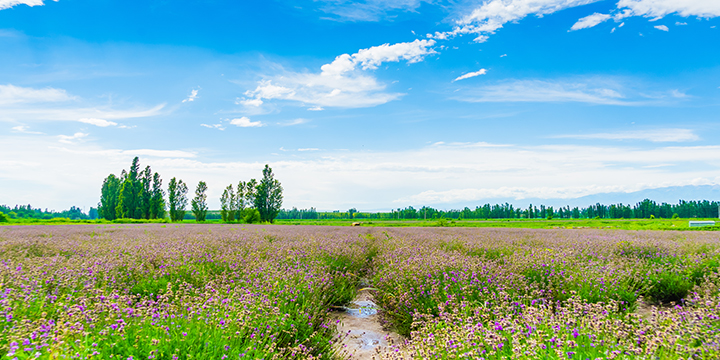
Lavender and neighbouring flower colours under Ili's open sky
The hour after sunrise and before sunset often brings lower contrast and longer row shadows, but mountain ridges can delay or shorten direct light. Midday may work for graphic rows, interpretation and processing details if wind is strong at the edges. Check cloud, rain, dust and wind, then select one primary and one sheltered fallback. Carry sun protection, water, closed shoes, rain cover and lens cloth; leave immediately for lightning, unsafe wind, machinery operations or a site closure.
One focused day can cover an authorized Huocheng field at early light, a midday interpretation or oil-processing visit if open, and one different late-light composition. A second day should be a bloom/weather reserve or add a genuinely different Ili landscape, not a duplicate purple field. The Silk Road travel guide can place the valley in a longer route, but long Xinjiang distances require verified driving time, licensed transport, seat belts, fuel and legal parking. Confirm toilets, food, mobile coverage and step-free paths with the selected site.
Build a flower-tour brief with the exact field or garden, crop stage, harvest risk, permission contact, intended image use, group size, tripod, portrait plan and weather fallback. Compare the assignment with the China flower photography route before fixing dates. Drones require current civil-aviation registration, airspace compliance and explicit land/site approval; airports, border controls, crowds, bees and farm operations may impose tighter limits. Keep the aircraft grounded whenever the legal or local position is unclear. A credible final gallery records the date and location, distinguishes visitor gardens from production fields, discloses material composites and never presents one year's bloom as a guaranteed annual schedule.
From $ 1568
From $ 850
From $ 2583
Editorial accountability
Hu Lei, CEO. The named owner is responsible for travel-planning accuracy and escalation of time-sensitive checks.
Yuntian Travel (Yunnan) Group is identified in its corporate profile as a licensed professional inbound travel service provider based in Kunming, China. Registration and travel-service documents can be requested before booking.
Page-specific references where cited, official destination, transport and entry notices, YUNSKY route-planning records, and direct provider confirmation before a booking is finalized.
Content is reviewed when rules, transport, access, pricing or route conditions change. Final availability and operating details are reconfirmed for each traveler’s dates.
Quality review: Page updated: