Your China & Yunnan Travel Experts


Wuyuan rapeseed flower photography guide—reviewed August 28, 2026. Wuyuan County in Jiangxi is a working agricultural landscape where spring oilseed fields, terraced slopes, rivers and white-walled villages share the frame. The Ministry of Culture and Tourism identifies Wuyuan as a major March–April flower destination, but weather, elevation, cultivar and farm decisions move the useful colour every year. Begin with the Jiangxi travel map, then ask for a dated bloom report and field-access update before fixing a sunrise transfer. This guide keeps the original Jiangling, Likeng and Moon Bay subjects while adding crop accuracy, route logic, exposure method, resident consent and a practical backup plan.
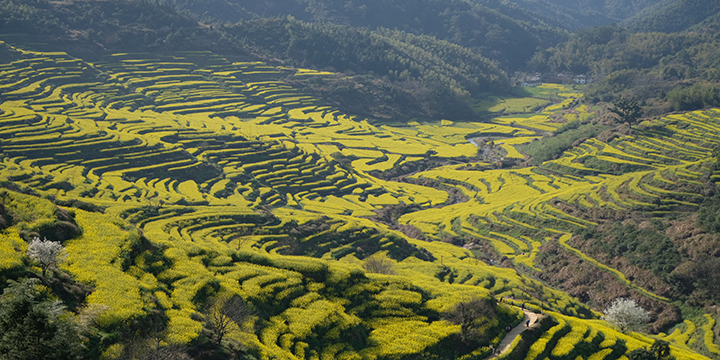
Rapeseed terraces, villages and spring light in Wuyuan
The crop is commonly called rapeseed, oilseed rape or canola in English and belongs to the genus Brassica. An old page may assign one Latin species to every field, but cultivars and production uses cannot be confirmed from flower colour alone. Photograph a location sign, field boundary and date for your notes; describe the crop as flowering rapeseed unless a reliable local label gives a more precise identification. These are cultivated fields, not a public flower lawn. Stay on paths, move no plants or irrigation lines, and never ask a farmer to delay work for a picture.
Use March through April as a planning range, not a permanent peak promise. An official 2025 route notice placed Jiangling's best viewing from March 8 to April 5 that year and noted that Huangling's higher terraces continued into April. That dated report demonstrates how elevation can extend a season; it does not predict a future one. Warm spells accelerate opening, while cold rain, wind and field management can shift or shorten the strongest colour.
Request a current image or official flower bulletin 7–10 days before arrival, check again about 48 hours before the shoot, and ask whether the intended field is open, harvested or restricted. A useful decision rule is visual rather than calendar-based: choose one area with broad colour coverage, clear village context and legal access. Keep an ancient-village, river-detail or indoor file-editing alternative for hard rain, haze, weak bloom or crowd control.
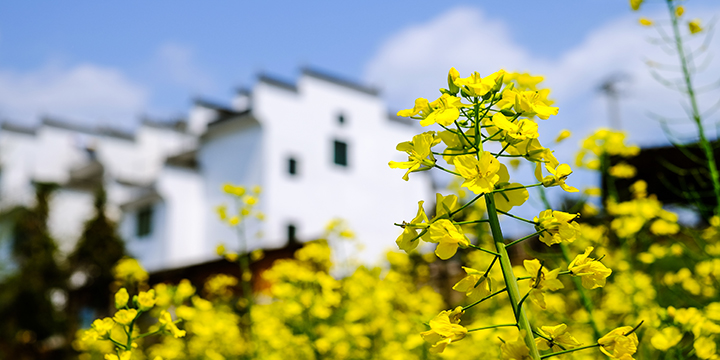
Spring rapeseed in flower beside Wuyuan villages
Wuyuan's sights are dispersed across villages rather than contained in one walkable park. The familiar east, north and west route labels help with transport, but they should not become a rushed checklist. For a one-day assignment, select one primary sector and one nearby fallback; repeated cross-county transfers consume the low light and increase roadside stopping. Confirm the exact entrance, parking point, shuttle rule, walking gradient and last return for the date.
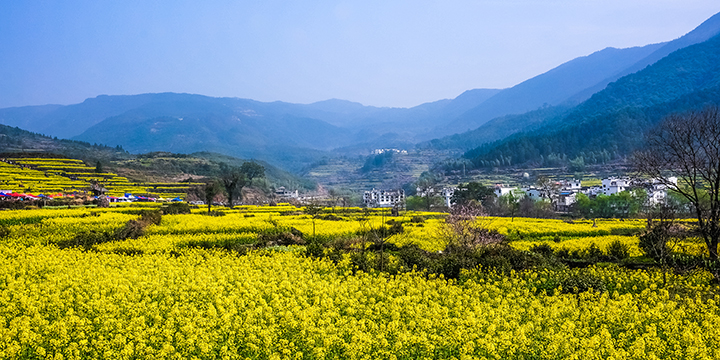
Rapeseed fields, river bends and Hui-style village roofs in Wuyuan
The east route is usually the strongest first choice for a rapeseed portfolio because Jiangling supplies terrace scale and nearby villages supply human context. Split the session into one wide landscape, one village relationship, one field-edge detail and one honest weather frame. That sequence tells more than ten interchangeable yellow panoramas.
Jiangling uses elevation to reveal bands of flowering fields descending toward villages and wooded slopes. Start from a signed platform and make a wide orientation frame before isolating roof clusters or field patterns. Platform numbering, one-way paths and crowd barriers may change, so use the current site map rather than an old “platform two” instruction. Mist can separate layers, but heavy haze can erase them; expose for the yellow highlights and retain a neutral reference frame before adding contrast. Keep tripod legs out of the circulation lane.
Likeng offers a compact relationship among waterways, paths, black-tile roofs and nearby fields. A moderate focal length usually preserves natural proportions better than an extreme wide lens from a narrow lane. Photograph architectural context from public space, verify the name of a hall or bridge from current signs, and ask before entering a courtyard. Residents, shopkeepers and schoolchildren are not automatic foreground props; request consent before an identifiable portrait and accept refusal immediately.
Moon Bay can produce a clear river-bend composition when water level, vegetation and field colour align. Use an authorized public lookout and keep road traffic in mind; do not climb a private slope or stop a vehicle on a blind bend. A boat can provide a lower perspective, but confirm service and life-jacket arrangements, secure equipment and avoid standing or directing the boat solely for a reflection. The moon shape is best shown by viewpoint and focal length, not by distorting the river in editing.
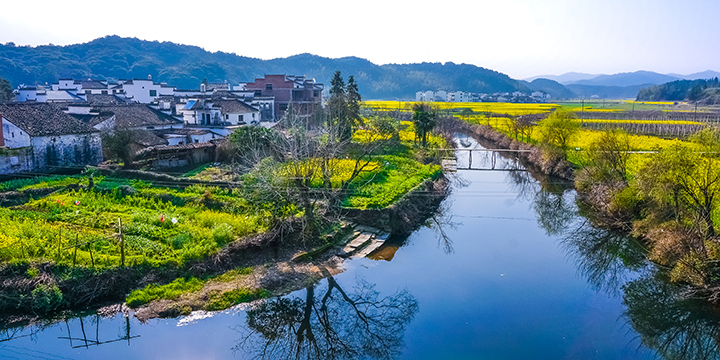
River bend and flowering fields at Moon Bay in Wuyuan
Low ISO helps retain fine flower and roof detail only when the shutter is still fast enough for wind, handheld movement or a long lens. Begin around base ISO for a stable wide scene, then raise ISO deliberately when gusts move the flowers or when a tripod is impractical. Check focus at the foreground and village plane rather than trusting a small screen. For close flowers, choose a shutter speed that freezes the intended petal movement; for a broader field, decide whether slight motion communicates wind or merely looks soft.
Bright rapeseed, white facades, dark roofs and wooded hills can exceed one exposure. Watch individual colour channels as well as the main histogram because saturated yellow can lose texture before the preview looks clipped. Make a neutral frame, then bracket a static landscape if needed; moving flowers, people and branches can create false HDR edges. Exposure compensation is not “increase for mountains, decrease for trees”—meter the actual highlight, inspect the result and protect important texture.
For a wide view, use a path, terrace edge or river as a lead toward a named village. For a medium view, let alternating crop, roof and woodland layers establish scale. For a detail, isolate one flower group against a darker natural background while retaining enough context to identify an agricultural field. Avoid trampling a new foreground, moving a fence or compressing perspective so strongly that separate villages appear contiguous. Record horizontal and vertical options before changing position.
Soft overcast light protects petal texture and supports architecture; low side light describes terrace relief; backlight can reveal translucent petals but often needs careful flare control and a brighter exposure than the meter suggests. Midday is useful for scouting, captions and village interiors only where photography is permitted. At sunrise or sunset, scout the exit in daylight, carry a light, and stop if a wet slope, lightning or traffic makes the location unsafe. Dew and fog are conditional weather, not guaranteed props.
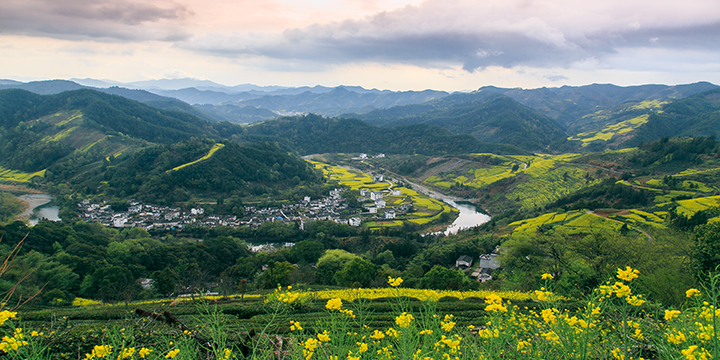
Late-day side light across flowering terraces in Wuyuan
The strongest Wuyuan frame connects cultivation with settlement, water, paths and seasonal work. Do not erase modern roofs, vehicles or protective barriers merely to manufacture a “timeless” village. If photographing planting, harvesting or food preparation, explain the intended use and obtain consent. Drones require national registration and airspace compliance plus explicit scenic-area, landowner and privacy permission; villages, crowds, roads and farm work make a ground-based viewpoint the responsible default. A wider China photography route should give Wuyuan enough nights for bloom and weather variation rather than using it as a roadside stop.
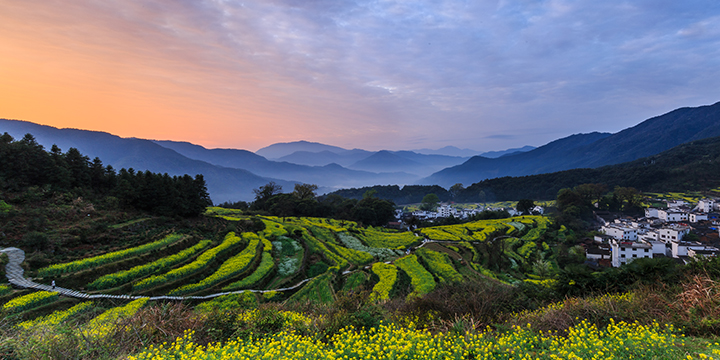
Flowering rapeseed, village roofs and surrounding hills in Wuyuan
For two nights, use the first afternoon to confirm bloom and scout one legal platform; reserve the next morning for Jiangling, rest and back up files at midday, then photograph one village or river subject late in the day. Carry a normal zoom, optional longer lens, lens cloth, rain cover, spare battery, two cards, water and footwear with grip. Confirm transport, early entry, toilets, step-free viewing, tripod and commercial-use rules. Record village, platform, date, weather, field permission and any portrait consent beside the file numbers. Reviewed information is a starting point: verify the actual year's bloom, ticketing, road and field conditions before departure.
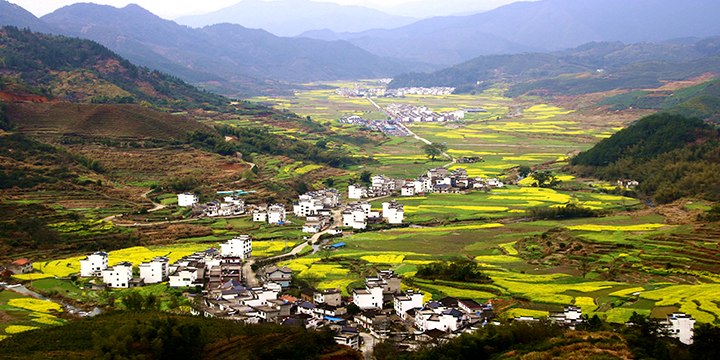
Terraced fields and village landscape on a Wuyuan photography route
From $ 1568
From $ 850
From $ 2583
Editorial accountability
Hu Lei, CEO. The named owner is responsible for travel-planning accuracy and escalation of time-sensitive checks.
Yuntian Travel (Yunnan) Group is identified in its corporate profile as a licensed professional inbound travel service provider based in Kunming, China. Registration and travel-service documents can be requested before booking.
Page-specific references where cited, official destination, transport and entry notices, YUNSKY route-planning records, and direct provider confirmation before a booking is finalized.
Content is reviewed when rules, transport, access, pricing or route conditions change. Final availability and operating details are reconfirmed for each traveler’s dates.
Quality review: Page updated: