Your China & Yunnan Travel Experts


Nyingchi peach-blossom photography depends on route elevation, live bloom reports, road and permit arrangements—not a fixed “mid-March to mid-April” promise. The region's valleys include Bayi/Gala, Bomi and Milin/Suosong, separated by substantial driving and different weather. In 2026 the official festival opened on April 3, while official weather guidance warned that rain, snow, icing, floods and landslide risk could affect different sectors. Treat the festival date as an event marker, not proof that every valley peaks together. Reviewed August 28, 2026.
The distinctive visual relationship is among old peach trees, fields, villages, river valleys and high snow mountains. It is an inhabited and worked landscape, not an empty pink backdrop. Choose one valley sector per session, ask before entering fields or courtyards, and caption the named village and date. Weather may hide Namcha Barwa or close a mountain road; build a valley-level fallback rather than chasing several distant bloom reports in one day. photography planning in Nyingchi must keep bloom uncertainty, local life and high-altitude safety visible.
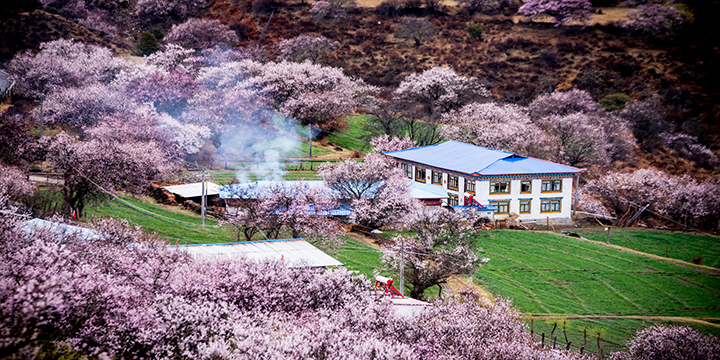
Peach trees, farm fields and village buildings in a Nyingchi valley
Official tourism material commonly describes old wild or semi-wild peach trees across the river valleys. Do not turn that into a species identification from a photograph. Record any interpretation panel or local name and avoid calling a tree “thousand-year-old” without documented evidence. Flowers, new leaves and fruit stages vary among tree, elevation and aspect. Keep branches intact, never shake petals for a photograph, and do not spray water or tie fabric to a tree.
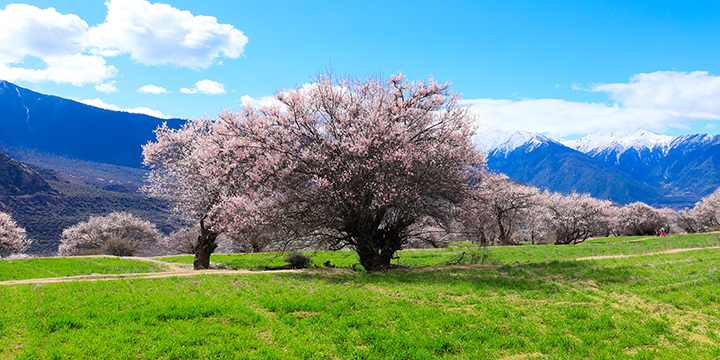
Peach tree flowering below snow-covered mountains in Nyingchi
Plan broadly for March and April, then use current official bloom and weather reports to choose the exact sector. The 2026 festival announcement set an April 3 opening; earlier official routes and events varied by county. Lower Bomi areas, Bayi villages and the higher Yarlung Tsangpo/Grand Canyon sector do not peak on one date. Ask for dated local images 7–10 days before arrival and recheck road, rain, snow and bloom 48 hours before each transfer. A future festival may move, shorten or change venue.
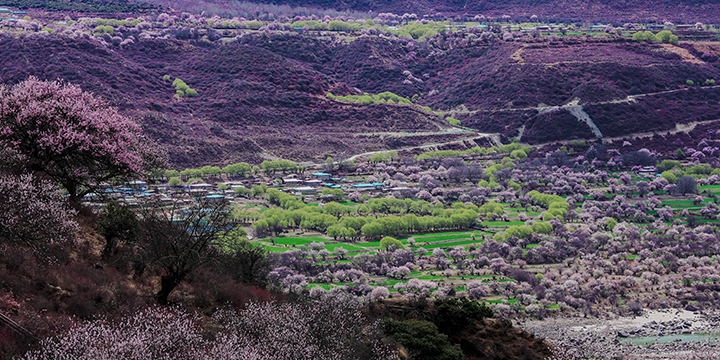
Spring peach blossom in the Nyingchi region
Gala is practical for a shorter village-and-tree assignment near Bayi; Bomi offers a longer valley sequence and large old trees; Suosong can align blossoms with Namcha Barwa when visibility and access cooperate. These are different routes, not interchangeable “spots.” Compare drive time, current tickets, village access, toilets, lodging, altitude and weather before selecting. Photograph from public or authorized paths, keep vehicles out of farm entrances and never direct residents, livestock or agricultural work for a staged scene.
Gala has served as a festival and viewing location, but event programming and entry arrangements change by year. Begin with a wide frame that shows trees, settlement and field boundaries; then use a normal lens for one relationship and a short telephoto for blossom layers. Avoid describing the place as untouched when paths, tourism services and homes are visible. Ask before photographing an identifiable resident or entering a courtyard.
Bomi supports a multi-village landscape assignment along the valley. Older copy repeated unverified numbers of trees and a “China's largest” Guinness claim; do not use either as fact without a current primary record. Build the story from named villages, old trunks, fields, river and mountain weather. Long driving means one or two planned stops are better than constant roadside halts. Park legally, follow local traffic control and avoid undeveloped slopes during heavy rain.
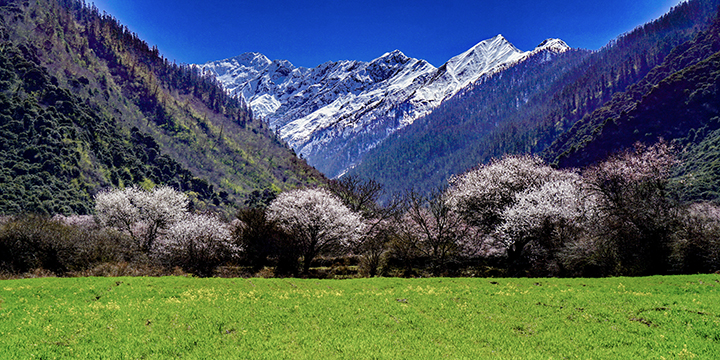
Peach trees spreading across a cultivated Bomi valley
Suosong can place peach trees against Namcha Barwa from the Grand Canyon area, but the mountain is frequently obscured and the village is not “China's Mount Fuji.” Check the current scenic-area entry, vehicle and lodging arrangement. Use a weather-cleared long lens for mountain scale, then make a truthful valley frame if cloud remains. Respect homes, religious markers and agricultural work; a ticket does not grant access to private rooftops or fields.
Choose one intact branch from an authorized path, focus on the nearest critical flower and use enough shutter speed for wind. Keep a contextual frame with trunk, field or mountain so the series does not become generic blossom stock. Pale petals clip easily against snow or cloud; check highlights and make a neutral exposure. Do not break a twig, remove a damaged petal or ask someone to hold a branch.
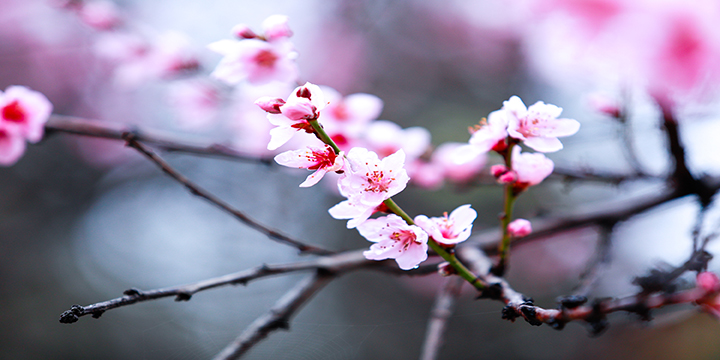
Peach blossom detail photographed without handling the branch
A macro lens can reveal petals and stamens, but shallow depth of field and wind make focus difficult. Work from the path, use continuous focus or a small burst, and allow bees to move naturally. Do not touch, chill, bait or trap an insect. Keep one label or landscape frame for caption evidence, and avoid claiming a cultivar or wild species that has not been identified locally.
Buds can explain how altitude and aspect stagger bloom, but never spray them to manufacture dew. Photograph one branch in context, record the village, date and weather, and compare open flowers on the same route. Rain or snow can create valuable documentary contrast, yet slippery paths, falling branches and road warnings override the shot. Protect the camera in a dry bag and allow it to acclimatize before changing lenses.
A higher public viewpoint can connect peach trees, farms, river and mountains, but drones, rooftops and unofficial slopes are not shortcuts. Use a legal signed platform or authorized path, retain field boundaries and avoid saturation that merges separate blossom patches into one “sea.” Drones require national compliance, current airspace rules and explicit scenic-area or land permission; keep the aircraft grounded near airports, crowds, villages, protected areas or when permission is unclear.
Spend the first day acclimatizing in Bayi and checking the live bloom/road report; use Gala only if it matches the assignment. Give Bomi its own driving and weather day, or choose Suosong as a separate two-night mountain-context option—do not combine both as a rushed loop. Back up files nightly, record permissions and keep a no-bloom alternative such as river landscape, village architecture from public space or an authorized cultural visit. Confirm the latest Tibet travel approval process, then use the China photography hub to connect the valley story with a wider route. Do not geotag a private courtyard, photograph a child without guardian and child assent, or publish a precise sensitive location merely because a blossom image becomes popular.
If the permit timeline or route remains unclear, ask YunSky's planner to confirm it . For a practical photography schedule, request a route-specific Nyingchi plan . Confirm the exact year's festival, bloom, road, scenic-area entry, weather and drone rules before departure. A trustworthy gallery identifies the village and date, respects residents and fields, and does not imply that one year's blossom or mountain visibility is guaranteed.
From $ 1568
From $ 850
From $ 2583
Editorial accountability
Hu Lei, CEO. The named owner is responsible for travel-planning accuracy and escalation of time-sensitive checks.
Yuntian Travel (Yunnan) Group is identified in its corporate profile as a licensed professional inbound travel service provider based in Kunming, China. Registration and travel-service documents can be requested before booking.
Page-specific references where cited, official destination, transport and entry notices, YUNSKY route-planning records, and direct provider confirmation before a booking is finalized.
Content is reviewed when rules, transport, access, pricing or route conditions change. Final availability and operating details are reconfirmed for each traveler’s dates.
Quality review: Page updated: