Your China & Yunnan Travel Experts



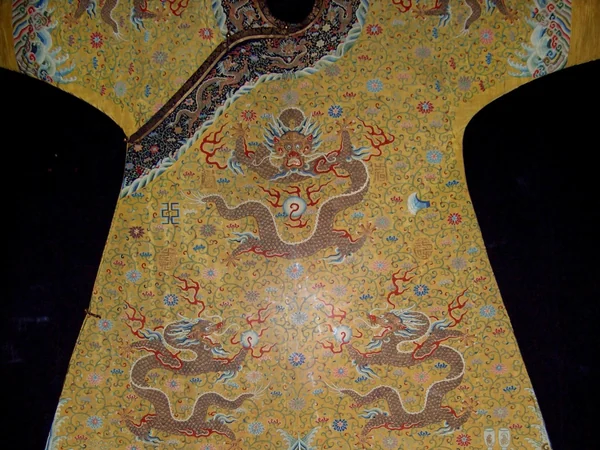
Chinese and Western dragons share a modern English name, but they grew from many different stories, images and religious settings. Chinese traditions often connect long (龙/龍) with rain, waterways, seasonal renewal and rulership. European traditions include dangerous serpents, treasure guardians, heraldic emblems and local protectors. Neither side has one fixed meaning: region, century, genre and audience all matter. This guide compares recurring patterns while keeping exceptions visible. It is a cultural and art-historical overview, not evidence that dragons were real animals or that one civilization imagined them in only one way.
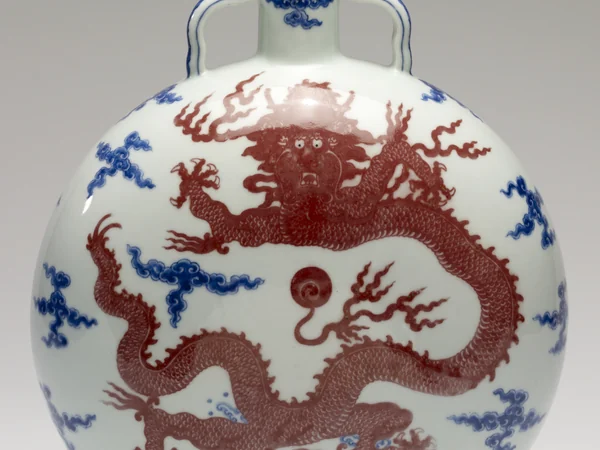
In much Chinese art, the dragon has a long, flexible body, scales, horns, whiskers and clawed feet. It can coil through clouds without visible wings. Details change across periods and media: a jade pendant, painted handscroll, porcelain vessel and imperial robe do not use exactly the same formula. Later writings list “resemblances” to several animals, but artists interpreted those lists rather than following a biological diagram. The flowing outline suits clouds, waves, columns and textiles, where the body can guide the viewer across a surface.
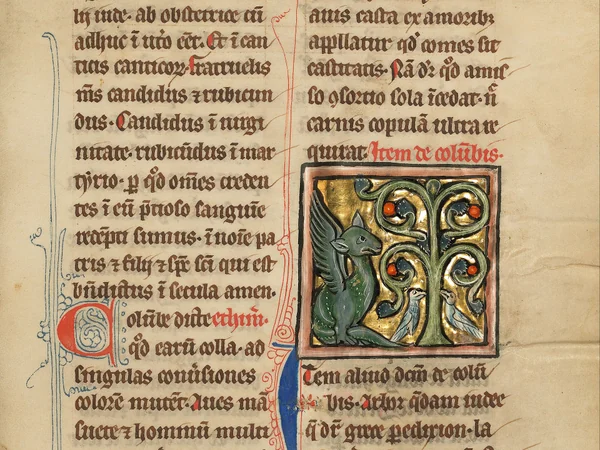
A familiar European dragon is heavy-bodied, winged and four-legged, sometimes breathing fire. Yet medieval images also show two-legged wyverns, legless serpents and sea dragons. Manuscripts, church sculpture, maps and heraldry each developed their own conventions. Wings are therefore common, not universal; fire is memorable, not required. Comparing the two traditions works best as a study of visual tendencies: Chinese dragons frequently move through water and cloud, while many European dragons occupy caves, wilderness or guarded boundaries.
No single story explains the birth of either dragon tradition. Early Chinese dragon-like forms appear on Neolithic jades and later ritual objects, but scholars debate how those motifs relate to later written dragons. Archaeology demonstrates long development, not one proven “first dragon.” A useful starting point is our Chinese dragon history, which separates dated objects from later origin legends.
The English word “dragon” ultimately derives through Latin and Greek terms associated with large serpents. Greek and Roman stories contain many dangerous reptilian beings, but they differ in anatomy and role. Ladon guards a garden; Python is linked with Delphi; the Hydra has many heads. Modern translations group them as dragons even when ancient authors used more specific language. This translation history helps explain why creatures that were not originally identical now appear together in comparison charts.
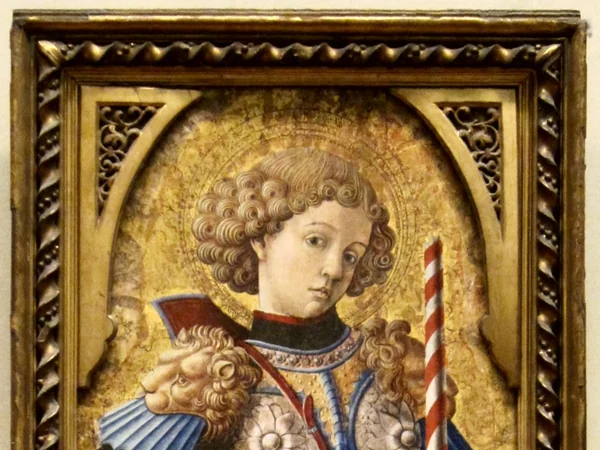
Christian art gave the dragon another influential role: an image of chaos, sin or a defeated adversary. That meaning appears in biblical interpretation and in saints' legends, yet medieval viewers also met dragons in decoration, bestiaries and heraldry. The creature could mark danger while simultaneously communicating courage, lineage or local identity. A negative narrative role does not mean every Western dragon image carried exactly the same moral message. Saint George and the Dragon The best-known medieval legend describes George rescuing a community or princess from a dragon. Versions differ, and the episode was elaborated long after the historical martyr was believed to have lived. Artists used it to stage faith, bravery and victory over evil; rulers and cities later adopted George as a patron. The story should be read as hagiography and visual tradition, not eyewitness history. Its enduring composition—mounted saint, spear, dragon and rescued figure—made it easy to recognize across altarpieces, manuscripts and civic emblems.
Chinese sources likewise present several dragon beings rather than one character. Dragon Kings govern seas or waters in religious and popular narratives; the Azure Dragon is associated with the east in correlative cosmology; Yinglong appears in early literature with changing roles. Names, attributes and family relationships vary by text and period. Explore the wider ritual and festival setting in our Chinese dragon culture guide. The Classic of Mountains and Seas The Shanhaijing, or Classic of Mountains and Seas, is a layered compilation describing extraordinary lands, beings and ritual knowledge. Later readers connected some of its figures with established dragon traditions, but translations and editions require care. It is safer to identify the passage and character than to merge every winged, horned or serpentine being into one species. The text shows how mythic geography could organize a world of powers; it does not provide a zoological catalogue.
In several biblical and Christian contexts, a dragon or great serpent represents an adversary defeated by divine power. Revelation is especially influential in European art. But “Western dragon” also covers pre-Christian stories, secular romances and national symbols, so the biblical image cannot stand for all of Europe. The red dragon of Wales, for example, works as a proud emblem rather than a monster awaiting destruction.
Chinese religious practice often links dragons with rain, springs, seas and protection. Communities historically addressed local water deities during drought or flood, while temples and court rites varied by dynasty and region. Daoist and Buddhist art also adapted dragons to their own narratives. Calling every Chinese dragon benevolent would be misleading: stories can show volatile, punitive or dangerous powers as well as helpful ones.
Literature expands these possibilities. A dragon can test a hero, guard a boundary, explain a landscape or embody political order. Genre matters: epic poetry, saints' lives, vernacular fiction and children's fantasy give readers different expectations. Beowulf In Beowulf, an old treasure-hoarding dragon is provoked after a cup is taken from its barrow. Its fire devastates the Geats, and the aging hero dies after defeating it with Wiglaf's help. The episode joins courage to mortality and the uncertain future of a people. It influenced the modern image of the dragon guarding gold, but it is one Old English work, not a summary of every European tradition. Journey to the West Journey to the West includes Dragon Kings, underwater courts and the White Dragon Horse, whose identity and service connect the pilgrimage to a larger divine bureaucracy. Dragons can be powerful, flawed, helpful or subject to higher authority. This complexity is closer to the source than labeling them simply “good.” The dragon is also the fifth zodiac animal; see the Year of the Dragon guide for calendar boundaries and responsible folklore context.
Modern novels, games and film freely mix these traditions. A wingless cloud dragon may speak with a medieval knight; an East Asian studio may create a fire-breathing cave dragon. Such hybrids are creative choices, not evidence that historical meanings were identical.
The clearest conclusion is not “Chinese dragons are good and Western dragons are evil.” Chinese dragons often emphasize water, cosmic order and authority; many European narratives emphasize conflict, guardianship and wilderness. Both traditions contain exceptions, regional voices and centuries of change. Compare a specific object, text and date whenever possible—that is more accurate, and more interesting, than a civilizational stereotype.
Editorial accountability
Hu Lei, CEO. The named owner is responsible for travel-planning accuracy and escalation of time-sensitive checks.
Yuntian Travel (Yunnan) Group is identified in its corporate profile as a licensed professional inbound travel service provider based in Kunming, China. Registration and travel-service documents can be requested before booking.
Page-specific references where cited, official destination, transport and entry notices, YUNSKY route-planning records, and direct provider confirmation before a booking is finalized.
Content is reviewed when rules, transport, access, pricing or route conditions change. Final availability and operating details are reconfirmed for each traveler’s dates.
Quality review: Page updated: