Your China & Yunnan Travel Experts



Silk heritage in the lower Yangtze belongs to a network of mulberry farming, silkworm raising, reeling, dyeing, weaving, embroidery and trade. Huzhou, Suzhou, Hangzhou and Shengze offer different parts of that story. Calling them “silk towns” is useful for travel planning, but it should not imply that each has one unchanged craft or that any city alone was the starting point of the Silk Road.
Huzhou sits south of Lake Tai in a region with deep sericulture history. Archaeological finds from the wider lower Yangtze help document early silk, while later villages combined mulberry cultivation with water management and household production. Exact claims about 4,700 years of continuous local manufacture should be tied to a named excavation rather than applied to the modern city as a whole.
Historical texts and trade records show that Huzhou silk entered regional and long-distance markets, but export-country counts and a single “true Silk Road starting point” are not reliable ways to explain that history. For travelers, canal landscapes, local museums and any operating sericulture demonstration should be planned separately. Confirm seasonal access because silkworm activity is not visible year-round.

Suzhou developed as a major Jiangnan center for silk weaving, embroidery, commerce and elite consumption. Court commissions and urban workshops shaped particular fabrics, while rural sericulture supported raw material supply. Claims reaching back to the legendary Xia dynasty should be presented as tradition, not a securely dated production record.
Suzhou embroidery, Song brocade and kesi are distinct techniques: embroidery is stitched onto a ground, brocade is patterned weaving, and kesi is a slit-tapestry method. A good visit asks the demonstrator to identify which process is being shown. Use Suzhou's main visitor guide to balance textile study with gardens and historic streets.
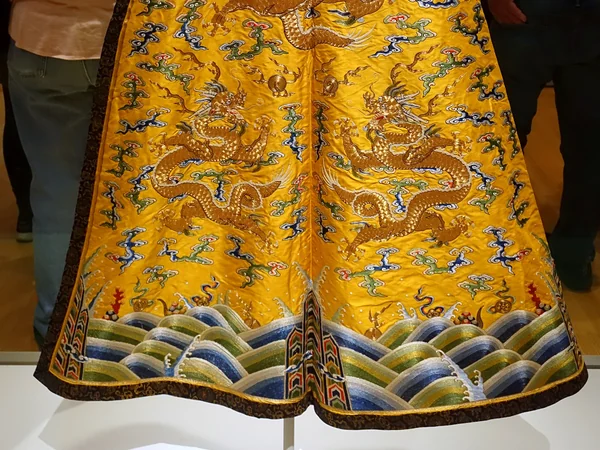
Hangzhou combines silk production history with strong museum interpretation and a major commercial market. The city was a political and cultural center during the Southern Song, when luxury textiles served court, religion and trade. Modern industrial and retail activity should be distinguished from hand weaving and historic collections.
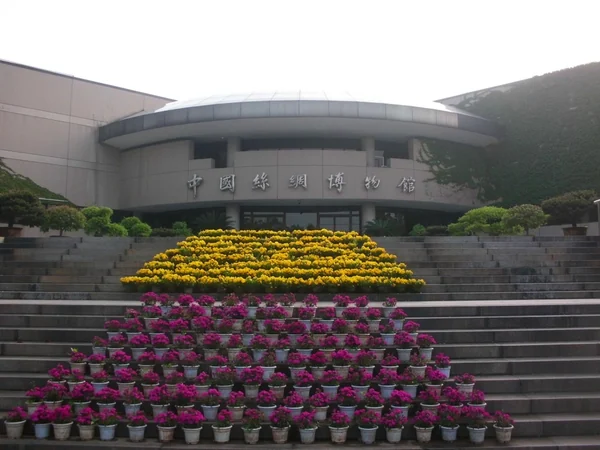
The most reliable first stop is the China National Silk Museum, where archaeological textiles, costume and loom technology can be read together. Exhibition access can change, so consult current museum information. For a broader itinerary, Hangzhou tourism planning helps connect the museum with West Lake and the city rather than treating it as a quick shopping stop.
Shengze in today's Suzhou area became an important weaving and textile-distribution center, especially in late imperial and modern commerce. Historical sayings about producing vast quantities of silk express market identity but are not present-day statistics.
Today, Shengze's textile economy includes industrial production and wholesale trade as well as heritage narratives. Travelers should establish whether a proposed stop is a public museum, booked workshop, factory showroom or wholesale market. In Suzhou, Shantang Street offers urban historical context, though it is not a substitute for a specialist silk collection. Across all four places, ask who made a textile, whether it is hand or machine produced, its fiber content and care needs; do not pay antique prices without independent provenance.
Editorial accountability
Hu Lei, CEO. The named owner is responsible for travel-planning accuracy and escalation of time-sensitive checks.
Yuntian Travel (Yunnan) Group is identified in its corporate profile as a licensed professional inbound travel service provider based in Kunming, China. Registration and travel-service documents can be requested before booking.
Page-specific references where cited, official destination, transport and entry notices, YUNSKY route-planning records, and direct provider confirmation before a booking is finalized.
Content is reviewed when rules, transport, access, pricing or route conditions change. Final availability and operating details are reconfirmed for each traveler’s dates.
Quality review: Page updated: