Your China & Yunnan Travel Experts


Langmusi photography guide—
reviewed August 28, 2026. Langmusi is a high-altitude town and cultural landscape at the Gansu–Sichuan border, not one monastery, one county or a generic “mysterious Tibet.” The Bailong River separates the Gansu-side Sertri monastery complex from the Sichuan-side Kirti complex, and each maintains its own access and photography rules. Weather, road and religious schedules can also differ across a single day. Start with the Gansu travel guide for the northern approach, then confirm the correct entrance in Chinese rather than asking a driver for “the temple.” Put the province, site name and date into each folder before the views become visually difficult to separate. Langmusi photography should distinguish province, monastery and viewpoint in every field note.

The strongest story is the relationship among religious practice, red-rock gorge, highland settlement, river and weather. Promotional phrases such as “Oriental Switzerland” describe an outsider impression, not evidence that the town is pristine or unchanged. Local government material places the town around 3,480 metres, so altitude and fast weather shifts shape both the itinerary and the ethics: a photographer who is breathless, cold or rushing is more likely to block worshippers and miss consent.
This guide preserves the original monastery, festival, sunrise, winter, sunset and portrait subjects, but replaces spectacle-driven claims with a two-side route, permission checks, high-altitude safety, respectful festival practice and truthful field technique.
Sertri on the Gansu side and Kirti on the Sichuan side face one another across the river but are separate religious places. Names are transliterated in several ways, so record the Chinese name shown on the ticket or sign and save its map pin. Do not assume one ticket, opening time or camera decision covers both. Allow time to cross town, find the correct gate and repeat the permission conversation instead of scheduling back-to-back interiors. The Sichuan travel guide helps plan the southern side and onward route, but date-specific access must come from the site itself.

A temple is first a place of worship. Before entering a hall or ceremony, read signs and ask staff or monastics whether still photography, video, flash, tripod or commercial work is permitted. The national Religious Affairs Regulations require outside activities at a religious venue to receive the venue's consent. Even where exterior photography is allowed, keep prayer routes and doors clear, silence equipment and stop immediately when requested.
Kirti-side gorge and settlement. The Sichuan side offers a broader relationship among monastery buildings, hillside homes and the gorge behind town. Treat any cave or short hike as a current access decision, not a guaranteed add-on: rain, ice, livestock, erosion or temporary religious restrictions may close a path. Carry only the equipment you can manage at altitude, turn back before light fails and identify the exact trail with local staff. Claims about sacred remains or restricted interiors should never be illustrated without explicit permission and authoritative interpretation.
Sertri-side architecture and elevated views. The Gansu complex rises on the slope and can provide layered views of roofs, river and town from authorized paths. Golden roofs are easiest to retain when highlights are protected and exposure is based on the brightest surface. Do not climb earth banks, roofs or prayer structures for elevation. The sky-burial area is not a tourist photo subject: do not approach, observe or photograph rites, bodies, implements or attendees. Follow barriers and local instructions even if an old guide claims visitors were once admitted.
 Before photographing a religious place : ask, observe and then decide. A respectful visit may produce no interior or ceremony photographs. That is a valid outcome, not a missed shot. Never imitate prostration, handle prayer objects, walk against the indicated circulation or pose someone in ceremonial space.
The Buddha-unfolding observance is commonly associated with the thirteenth day of the first lunar month, but the civil date changes and the public programme, access and photography conditions can change. Do not promise a 09:00 start or unrestricted viewing from an old article. Confirm the year's schedule with the venue or local authority, arrive without blocking worshippers, and accept that a ceremony may be private, postponed or cancelled.
If photography is permitted, build a sequence from public context: the approach, respectful crowd scale, permitted processional movement and the landscape around the event. Avoid extreme close-ups of prayer or grief, flash, raised monopods and drones. Use a normal or short telephoto lens from an assigned area and keep enough shutter speed for movement. Captions should name the event and date accurately without treating worship as entertainment.
Early and late light can separate red cliffs, pale walls and roofs, but surrounding slopes shift the useful window. Check the forecast, wind and road status the evening before and again on departure. At roughly 3,480 metres, build in acclimatization and a shorter first session. The National Health Commission advises reducing activity on arrival and increasing it only gradually, keeping warm, avoiding alcohol and seeking urgent medical help for serious symptoms. Headache, dizziness, nausea or chest discomfort should pause the session and be discussed with a qualified clinician or local emergency service; worsening breathlessness, confusion or severe headache requires urgent action. A sunrise is never a reason to continue.
Cloud shadow and chimney vapour can add depth, but neither should be exaggerated into a permanent condition. Protect bright roofs, watch the histogram and make a neutral exposure. If the dynamic range exceeds a single frame, bracket only a static landscape; moving people or prayer flags can create false HDR edges. Fast-moving cloud is also a weather warning, not merely a dramatic backdrop.
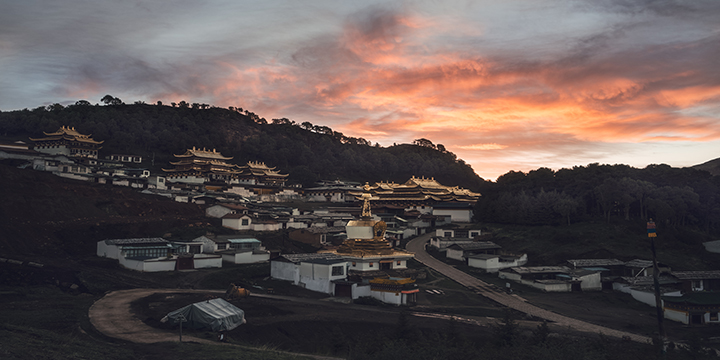
Field note
 : Use the sun direction to decide which side of the valley receives first light; do not copy a fixed “best spot” from a photograph made in another month.
Cold air, open water and backlight can produce vapour, silhouettes and frost, but older romantic descriptions understate risk. Banks and wooden crossings may be icy; do not step onto frozen water, test an edge or stand where residents collect water. Condensation can form when moving equipment between heated rooms and cold air, so seal the camera in a bag before warming it and carry spare batteries inside a layer.

 Winter safety :
The red cliff and winding river can take warm light from an authorized elevated path, but the best position changes with season and current access. Scout the descent, keep a small light free, and leave before ice or darkness makes the slope uncertain. Expose for the cliff without crushing the town into black; a graduated filter or modest bracket can help a static scene. After the sun drops, avoid walking through monastery grounds solely to chase blue hour if entry is closing.
Do not describe Tibetan residents as timeless, exotic or naturally available to photographers. Begin with a landscape or public-life frame, learn the appropriate greeting, and ask before an identifiable portrait. Explain whether the image is personal, editorial or commercial, show it when practical and accept refusal without bargaining. Clothing, prayer and work should be identified only with knowledge supplied by the subject or a qualified guide. Audio, close video and live-streaming require the same restraint as still images; do not record private conversation or geotag a sensitive ceremony simply because the phone is less visible than a camera.

 Portrait ethics :
Allow at least one daylight orientation period before dawn or sunset. Day 1: acclimatize, identify the river boundary, visit one monastery exterior under its rules and scout one elevated public viewpoint. Day 2: make one conditional sunrise, rest through harsh midday light, then choose the other monastery area or gorge only if health, weather and access permit. Build a genuine midday recovery period for hydration, food, file backup and symptom review rather than filling it with another hill. Confirm licensed transport, seat belts, winter road status, exact hotel pin, heating, breakfast and return time; mobile coverage and card payment should not be assumed.
Langmusi route brief : combine this assignment with the China ethnic communities photography route, but specify the Gansu and Sichuan sites separately. List intended image use, ceremony interest, tripod and drone equipment, mobility, altitude history and a no-photography fallback. National drone registration and airspace rules do not replace local, religious or protected-area permission; keep the aircraft grounded if any layer is unclear.
From $ 1568
From $ 850
From $ 2583
Editorial accountability
Hu Lei, CEO. The named owner is responsible for travel-planning accuracy and escalation of time-sensitive checks.
Yuntian Travel (Yunnan) Group is identified in its corporate profile as a licensed professional inbound travel service provider based in Kunming, China. Registration and travel-service documents can be requested before booking.
Page-specific references where cited, official destination, transport and entry notices, YUNSKY route-planning records, and direct provider confirmation before a booking is finalized.
Content is reviewed when rules, transport, access, pricing or route conditions change. Final availability and operating details are reconfirmed for each traveler’s dates.
Quality review: Page updated: