Your China & Yunnan Travel Experts


Zhaoxing Dong Village photography guide—reviewed August 28, 2026. Zhaoxing lies in Liping County, Guizhou, in a valley of timber houses, streams, drum towers, covered bridges and present-day community life. A 2026 local management measure defines protected core and construction-control areas, so photographers should treat lanes, buildings, waterways and cultural activity as a managed living heritage environment. Use the guide to China's minority autonomous areas for administrative context, then verify the current gate, shuttle, performance and route rules for the date. Avoid repeating fixed household counts or a universal founding date without current on-site interpretation.
The goal is not to collect “ethnic colour.” Build a sequence that identifies the five local group areas, public architecture, agricultural setting and consented cultural practice without conflating Dong subjects with nearby Miao or Zhuang communities. This guide retains architecture, song, terraces, viewpoints and route planning while adding verified heritage context, fire safety, portrait ethics, transport uncertainty, exposure method and a two-night assignment.
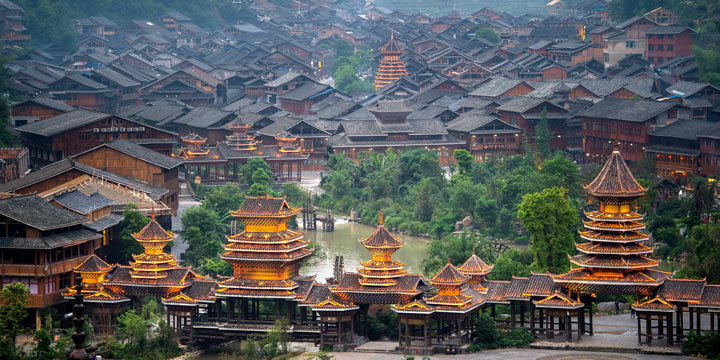
Zhaoxing drum towers and timber village landscape
Dong timber architecture includes homes, drum towers, stages and covered wind-and-rain bridges, but each has a different community role and access rule. Start with one valley-wide frame, then record how paths, water and public buildings connect. Do not call every timber structure ancient, enter a house because its door is open, or use a resident as scale without consent. Current signs and local explanation should determine names and functions.
Zhaoxing's timber houses follow the terrain and present layers of eaves, lanes and working ground floors. Use a normal lens at street level to retain natural proportions, then a moderate telephoto from a signed public position to separate roof patterns. Keep modern drainage, fire lanes and repairs when they explain how the village functions. Thresholds, windows and balconies remain private; never photograph through them or move tools, laundry or food preparation for a cleaner frame. Early lanes may be quieter, but they are also working access for residents and deliveries; keep bags against your body and never occupy a doorway.
Zhaoxing is organized into five named group areas commonly translated as Ren, Yi, Li, Zhi and Xin, each associated with a drum tower. Verify the local and English name before captioning a specific tower. These structures are community gathering places as well as photographic landmarks. Use side light to reveal joinery and eaves, keep verticals controlled, and include people only when their activity and consent make the social role clear. Do not block seating or a meeting with a tripod.
Covered bridges link walking routes, water and gathering space. Frame one bridge in its river and village context before isolating roof details. A long exposure can smooth water only when equipment is permitted and leaves a safe passing lane. Compare a faster frame that preserves current and pedestrian movement; the slower version is an interpretation, not automatically better. Rain makes timber and stone slippery; use a compact support, keep bags away from traffic and stop if flood, lightning or official restrictions change the route.
Fire notice: the village contains extensive timber construction. Obey all smoking, flame, charging and restricted-access rules. Do not place lamps against wood or fabric, fly a drone over dense roofs, or leave batteries charging unattended. Photograph emergency infrastructure honestly when it is part of the scene; removing hydrants, signs or fire lanes in post-production falsifies the present-day village and can encourage unsafe imitation.
UNESCO inscribed the Grand Song of the Dong ethnic group on the Representative List of the Intangible Cultural Heritage of Humanity in 2009. It is multi-part singing without instrumental accompaniment or a conductor, transmitted through community practice. Do not relabel every staged song or dance as “Grand Song.” Record the announced program and venue, distinguish a scheduled visitor performance from community activity, silence the camera where required and never use flash without permission.
Singing carries history, knowledge and social values, so an image should not reduce performers to costume. Ask before close portraits, explain intended use and accept refusal. Children require guardian consent. Public attendance is not a model release, and payment does not automatically create cultural or commercial rights. For an anonymous audience frame, avoid isolating a person in a vulnerable or mocking moment. Confirm event dates rather than repeating an old claim about a biennial Mid-Autumn festival or daily performance. During a song, favour silent shutter only after checking that it does not create banding under stage LEDs; otherwise use a quiet mechanical mode and wait for pauses.
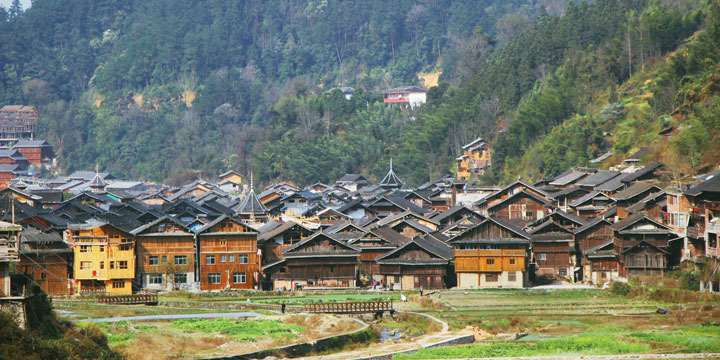
Zhaoxing's valley and surrounding cultivated slopes broaden the story beyond architecture. Rice stage, fog and harvest follow weather and farm work, not a tourism calendar. Use paths and authorized viewpoints, stay off paddies and bunds, and yield to residents carrying crops or tools. A frame that connects forest, water, village and fields has more documentary value than an isolated green pattern. In fog, manual focus confirmation and a lens cloth matter more than adding contrast later; make a colour reference before any monochrome interpretation.
Tang'an lies beyond Zhaoxing and is often linked by road or a roughly six-kilometre village-and-terrace walking route, but path condition, shuttle arrangements and gradients must be checked locally. Do not advertise the walk as universally easy or compare its terraces as a substitute for Longji. Start only with daylight and weather margin, carry water, save an offline route and arrange a confirmed return. The related ethnic villages photography route should protect time for separate captions and community context.
Set one clear visual assignment—public architecture, Dong song with permission, valley agriculture or day-to-night village life—then use each location to add evidence rather than duplicate postcards. Record tower or bridge name, group area, viewpoint, date, performance type and consent beside the file numbers.
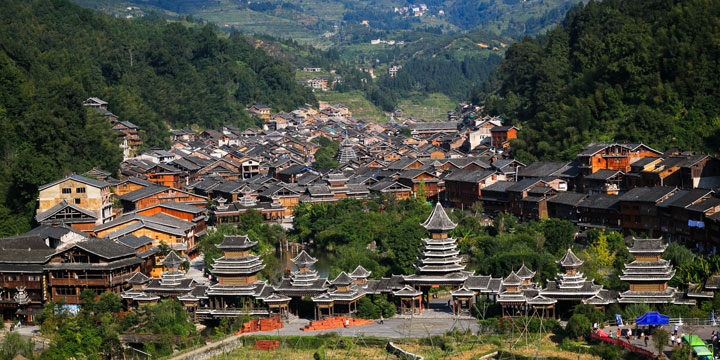
Timber eaves against bright sky can exceed one exposure. Meter the important highlights, make a neutral frame and bracket only a static scene when necessary. Correct perspective conservatively so the tower remains believable; do not stretch roofs, remove safety rails or clone away modern village life. A 24–70 mm equivalent lens covers most context, while a short telephoto isolates joinery without intruding into private rooms.
Low side light can separate roof and terrace layers, while overcast weather supports timber detail and quiet lane work. A 90-degree sidelight formula is not universally correct: walk only within public routes, compare front, side and backlight, and choose the direction that explains the subject. For blue hour, protect illuminated tower highlights and keep enough ambient exposure to show valley context. Review the red channel under warm lamps and avoid orange white balance that erases timber colour. Bracket only static architecture; moving people, flags and smoke create blending artifacts. Drones require national compliance plus explicit scenic-area and privacy permission; ground viewpoints are safer.
Arrive from the Congjiang/Liping direction in daylight, confirm the current visitor-service route and scout one platform. Use the first evening for a safe blue-hour overview. On the full day, photograph public architecture early, rest and back up files at midday, then choose either an authorized performance or a Tang'an/terrace segment with a confirmed return. The final morning is for weather, bridge detail or a consented daily-life subject. Save Chinese place names and accommodation contact offline because rural connections can be inconsistent. Compare the separate Xijiang Miao Village photography guide and never reuse one community's caption for the other.
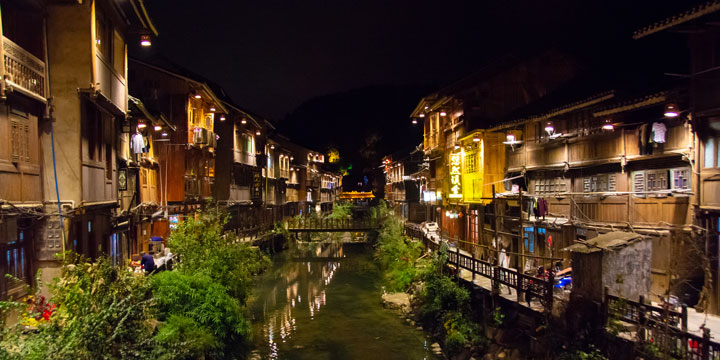
Zhaoxing village lights and timber buildings at night
From $ 1568
From $ 850
From $ 2583
Editorial accountability
Hu Lei, CEO. The named owner is responsible for travel-planning accuracy and escalation of time-sensitive checks.
Yuntian Travel (Yunnan) Group is identified in its corporate profile as a licensed professional inbound travel service provider based in Kunming, China. Registration and travel-service documents can be requested before booking.
Page-specific references where cited, official destination, transport and entry notices, YUNSKY route-planning records, and direct provider confirmation before a booking is finalized.
Content is reviewed when rules, transport, access, pricing or route conditions change. Final availability and operating details are reconfirmed for each traveler’s dates.
Quality review: Page updated: