Your China & Yunnan Travel Experts


Longji Rice Terraces photography guide—reviewed August 28, 2026. Longji lies in Longsheng Various Nationalities Autonomous County, north of Guilin, and is a living rice-growing landscape rather than a permanent scenic installation. The terrace system links mountain forest, irrigation, cultivated fields and Zhuang and Yao communities; as part of China's Southern Mountainous and Hilly Rice Terraces, it was recognized by the UN Food and Agriculture Organization as a Globally Important Agricultural Heritage System in 2018. Use the Guilin travel hub to plan the approach, then verify the exact village, parking or shuttle point and trail conditions for the date.
This guide retains Jinkeng, Ping'an, Ancient Zhuang Village, seasonal crop stages and the original three-day outline, but replaces fixed-date promises with current farm checks, corrects the location to Guangxi, adds trail and portrait ethics, and explains how to build a coherent photographic sequence. Rice timing follows water, weather and farm work; the landscape does not owe a visitor flooded mirrors, green shoots, gold grain or snow on a booked date.
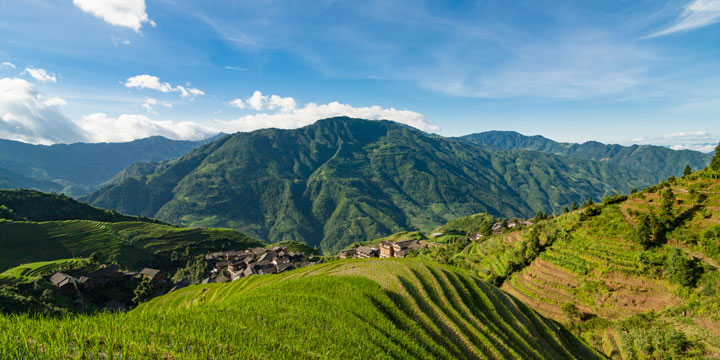
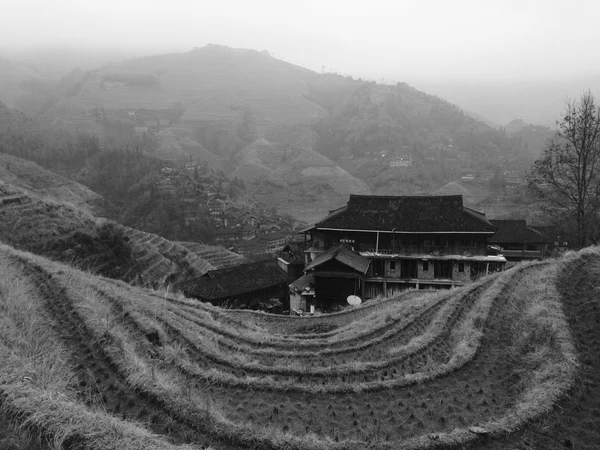
Longji rice terraces, mountain forest and village landscape
Longji includes the Jinkeng Dazhai Yao terrace area, Ping'an Zhuang terrace area and Longji Ancient Zhuang Village. They are connected by mountain roads and paths, not by one flat promenade. Put each on the Guangxi travel map, then choose one overnight base from the desired crop stage, sunrise direction, walking difficulty and current transport. Community names describe living cultures; avoid treating clothing, long hair, timber homes or farm work as an “ethnic spectacle.”

Jinkeng spans several settlements including Dazhai and Tiantou and supplies broad, layered views from signed routes and platforms. The terrain is large enough that a platform name on a brochure can hide substantial steps and transfer time. Confirm whether a cableway, shuttle or footpath is operating, where it ends, and how long a loaded photographer needs for the return. Photograph the relationship among fields, village and forest before compressing patterns with a telephoto lens. Ask before an identifiable portrait, entering a timber home or recording a cultural activity.
Ping'an is a practical base for the Seven Stars with the Moon and Nine Dragons and Five Tigers viewpoints, with guesthouses and signed walks in the village area. “Easier” is relative: stone steps can be steep, wet and uneven, and luggage may need separate handling. Use the first daylight hours to find the correct branch in the path and a passing-safe tripod position. The famous shapes are interpretive names; caption the viewpoint and direction rather than claiming the landform literally depicts stars or dragons.
The Ancient Zhuang Village area offers a closer study of cultivated terraces, stone paths, bridges and settlement fabric. It is in Longsheng, Guangxi, and its value is not that it is frozen in time. Identify a historic building from current interpretation, retain evidence of present-day life, and distinguish public lanes from thresholds and working courtyards. The terrace may appear less expansive than Jinkeng, but a normal lens can show how water, walls and homes fit together without exaggerating scale.
Longji changes with the agricultural cycle: spring preparation and irrigation reveal reflective contours; early growth produces fine green lines; summer develops dense green layers; harvest brings mature grain and active farm work; winter can expose earth, stubble, water or occasional snow. These are conditions, not four guaranteed postcards. Ask the scenic area or host for a dated field image, irrigation status and expected harvest activity shortly before travel. Never enter a paddy, stand on a narrow bund or request delayed harvest.
Water-filled plots can reflect sky and trace every terrace edge, but irrigation and transplanting dates vary by village, rainfall and farm plan. Backlight or low side light may define the curves; direct glare can also destroy texture. Expose from the brightest reflection, make a neutral frame and use a polarizer cautiously because rotating it can remove the very reflection that explains the scene. Keep off water channels and do not block a farmer carrying seedlings or tools.
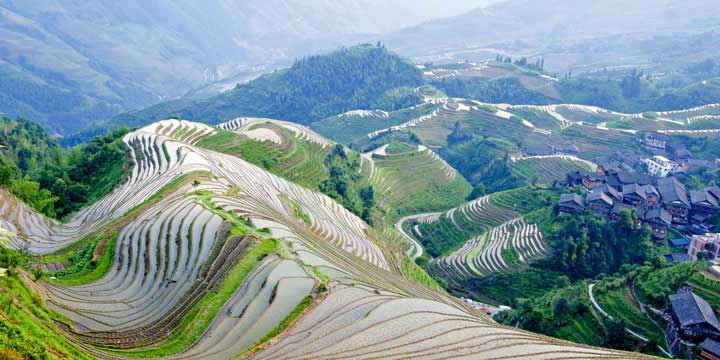
 Field check : confirm which sector is actually irrigated, whether planting is active and whether the selected public viewpoint faces the useful light. A flooded field beside an unplanted one is truthful agricultural variation, not a defect to clone away.
Green terraces can carry fine tonal separation after rain or in low angled light. Use a polarizer only after comparing an unfiltered frame; strong polarization can make foliage uneven across a wide sky. Summer heat, humidity and storms matter more than an inherited 08:00–17:00 shooting rule. Reserve opening and closing light for wider landscapes, use midday for scouting and caption work, and stop on exposed ridges for lightning or dangerous wind.

 Field check : ask about trail repairs, recent rain and visibility, then select a shutter speed that holds moving rice leaves. Protect equipment from humidity and let it acclimatize before changing lenses after leaving an air-conditioned vehicle.
Mature fields can turn yellow-gold before harvesting, while adjoining plots may be cut on different days. The exact harvest schedule is a farm decision and can be adjusted by weather or local management. Build a documentary sequence—uncut grain, people working with consent, a wider village relationship and the resulting stubble—rather than presenting every gold field as untouched scenery. Keep machinery routes and field entrances clear.
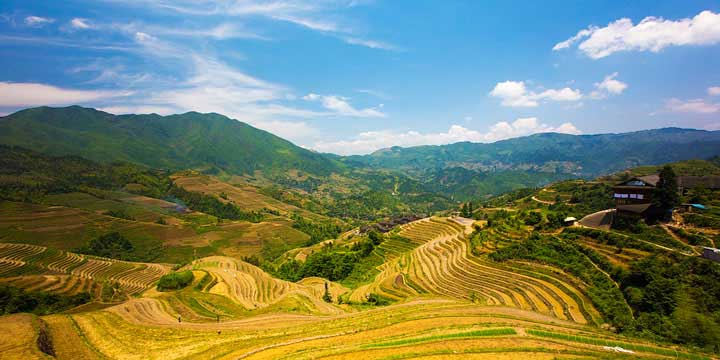
 Field check : verify the current mature area and expected harvest date within days of arrival. Warm dawn light can add separation, but honest colour and visible crop stage are more valuable than maximum saturation.
Winter often reveals terrace geometry through earth, stubble or water; snow is possible but never assured. Wet stone, frost and unlit steps raise the risk well before they improve the photograph. Scout the route in daylight, wear footwear with grip, carry a headlamp and choose a viewpoint with a safe retreat. Black-and-white conversion is an editorial choice, not an automatic fix; preserve a colour reference and retain tonal separation in snow or cloud.
 Field check : confirm road, cableway and trail status plus heating at the overnight base. Cancel an exposed dawn for ice, closure, whiteout or unsafe transport.
Platform names are useful only when linked to the right village area, route and current access. A credible plan includes walking time, direction of light, a safe alternative and a turnaround time. Ask locally whether English names on an old map still match current signs, and save the Chinese name or pin offline. Do not cross a barrier or walk a field bund because another photograph appears to have been made there.
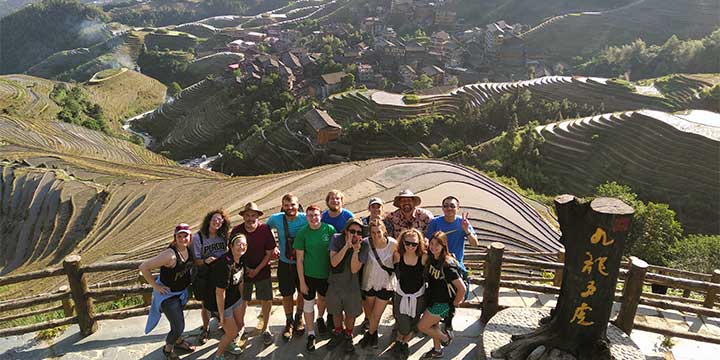
Seven Stars with the Moon is read from a designated elevated route; use a moderate focal length to retain the surrounding village and field scale instead of isolating the named pattern.
Nine Dragons and Five Tigers uses ridges and terrace forms to create a layered interpretation. Record the viewpoint name and weather, keep the horizon level, and avoid adding or removing terrace lines in post-production.
Jinkeng often provides broader scale, while Ping'an can simplify logistics for a shorter stay; neither is universally less crowded or easier. Match the base to current visitor pressure, transport, mobility and light. A photographer with limited stair tolerance may need a cableway-supported or lower public view, plus confirmed luggage help and toilets.
A photography visit needs enough time for orientation, changing weather and one crop-stage decision. Compare current transport and lodging through the Guilin tour planner, then give one village area a full dawn-to-evening cycle instead of switching bases at the best light.
Day 1: arrive in daylight, confirm crop and access conditions, settle in Jinkeng or Ping'an, scout one viewpoint and photograph a safe late session.
Day 2: make one conditional dawn, rest and back up files, then walk or transfer only to a second authorized viewpoint that adds a different field–village relationship. Ask before any portrait or interior.
Day 3: use the weather or crop fallback, visit Ancient Zhuang Village if logistics are realistic, then depart with daylight margin.
Send the planner your preferred crop stage, stair tolerance, luggage, equipment and intended image use so access, room location and permissions can be checked. plan a Longji photography trip only after the host supplies a current field image and transport answer; do not buy a non-refundable ticket around an old harvest date.
From $ 1568
From $ 850
From $ 2583
Editorial accountability
Hu Lei, CEO. The named owner is responsible for travel-planning accuracy and escalation of time-sensitive checks.
Yuntian Travel (Yunnan) Group is identified in its corporate profile as a licensed professional inbound travel service provider based in Kunming, China. Registration and travel-service documents can be requested before booking.
Page-specific references where cited, official destination, transport and entry notices, YUNSKY route-planning records, and direct provider confirmation before a booking is finalized.
Content is reviewed when rules, transport, access, pricing or route conditions change. Final availability and operating details are reconfirmed for each traveler’s dates.
Quality review: Page updated: